EN
EN



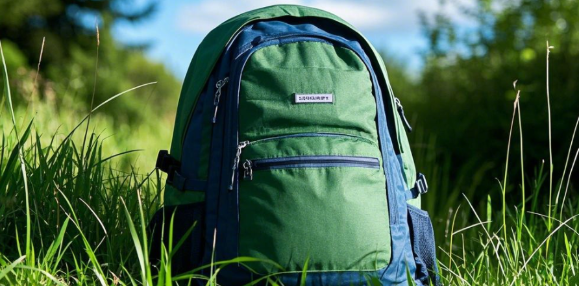
Within the quickly developing outdoor market, deciding on a hiking backpack size is quite a complex aspect now than a straightforward product choice—it has turned into a strategic commercial decision. Outdoor brands aiming to serve the North American and European regions should understand that backpack sizing has a direct effect on customer satisfaction, product returns, and brand reputation. Modern consumers are not only looking for a product that works well but also keen on ergonomics, durability, sustainability, and personalization.
On the other hand, to B2B buyers—distributors, wholesalers, and private label brands—the feature can become confusing. As a matter of fact, they have to match the product specifications to different consumer preferences while keeping both costs and supply chain planning in check.
This piece discusses hiking backpack sizes in detail, identifies typical problems for buyers, and offers professional solutions in particular by shedding light on how Quanzhou Tianqin Bags Co., Ltd assists worldwide clients in overcoming these issues with customized OEM/ODM services and top-notch production capabilities.
Chapter 1: Understanding Hiking Backpack Sizes
1.1 Standard Backpack Size Categories
Usually, hiking backpacks are divided into groups based on capacity (liters):
- Daypacks (10–30L) Best suited for short hikes, city walk trips, and light outdoor activities.
- Medium Packs (30–50L) Perfect for overnight stays or very light multi-day hikes.
- Large Packs (50–80L) Intended for long journeys with a need for a tent, sleeping bag, and food.
- Expedition Packs (80L+) Carrying heavy loads during climbing or long-distance trekking.
Every category corresponds to a particular user case, thus using the wrong one may cause a bad experience for the user, high product return rates, or even negative feedback.
1.2 Key Factors Influencing Size Selection
Professional buyers, among other things, need to consider:
- The length of the hiking trip
- The climate and nature of the area
- The way the load is distributed across the body
- The size of the user (torso length)
- Design tailored for different genders
Failure to take these variables into account will very likely result in products that don’t fit the requirements of the target markets.
Chapter 2: Buyer Pain Points in Backpack Sizing
2.1 Inconsistent Market Demand
Preferences vary greatly from region to region:
- European hikers are more into slim and lightweight designs
- North American outdoor enthusiasts mostly target the capacity and endurance
One of the challenges for brands can be trying to standardize their product lines despite the above presented differences.
2.2 High Return Rates Due to Size Mismatch
Product returns represent one of the biggest challenges for retailers, and in addition to that the costs associated with the logistics of handling returns also lead to quite a hit to profitability. Such untimely returns are mainly caused by:
- Mismatches in capacity expectation
- Failure in effective ergonomic accommodation
- Product description not clearly setting the right expectations
2.3 Lack of Customization from Suppliers
In many cases, the traditional manufacturers have little to offer in terms of customization options, and this puts brands in the situation where they have to:
- Accept sub-optimal design
- Give up market differentiation
- Burn the private labeling struggle
2.4 Quality vs Cost Dilemma
Often the buyers' struggle is what to do when:
- Low-cost suppliers → quality erratic
- High-quality suppliers → MOQ and pricing high
These factors need to be balanced with a view to the long term.
Chapter 3: Market Trends in Hiking Backpack Sizes
3.1 Lightweight and Modular Designs
Today’s shoppers like:
- Light materials
- Expandable compartments
- Multi-functional features
3.2 Sustainability and Eco Materials
In general, customers in Europe and the US increasingly prefer:
- Recycled textiles
- Environmentally safe treatments
- Production ethics
3.3 Smart Storage Solutions
The evolution of backpacks is also characterized by:
- Anti-theft compartments
- USB ports
- Hydration packs
Chapter 4: Solutions for Outdoor Brands
4.1 Diversified Product Line Strategy
Successful brands do not concentrate on the production of a single size only but offer:
- Budget daypacks
- Mid-tier travel backpacks
- High-end expedition packs
Such a strategy reaches varied customer segments and also lowers risks.
4.2 Accurate Product Positioning
Labeling in a simple and unambiguous way like:
- “Day Hiking Pack”
- “Trekking Backpack for 3 Days”
is an effective means to combat customer disorientation and returns.
4.3 Ergonomic Design Optimization
Major changes are:
- Adjustable shoulder straps
- Ventilated back panels
- Load distribution systems
Chapter 5: How Tianqin Solves Buyer Pain Points
5.1 Strong Manufacturing Experience
With over 17 years of manufacturing experience in bags, Quanzhou Tianqin Bags Co., Ltd supplies:
- Business bags
- Travel bags
- Outdoor backpacks
The company integrates design, production, and quality control into one unit.
5.2 One-Stop OEM/ODM Solutions
Tianqin provides the opportunity for total branding and product customization:
- Logo printing
- Selection of materials
- Size and structural design
- Packaging customization
Without another manufacturer, you can have your brand creating a one-of-a-kind hiking backpack that is best suited for your particular market.
5.3 Advanced Production Technology
The company implements:
- Semi-automatic production lines
- Development of 3D models
- Systems for precise cutting
Efficiency is increased, and product launch speed is supported by these new technologies.
5.4 Strict Quality Control
Tianqin conducts:
- Testing of materials
- Thickness inspections
- End product checks
Each unit is checked before packaging to ensure it meets US and EU standards.
5.5 Global Export Capability
Tianqin exports its products to over 50 countries and collaborating with international partners it produces:
- Stable logistics
- Regulation compliance
- Reliable delivery schedules
Chapter 6: Product Example – Tactical Hiking Backpack
The usual features of a Tianqin hiking backpack are:
- Strong polyester fabric
- Multi-pocket storage system
- Lightweight build (approx. 0.6 kg)
- Customizable size and design
They show the company’s skill to mix long-lasting, functional and cost features.
Chapter 7: Customer Case Study
Case: European Outdoor Brand
Problem: Due to incorrect backpack sizing and lack of ergonomic design, the mid-sized European brand experienced high product return rates.
Tianqin's response:
- Three size categories (25L, 45L, 65L)
- Improved strap and back panel designs
- 3D samples for fast approval
Impact:
- Returns halved
- Clients very pleased
- Sales rose in the first two quarters
Case: US Private Label Brand
Issue: Required a hang backpack with customization options at low MOQ.
Response:
- OEM design with brand logo
- Flexible production quantities
- Fast sample turnaround
Outcome:
- Entered successfully the Amazon product line
- Emerged as one of the top in early reviews
Chapter 8: FAQ for Western Buyers
Q1: What is the most popular hiking backpack size?
A backpack with a volume of 30-50 liters is really the most universal and versatile hiking backpack size for outdoor activities.
Q2: How to choose the right size for my brand?
The way I would approach that is by first doing some market research to decide on the best size for your brand and then offering different sizes to cover the various user scenarios.
Q3: Can backpacks be customized for branding?
Yes, customization is absolutely possible; Tianqin provides complete OEM/ODM customization services.
Q4: What certifications should I look for?
Don’t forget to check for compliance with the quality standards of ISO, EU, and the US.
Q5: What is the typical production lead time?
- Samples: 1 week approximately
- Mass production: 30-50 working days
Chapter 9: Strategic Recommendations for Buyers
- Collaborate with manufacturers having years of experience in the field
- Remodel the design, ergonomics, and scenarios of use effectively
- Always have more than one size option for your products
- Modify the product in order to gain your brand’s uniqueness and differentiation
- Meet the requirements and standards of the global markets concerning the quality of the products
Conclusion
Backpack sizing for hiking is no longer a mere aspect of the product's technical details, it is a major influencing factor of the product's commercial success. For outdoor brands to comprehend user needs, target the pain points of buyers, and cooperate with reliable manufacturers are the necessary steps to establish a competitive product line.
Quanzhou Tianqin Bags Co., Ltd is a trustworthy partner with whom you can rely on for offering entire solutions-from design to production - assisting local brands worldwide in the reduction of risks, improvement of product quality, and the attainment of sustainable growth.
Indeed, by correctly matching backpack sizes to market requirements and arranging for professional manufacturing support, outdoor brands can secure their position in the global market for the long run.