EN



The container is booked for Thursday and the inspection report lands on Wednesday afternoon with 14 major defects. Nothing can be reworked in time, so the choice is to load a weak lot or pay for a rolled shipment. Both outcomes trace back to scheduling. Pre-shipment inspection is not a step you add at the end of production, it is a calendar you build when the order is placed. Here is the sequence we run with buyers, and the paperwork they should hold at loading.
The Inspection Timeline
Build the calendar backwards from the vessel date. For a 5,000-unit laptop backpack program, our production runs 25 to 35 days after the purchase order and deposit clear. The sample must be approved before that clock starts, which is why a 7 to 15 business day sampling phase matters so much to the total.
During production inspection fits best around day 12 to 15, when 20 to 40 percent of the units are finished. At that point the line has real output, so defects are visible, and there is still time to change a setting, retrain an operator, or re-cut a panel. An inspection done on day 29 finds the same defects, only now they are irreversible.
Pre-shipment inspection should happen when at least 80 percent of the order is packed and 100 percent of the units are finished. In practice we schedule it around day 28 for a 30-day production run, which leaves 2 to 4 working days to close findings before the container arrives on day 32.
Book the inspector 5 working days ahead. Third-party agencies in Fujian and Guangdong fill up around Chinese New Year and the September peak, and a rushed booking costs extra or gets pushed past the loading date.
One scheduling detail catches first-time importers: the inspection date follows the actual packing date, and packing is the last operation in the sequence for a reason. If the carton supply arrives late or the hangtag print run slips, packing slips with it and the booked inspection has to move. Put 2 spare days into the plan instead of into a supplier promise.
Third-Party Inspectors and Factory-Internal QC
The first question most buyers ask us is whether they need a third-party inspector when we already run internal QC. Our answer is yes, budget for it, and here is the honest reasoning.
Internal QC exists to keep the line honest, and it improves first-pass yield. It cannot be the buyer's only assurance, because a factory reporting on itself always carries an interest, however small. A third-party report is worth the money for the dispute value alone. Typical man-day cost in China is USD 250 to 350 plus travel, which against a 5,000-unit order is a rounding error.
What internal QC is better at is early detection. Our line QC has been on the floor since hour one and can catch a trend while it is still one operator instead of one carton.
At Tianqin, we run an internal pre-final inspection 48 hours before the third-party visit, using the same AQL sheet. It costs a shift of QC labor per order, and it moves fixable defects out of the lot before the inspector samples it. The buyer then gets a third-party report that reflects the lot, not our hopes for it.
Choose the Right Inspection Type
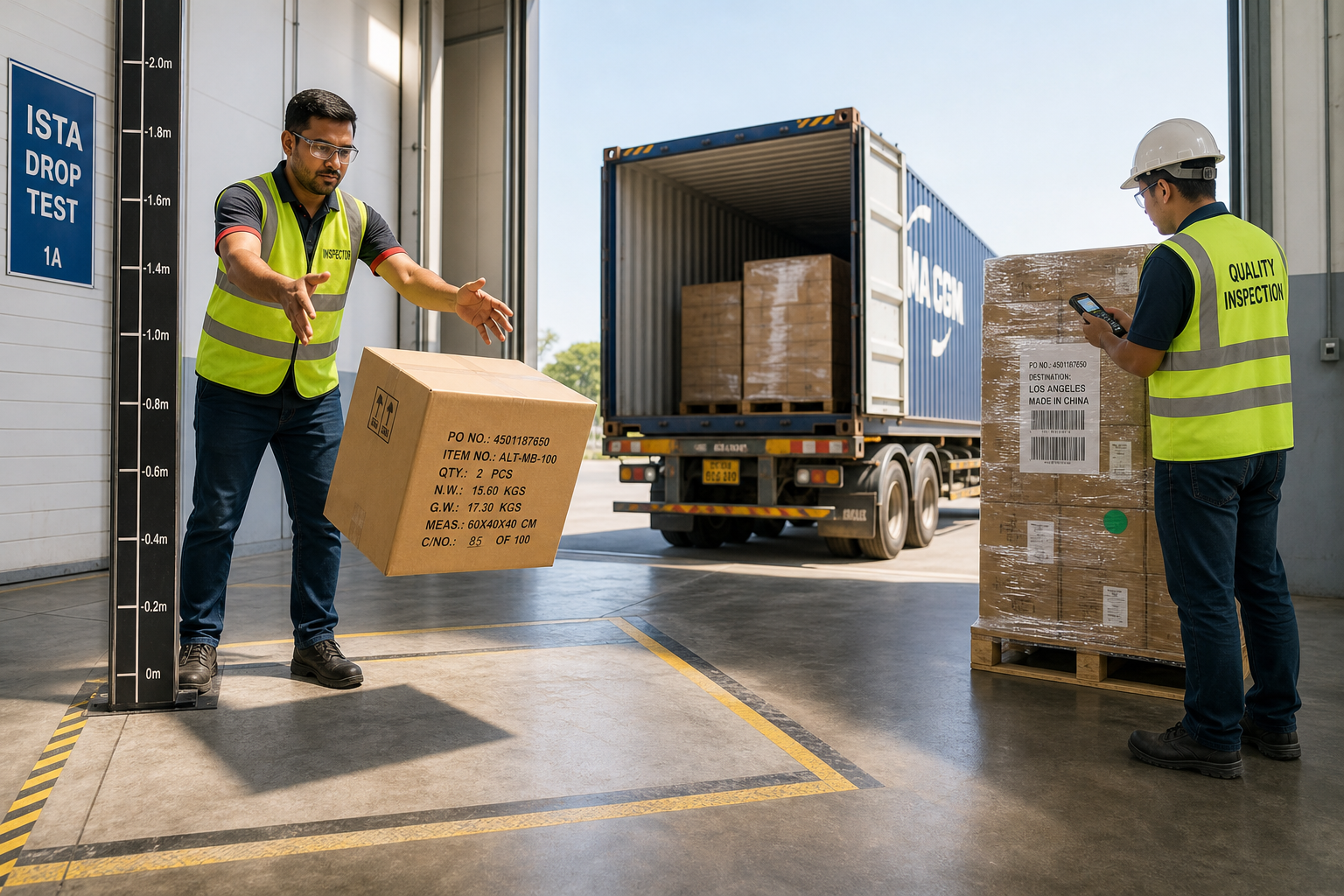
Three types cover almost every laptop backpack order, and they answer different questions.
During production inspection asks whether the process is producing acceptable goods while there is still time to intervene. It samples partially finished units, so it is weak on packing and carton checks.
Pre-shipment inspection asks whether the packed lot meets the specification. It is the report that most purchase orders reference, and it covers finished units plus packed cartons.
Container loading supervision asks whether the right goods went into the right container in the right quantity, which is a documentation and count check rather than a quality check.
For orders above 10,000 units, we recommend during production plus pre-shipment. For a first order with a new supplier, both are close to mandatory. For a repeat order with a stable history, pre-shipment alone is a reasonable compromise, and it is a compromise.
Cost rarely exceeds 1 percent of order value on a 5,000-unit run, and it is the only spend in the order that produces a document usable months later when a retailer files a claim. Treat it as insurance with paperwork attached.
Defect Disposition: Rework, Sort, or Reject
Decide the disposition rules before the inspector arrives, because the report creates pressure to decide quickly.
Rework on site is the cheapest route when the defect is local, such as a thread tail or a logo misprint on the front panel. Full sort is slower and pulls units out of the carton count, which is why it needs a written percentage threshold. Rejection of the lot is rare at pre-shipment, and it usually means a systematic error that was never caught in line.
Ask for a named owner and a closing date on every finding. A report with 14 major defects and no owner is a report that will still describe the same 14 defects next order.
Our default thresholds in a purchase order read this way: any critical defect stops packing immediately, more than 3 percent of sampled units carrying the same major defect triggers a 100 percent sort, and scattered major defects inside the AQL limit are reworked on site before cartons close. Writing those thresholds down removes the negotiation that otherwise happens at 11 pm on a loading day.
The Evidence Pack You Should Receive
Ask for this set with every bulk shipment, and read it before the container is sealed.
Inspection report stating lot size, sample size, AQL level, and the accept and reject numbers used
Unit-level defect log with unit ID, defect code, measured value, and photo reference
Carton photos showing shipping marks, barcode, and packed quantity per carton
Full carton weight list with gross and net weight for every carton number
Measurement sheet covering logo height, strap width, compartment depth, and bag weight in grams
Load or drop test video filmed on the inspection day, 30 seconds per test, unedited
Packing list matching the final carton count, signed by the QC lead
Corrective action sheet with owner, action, and closing date for each finding
Retained counter sample identified by its own ID and kept for 6 months
Test reports for shell fabric and hardware, available on request from our file
The photo set is the item buyers use most, because it is what they forward to a retailer when a question comes up three months later.
Close the Findings Before the Container Is Sealed
Set a hard rule: no findings above the agreed AQL limit survive into the loading bay. If the lot fails, do not load it and argue afterward. Once the container is sealed, the negotiating position changes and the evidence becomes harder to use.
Then confirm three things by email on loading day: the sealed carton count against the packing list, the container number against the booking, and the final defect status. Three lines, sent the same day.
If your current supplier resists a pre-shipment inspection, treat the resistance itself as data. The refusal costs more to interpret than the inspection costs to run.
Send your order schedule to [email protected] and we will return a production and inspection calendar with the dates marked, including the internal pre-final slot and the third-party window. Samples run 7 to 15 business days, so the calendar starts earlier than most buyers expect. Factory capability and active product lines are listed on www.tianqinbag.com.



 Hot News