EN
EN



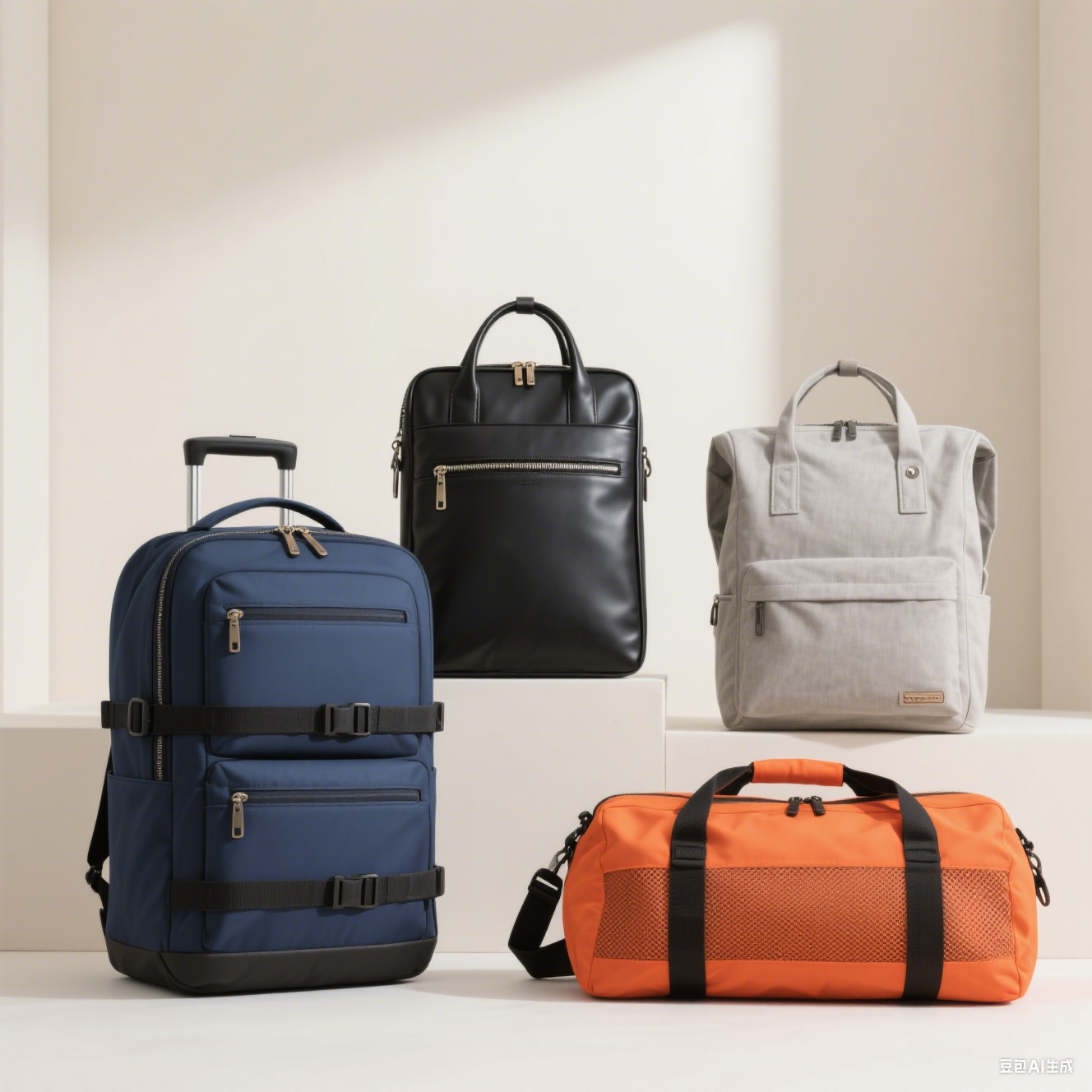
The global travel industry is at the brink of a new growth cycle. The post-pandemic travel revival, the rise of e-commerce, tougher sustainability rules, and changes in airline policies - these are some of the factors impacting the market for luggage and travel accessories. For international B2B buyers, 2026 will mean more than just another season – it will mark a major strategic transition.
Say, you are a buyer of travel bags, cabin bags, or travel accessories planning for 2026 then it would be wise not to just fight for the lowest price but also consider other factors.Besides that, regular last-minute trend catchers will be the losers, while early planners, those who work with the regulators and fine-tune their product lifecycle strategies will be the winners.
This article outlines the main 2026 travel bag design trends and provides procurement tips based on those.
1. The Big Picture: What’s Driving 2026 Travel Bag Demand?
In addition to product design, a buyer should zoom out and look at the overall economic trends that are shaping the market:
- Global travel volume is generally on the rise, and the most significant increase is in short-haul and low-cost airline travel.
- Sales of luggage through cross-border e-commerce channels have become leading.
- The EU’s ESPR (Sustainable Products Regulation) is an initiative that will raise the level of product compliance.
- Consumers are gradually moving away from buying trendy but "fast fashion bags" to opting for those that are durable and multi-purpose.
The EU's ESPR requires that:
- Items be durable
- Items be repairable
- Items be recyclable
- Materials used in items be traceable
- Design be based on the entire lifecycle of the item
It will certainly become a problem in the future if companies continue to sell low-quality couch bags with short usage cycles not only for the environment but also for the company image and the increasing pressure from the regulators and other parties. Buyers need to move from just looking at short-term costs to having a longer-term vision of product sustainability.
2. Trend Breakdown for 2026
2.1 Modular & Multi-Function Design
Modular travel bags are becoming more and more accepted as the norm. Buyers might come across:
- Detach-friendly compartments for different items
- Capacity expansion mechanisms
- Convertible designs from business to travel
- Detachable toiletry or tech pouches
What it means for procurement:
- A single product can serve different purposes (a business trip and a weekend getaway).
- You can increase the perceived value of the product without essentially raising the production costs.
- Inventory variations can be rationalized with greater ease.
With modular construction, the lifespan of the used product will be extended because users will adapt the bag to their needs instead of buying a new one every time. Hence, it meets the sustainability criteria perfectly.
Strategic suggestion: Make use of structural design development at an early stage. Modular construction requires more precise pattern making and longer and more rigorous stress testing.
2.2 Sustainable Materials Become Standard, Not Premium
By 2026, sustainability will cease to be merely a marketing advantage and instead will be the norm.
Materials buyers should prepare for:
- Recycled polyester (rPET)
- Recycled nylon
- Bio-based fabrics
- Dyeing with a low environmental impact
- Traceable supply chain documentation
EU ESPR-compliant products will increasingly require fabric traceability and lifecycle transparency by means of procurement decisions.
What this means for buyers:
- Changing to sustainable materials will inevitably affect the cost structure.
- Ordering material in advance helps to keep price fluctuations low.
- Certification (e.g. GRS, recycled content documentation) becomes a must-have.
Risk:When sourcing materials on demand may face risk of stock-outs and non-compliance issues.
Advice:Complete your material decision latest by Q3 2025 so that the 2026 collection can be released on schedule.
2.3 Lightweight but Structured Design
Despite the fact that customers want to have lighter bags, they also want the bags to be more compartmentalized and orderly.
Key design focus:
- Lightweight frames
- Reinforced stress points
- Structured compartments
- Functional internal zoning
Going extremely light without having structure in place can lead to higher product returns, particularly when selling through an e-commerce channel.
Reasons why structure should not be ignored:
- During air travel it will keep the bag from being misshape.
- Thus, it will be easier to pack the bag more efficiently.
- Moreover, the higher the product is in quality, the greater is its level of perceived value.
Procurement insight:Weight saving should not come at the expense of the product's durability. Material engineering and internal architecture redesign can be used for that matter.
2.4 Tech-Integrated Travel Bags
Only gadgets used to be the exclusive area where tech integration was common. Now, travel bags are also getting tech-integrated features.
Expected features in 2026:
- Built-in USB charging ports
- RFID anti-theft pockets
- Optimized laptop compartments
- Hidden security pockets
- Smart cable management
What should global buyers know:
Tech features greatly improve retail conversion rates online. But, electronic elements need to be compliant with the safety standards of the destination market.
Reasons:
- Restrictions on batteries-related shipment
- Certification demands
- More complicated defect management
Planned response:Usually, tech-packed SKUs are best employed in the mid to premium price segments, not the standard mass line.
2.5 Airline-Compliant Cabin Sizing
More and more low-cost airlines are going to put stricter limits on the size of cabin baggage.
This makes it a threat as well as an opportunity.
Opportunities:
- Cabin-specific collections
- “Airline compliant guaranteed” marketing positioning
- Reduced return rate from sizing disputes
Risks:
- High-return rate if products are not capable of meeting the size standard.
- Different airline policies from one geographic region to another.
How to go about it:
- Design several SKUs for different cabin sizes.
- Make sure that the size of your product is prominently displayed.
- Conduct a test of your product using frames of the actual airline size.
If B2B buyers decided to ignore airline compliance, they will, without a doubt, be stuck with very expensive after-sale disputes.
2.6 Neutral Earth Tones & Urban Utility Aesthetics
In 2026, color strategy becomes inventory strategy.
Trending tones:
- Sand
- Olive
- Stone grey
- Desert beige
- Urban black
B2B buyers find that neutrals are less risky, for example, because:
- Less chance of inventory becoming stale.
- Different seasons compatibility.
- It appeals to both genders.
- Consistent photography for the e-commerce platform is much easier.
Urban utility aesthetics minimal logos, functional appearance are replacing loud branding.
Procurement advice:Don’t let your fashion color production exceed your demand. Keep a steady core color inventory.
3. How These Trends Impact Procurement Strategy
It's great to know the trends but that's only half the battle. One has to turn the trend insights into tangible actions to make them truly useful.
3.1 Cost Implications
- The use of sustainable materials brings about a rise in the prices of raw materials.
- Modular and multi-functional products add to the complexity of the development.
- Adding tech features means not only more certification but also QC expenses.
- Cabin compliance measures that reduce redesign risks.
On the other hand, the same investments will allow you to reduce:
- Return rates
- Regulatory risk
- Brand damage
- Inventory waste
The long-term benefits of investing in the first place are often more than enough to cover the initial increase in costs.
3.2 MOQ Strategy
Modular design can be a good way to keep a number of different SKUs under control.
Purchasing 5 separate types of bags results in;
- Higher material purchase costs
- Logistical issues and a complexity in handling inventory
- Higher management and production costs at a small scale
- Higher minimum order quantity requirements
On the contrary, it would be much easier to:
- Separate the complexity of the market.
- Have fewer style variants.
- Have less fragmented inventories and warehouses.
3.3 Risk Management
Top risks in 2026 include:
- Non-compliance with regulations (ESPR).
- Unsellable color overproduction.
- Taxi size mismatch.
- Material traceability gaps.
To guard against such risks, buyers should request the following:
- Material certification documentation
- Durability testing reports
- Airline dimension verification
- Lifecycle design planning
4. 2026 Collection Planning Timeline
Leading buyers should work backward from the peak season.
Recommended timeline:
Q2 2025
- product direction confirmed
- material sourcing locked in
- structural design starts
Q3 2025
- colors decided
- prototyping
- testing and compliance
Q4 2025
- booking of bulk production
- early inventory planning
- e-commerce product content preparation
2026 peak season
- Stocking the inventory 90–120 days before the demand surge
If you work backwards from the peak season and plan your collection late, then there will be sbf:
- More costly materials
- Production being left behind schedule
- Design quality being downgraded
By starting early with your prototyping, you will also enjoy less cost volatility and will have less production pressure.
5. Final Strategic Takeaway
Travel bag market 2026 will be about:
- Strong and durable design
- Eco-friendly materials
- Structured lightweight engineering
- Tech embedding
- Compliant with airline regulations
- Neutral inventory strategy
On the contrary, it would be very disadvantageous to:
- Cheap fast-fashion bags
- Materials that can’t be traced
- Overly complex color assortments
- Lack of planning in procurement
So if you plan to have a premier travel bag collection in 2026, then starting your prototyping and material sourcing in Q2/Q3 2025 would be the best thing to do. Not only will you be able to spread your cost better, but you will also experience less pressure from production.
Market is slowly but surely moving towards sustainability that is well-structured and smart functionalities. Buyers who react quickly will be the ones who secure stable supply chains, compliance certainty, and higher margin positioning in 2026.