EN
EN



Today backpacks have evolved to be more than just storage carriers - they are specifically designed products that fulfill various user needs in sectors like travel, business, education, sports and logistics. For B2B buyers in Europe and North America, determining the appropriate backpack size/dimensions remains a major purchase factor influencing user satisfaction, return rates and brand reputation.
This handbook shares a detailed expert exposition on backpack sizing norms, buyer challenges and use cases—alongside a highlight of Tianqin Bags' role in providing tailor made high quality solutions to the worldwide clientele.
1. What Defines Different Backpack Size Categories?
Generally, backpack size is specified in three ways: capacity (liters), physical dimensions (cm/inches), and compartments for different functions.
1.1 Small Backpacks (10–20L)
- Common size: 30–40 cm high
- Function: everyday commuting and travel with small luggage only
- Main points: very small and light
1.2 Medium Backpacks (20–40L)
- Common size: 40–50 cm high
- Function: school, business, weekend getaways
- Main points: space for a laptop, well-organized compartments
1.3 Large Backpacks (40–70L)
- Common size: 50–70 cm high
- Function: travelling, hiking
- Main points: very spacious, ergonomic support
1.4 Extra-Large Backpacks (70L+)
- Function: expedition, military, logistics
- Main points: use of heavy-duty materials, load-bearing systems
For B2B buyers, correctly categorizing products results in meeting customers’ needs more efficiently, reducing inventory risk.
2. Buyer’s Evaluation Points - Dimension Parameters
2.1 Outer Dimensions
- Height × Width × Depth
- Airline carry-on regulations should definitely be taken into account (especially for EU/US markets)
2.2 Inner Volume
Capacity here means the amount of usable volume measured in liters. To this end, buyers need to:
- Be sure that the capacity is not “over-stated”
- Make the best use of the space available
2.3 Laptop Compartment
The most common sizes are:
- 13” laptops (MacBook Air)
- 15.6” laptops (Dell XPS 15)
- 17” laptops (MacBook Pro)
2.4 Weight and Load Distribution
- Users prefer lightweight backpacks.
- Ergonomic straps help reduce fatigue.
3. Buyers’ Concerns
Concern 1: Lack of Uniform Size Standards
Due to different suppliers’ use of different measurement methods, some issues arise:
- Handling customer complaints
- Considerable return rate
Concern 2: Inefficient Space Design
Even large backpacks may lack usable compartments, which may lead to:
- Poor storage options
- User dissatisfaction
Concern 3: Very limited options to do customization
Dimensions, branding, functional design, and many other areas are limited possibilities for most brands/manufacturers.
- Dimensions
- Branding
- Functional design
Concern 4: Quality vs. Cost
It is quite painful for buyers to coordinate between
- High-quality materials
- Competitive price points
Concern 5: Lengthy Sampling and Production Lead Times
The delay results in the loss of opportunities to enter the market.
4. Industry Solutions to Backpack Dimension Challenges
4.1 Standardized Measurement Systems
Today, professional backpack manufacturers
- Employ standardized measurement terminology
- Supply well-dimensioned technical drawings
4.2 Modular Design
- Compartments that can be modified
- Expandable storage
4.3 Ergonomic Engineering
- Weight load balancing systems
- Back panels allowing air circulation
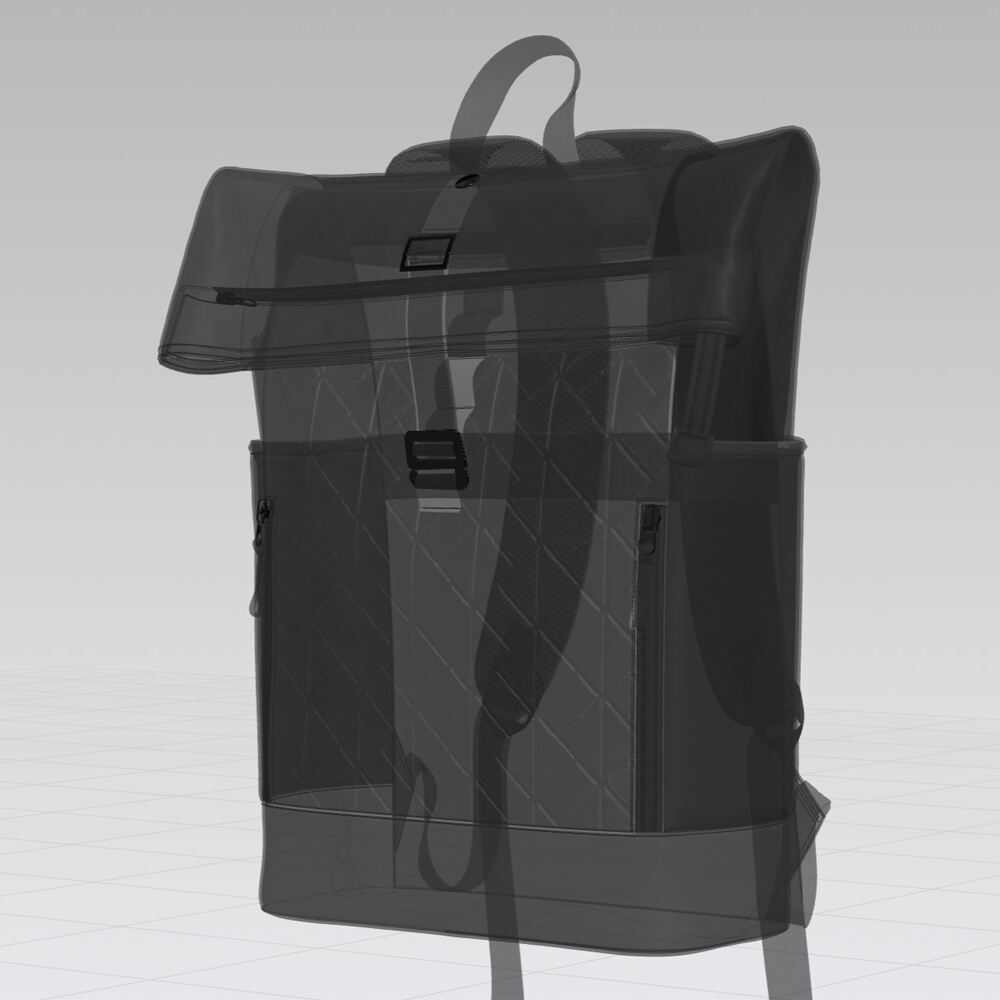
4.4 Digital Prototyping
- By 3D modeling, the margin of error is lowered
- Sampling cycle is faster
5. Tianqin Bags - A Buyer’s Pain Points Fixer
Tianqin Bags About Us mentions that Quanzhou Tianqin Bags Co., Ltd. is a profesisonal manufacturer.
5.1 Accurate Dimension Control
Tianqin employs advanced technology and maintains rigorous quality inspection to ensure that the size and specification are consistent with US and EU standards.
5.2 Strong Customization (OEM/ODM)
- From concept to end-product full customization
- Dimensions tailored for diverse markets
- Branding and packaging enhancement supports
5.3 Fast Sampling with 3D Technology
- The 3D sample making technology enhances precision
- Significantly shortens the time-to-market
5.4 Large-Scale Production Capacity
- 20,000㎡ factory
- Efficient production lines
- Fast delivery timelines
5.5 Proven Global Experience
Tianqin is a global player and has been the supplier for world famous brands including Mercedes-Benz, Volkswagen and Hyundai.
6. Client Example
Situation: European Retail Brand Expansion
Issues:
- Very strict carry-on size restrictions by airlines
- The need for utmost laptop protection
- A desire for a sleek business look
Challenges:
- Supplier previously did not provide consistent sizes
- High return rate because of poor sizes
Tianqin gave:
- Backpacks specifically dimensioned for the EU airline compliance
- Durable (15.6” reinforced) laptop compartments
- Better internal layout
Results:
- 35% less return rate
- Increased customer satisfaction
- Strategical partnership after that
Besides, Tianqin’s digital work approach helped getting massive orders (up to 80,000 units) thanks to quicker and more efficient sampling.
7. Important Factors for European and American Buyers
7.1 Compliance Requirements
- REACH (EU)
- CPSIA (US)
- Material safety standards
7.2 Market Preferences
- Simple aesthetic look
- Weight matters!
- Ability to serve multiple purposes
7.3 Sustainability
- Green/conscious fabrics
- Biodegradable/recyclable packaging
7.4 Logistics Efficiency
- Compact, minimal packaging
- Optimized dimensions for shipping
8. Backpack Dimension Trends in 2026
8.1 Slim Yet High-Capacity Designs
- The most efficient space usage
- Highly sought after for business
8.2 Expandable Backpacks
- Capacity that can be adjusted
8.3 Tech-Integrated Backpacks
- USB charging ports
- Security compartments (anti-theft)
8.4 Customization as Standard
- The need of buyers for unique designs
- OEM/ODM basically a must.
9. Practical Buying Checklist
Before placing an order, B2B buyers should confirm:
- ✔ Exact measurements (H×W×D)