
 EN
EN



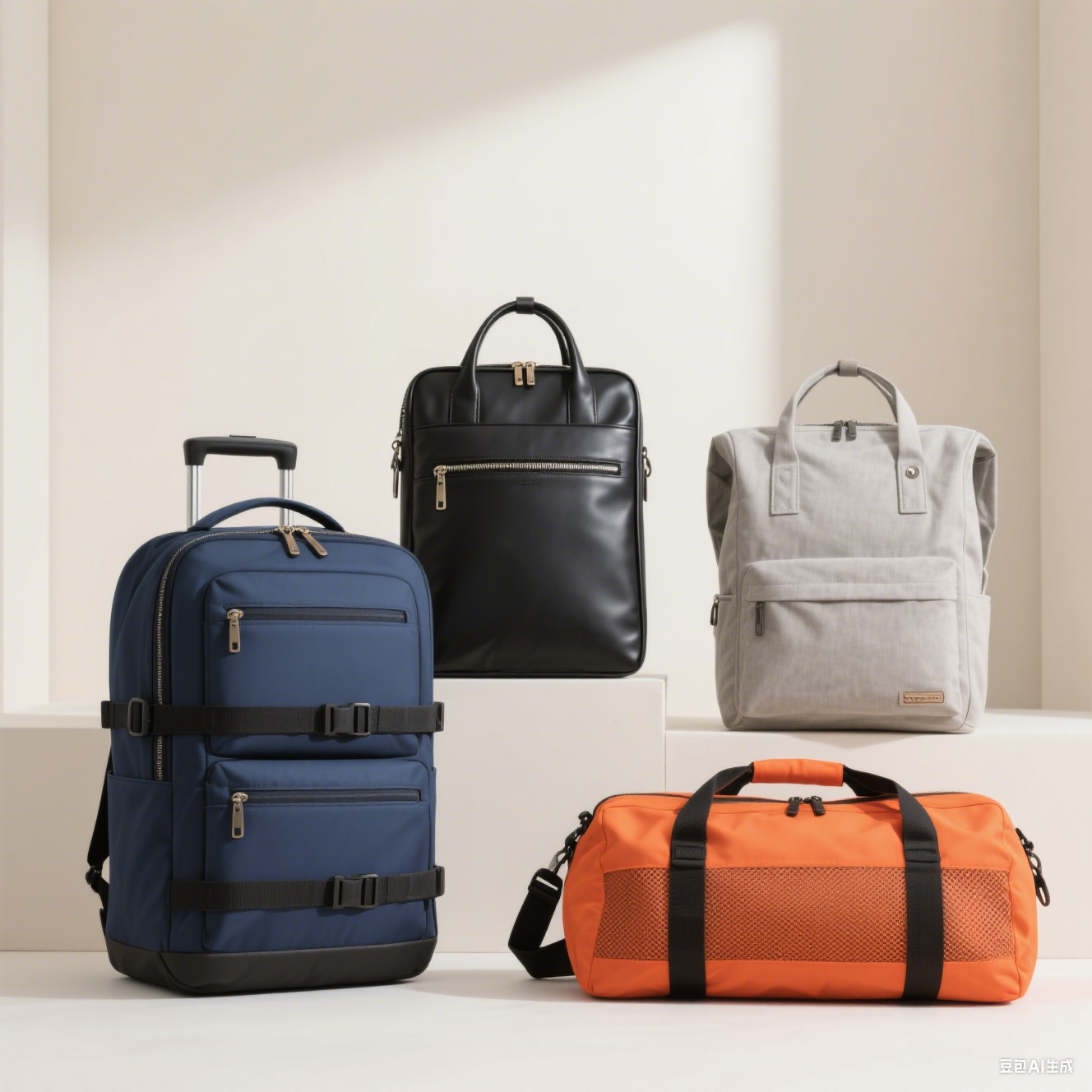
When choosing the right fabric for a bag—whether it’s a backpack, travel duffel, or laptop case—understanding the material is essential. The strength, weight, water resistance, and even price of a bag are all determined by its fabric structure. Among all materials, polyester and nylon are the most common synthetic fibers used in modern bag manufacturing. Yet, terms like “300D”, “600D”, or “1680D” can confuse many buyers. What do they mean? How do denier ratings, weave patterns, and coatings affect the fabric’s function? Let’s break it all down.
1. Material Comparison: Polyester vs Nylon
Polyester and nylon might look similar, but they differ in chemical composition and performance. Both are man-made fibers derived from petrochemicals, but their internal structures lead to unique characteristics.
Polyester Fabric
Polyester is known for its excellent color retention, UV resistance, and affordability. It doesn’t fade easily under sunlight, making it ideal for outdoor bags, shopping totes, or promotional backpacks. Polyester is also less water-absorbent than nylon, meaning it dries quickly after getting wet. It’s stiffer in texture, which helps bags maintain their shape and structure.
Nylon Fabric
Nylon, on the other hand, is valued for its exceptional strength, flexibility, and abrasion resistance. It was first developed as a silk substitute, and it remains one of the toughest synthetic fibers available. Nylon fibers can stretch without breaking, providing durability for heavy-duty bags, tactical backpacks, and luggage. However, nylon tends to absorb more water and may take longer to dry. It’s also more sensitive to UV light, which can lead to color fading over time.
Summary of
| Property | Polyester | Nylon |
|---|---|---|
| Strength | Moder | Very High |
| Water Absorpti | Low | Moderat |
| UV Resist | Excell | Poorer |
| E | Lower | Higher |
| Cost | Lowe | Higher |
| Drying S | Fast | S |
| Te | Sli | S |
For example, a polyest might be used nylon 1680D ballistic fabric would be chos
2. Understanding Denier (D): Thickness, Strength, and Application
The letter "D" in 300D, 600D, or 1680D is pointing to denier which is a unit that represents the thickness or the fineness of the yarn fibers. According to the definition, one denier is the mass in grams of 9,000 meters of a single strand of the fiber. Consequently, the denier is inversely proportional to the fabric's thickness, weight, and strength.
Comparing Common Denier Levels
300D Fabric
Light and soft, ideal for small handbags or packing cubes.Moderate strength with good flexibility.Weight-saving products, such as bicycle bags or inner linings, are made of these materials.
Light and soft, ideal for small handbags or packing cubes.
Moderate strength with good flexibility.
Weight-saving products, such as bicycle bags or inner linings, are made of these materials.
420D Fabric
Slightly heavier with a better tear resistance.Typically used for medium-range backpacks, camera bags, or travel organizers.Provides a compromise between weight and durability.
Slightly heavier with a better tear resistance.
Typically used for medium-range backpacks, camera bags, or travel organizers.
Provides a compromise between weight and durability.
600D Fabric
The most popular for everyday bags.
Strong enough for daily use, affordable, and versatile.
Common in school bags, casual backpacks, and promotional totes.
900D Fabric
Noticeably thicker and more durable.
Used in outdoor or tactical gear that faces frequent abrasion.
Offers long-lasting performance with moderate flexibility.
1680D Fabric
Extremely tough, dense, and abrasion-resistant.
Most likely fabricated from ballistic nylon.
Perfect for professional equipment cases, military-grade packs, and heavy-duty luggage.
In brief:A higher denier number is generally indicative of more strength, more weight, and more durability, but sometimes less flexibility and higher price. The right denier is determined by the use of the product - for example, you wouldn't make a lightweight daypack out of 1680D fabric, but it would be perfect for a rugged suitcase.
3. Weaving Patterns: Plain, Twill, and Ripstop
What a fabric looks like and feels are the things that get decided by the threads being woven during the production process. Not only the look of the fabric is changed but also its strength and tearing resistance get changed.
Plain Weave
The most fundamental structure, whereby the threads go over and under each other alternately.
Generates a smooth, even surface.
The majority of 300D and 600D polyester Oxford fabrics are plain-weave.
Is cheap and can be utilized for general-purpose bags.
Twill Weave
The diagonal rib pattern is formed by shifting each row of threads one position to the side.
Improves fabric's flexibility and abrasion resistance.
Durability and good looks being the most important factors, it is most commonly used in luxurious products.
Cleaning gets easier, and dirt is less visible.
Ripstop Weave
A mesh-like design with the reinforced threads coming each few millimeters.
Small tears cannot get bigger because of this fabric.
Being the most essential factor, reliability, the technology is used for the production of outdoor, military, and sports bags.
Extremely light, and at the same time, very resistant to tearing.
Example:Nylon ripstop 420D is lighter than a regular 600D polyester plain weave but is more tear-resistant. That is why ripstop nylon is the most common material in backpacks for hiking and tents as it combines low weight with high strength.
4. Surface Coatings: Function and Feel
Just raw woven fabric is not entirely safe. To elevate the performance, the materials that are used for bags get surface treatments or coatings that change waterproofing, texture, and durability.
(1) Water-Repellent (DWR) Coating
An extremely thin and invisible layer that enables water to form beads and that makes water roll off the surface. The layer is frequently used for outdoor bags, although it is not entirely waterproof. After a while, the DWR may become worn-out, but the sprays can be used to re-treat it.
(2)PU (Polyurethane) Coating
The inner side of the fabric is covered with a thin film that imparts waterproofing and the fabric retains its shape. The PU-coated fabrics are still soft and foldable. Most backpacks and school bags are made of PU-coated polyester or nylon.
(3) PVC (Polyvinyl Chloride) Coating
Is a more substantial and less flexible type of cover that provides high waterproof performance and a shiny surface. The PVC materials are heavier; however, they are very durable, and thus, are the perfect choice for tool bags, motorcycle bags, and waterproof duffels.
(4) TPU (Thermoplastic Polyurethane) Lamination
The main features of TPU covers are flexibility and elasticiy. They are more environmentally friendly, less abrasive, and less susceptible to hydrolysis than PVC. The TPU-covered materials have a nice finish and are mainly used for the production of comfortable and durable outdoor products and sports equipment.
| Coating Type | Waterproof | Flexibility | Typical Use |
|---|---|---|---|
| DWR | Light | Very Soft | Daypacks, jackets |
| PU | Moderate | Flexible | Backpacks, tote bags |
| PVC | High | Stiff | Tool bags, waterproof duffels |
| TPU | High | Flexible & Durable | Sports bags, premium backpacks |
Example:A 600D polyester fabric with a PU coating is good to use for a school backpack. On the other hand, a 900D polyester with a PVC coating would be the right choice for a motorbike tail bag or outdoor gear where complete waterproofing is a must.
5. Matching Denier, Weave, and Coating to Real-World Use
The choice of fabric is not only a question of its strength -- it is a matter of balancing. Each combination of denier, weave, and coating has its own specific use.
Lightweight Everyday Bags (300D–420D, Plain Weave, PU or DWR)
Office backpacks or casual tote bags made of 300D–420D polyester or nylon with PU coating would be a good pick. It is light in weight, inexpensive, and provides a basic level of water resistance. It is just the right thing for commuting or traveling when the business of low weight comes into play.
Outdoor Backpacks (420D–600D, Ripstop or Twill, PU/TPU)
The backpacks for hiking or camping have to be made of tough and somewhat flexible materials. The 420D ripstop nylon with PU coating is a perfect item with features such as tear resistance and moderate waterproofing. The TPU ones, however, have more stamina for the longer periods in harsher weather conditions.
Travel and Luggage Bags (600D–900D, Twill, PVC)
So as to be able to endure the handling stresses and the abrasions due to the rough surfaces, a travel or luggage bag has to be made of sturdy materials. The 600D or 900D polyester with PVC coating is the answer that offers both long-term protection and an attractive semi-gloss finish.
Heavy-Duty or Tactical Gear (900D–1680D, Ballistic Weave, TPU or PVC)
The core of a military or professional tool bag is super thick, tightly woven ballistic nylon (usually 1680D). Basically, the material is made to resist cuts, tears, and impacts, while, at the same time, maintain its shape and structure. A good example of a high-end performance product with an eco-friendly waterproofing feature is the TPU-coated ballistic nylon.
6. Cost and Performance Balance
Even though nylon is generally more powerful, polyester saves a lot of money and keeps the color stable. For example, 600D polyester is still the best compromise of strength, price, and versatility for a lot of mid-range bags. When you want the highest performance and don't care much about the price—like with the premium travel gear—you go for nylon, especially the ballistic or ripstop varieties.
Coatings also contribute to the final price:
PU-coated fabrics being the most affordable ones are the ones that you will most frequently find on the market.
PVC-coated fabrics are a bit more expensive due to their more intricate processing.
TPU-laminated fabrics are of premium-quality and mostly featured in branded outdoor equipment.
While Choosing different options, producers often consider both gram weight (gsm) and denier together as these together determine the material's weight and strength-to-cost ratio.
7. Recommendations: Choosing the Right Fabric for Your Bag
Matching a fabric with the purpose of a bag is much simpler with this guide:
| Bag Type | Recommended Fabric | Coating | Key Benefits |
|---|---|---|---|
| Shopping Tote | 300D Polyester | PU | Light, affordable |
| Laptop Bag | 600D Polyester | PU | Strong, holds shape |
| Hiking Backpack | 420D Nylon Ripstop | TPU | Tear-resistant, durable |
| Tool Bag | 900D Polyester | PVC | Waterproof, rigid |
| Travel Luggage | 1680D Ballistic Nylon | TPU | Heavy-duty, premium |
| Sports Duffel | 600D Nylon | PU | Flexible, washable |
Polyester will do just fine and is visually appealing for urban lifestyle bags. In the case of a performance-oriented outdoor activity, nylon remains the best alternative because of its resistance and flexibility.
Conclusion
Deciding between polyester and nylon, or choosing which denier rating to go for, is about understanding balance—between strength and weight, cost and comfort, waterproofing and flexibility. Polyester offers the cheap, colorfast, and structurally stable solution that makes it just perfect for everyday bags. On the other hand, nylon is the one that has the advantages of being durable and elastic, and thus, can be found mostly in outdoor or professional gear.
Denier is a measure that tells how thick and tough a fabric is; however, patterns of weaving indicate how tear-resistant and flexible it will be; finally, coatings serve the purpose of waterproofing and enhancing the tactile side. The three factors when combined let you choose the best fabric for any kind of bag from lightweight travel totes to rugged tactical packs.
Simply, the best fabric is not necessarily the thickest one but the one that suits your bag's purpose the best. Knowledge of polyester, nylon and denier ratings is beneficial for both buyers and manufacturers as it helps them make more intelligent and longer-lasting choices in bag design.