EN



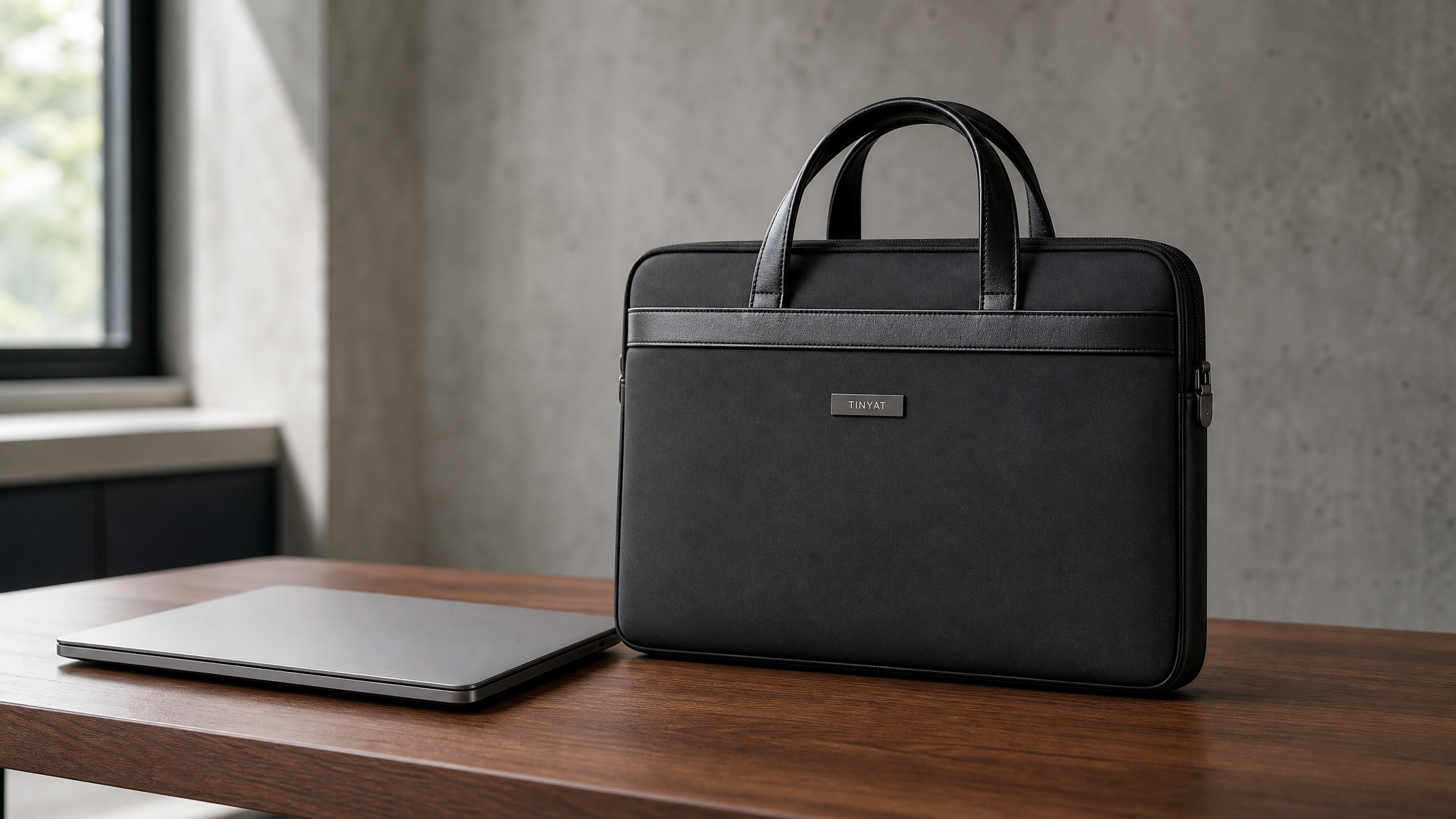
A 25 mm deep laptop bag is a hard engineering problem, because protection comes from thickness and thickness is what the design is trying to remove. Any custom 14 inch laptop bag manufacturer faces the same arithmetic: an 18 mm device in a 25 mm bag leaves 7 mm of padding split between two faces, the edges, and the bottom. Every one of those millimetres is a decision, and the discipline is spending them in the right order.
Slim Is A Protection Problem In Disguise
Buyers brief slim bags as a shape request. They are actually specifying a drop performance, whether or not they say so.
The physics is simple. A device dropped in a bag decelerates over the distance the padding allows. With 4 mm of foam on a face, the deceleration distance is short and the force on the chassis is high. With 10 mm, the same drop spreads over more than twice the distance, and the corner that would have cracked survives.
Itaque prima quaestio in brevi specificatio non est profunditas. Sed quae altitudo decidendi sacculus sustinere debet, et unde. Sacculus qui in scrinio et in vehiculo ferri debet 600 mm in durum solum cadere potest. Sacculus qui in sarcophago aut in cassetto superiori ponitur 900 mm cadere debet.
Tenuissimus stratus qui cadentem impetum sustinet
Quattuor strata in tenui structura operantur, et ordo eorum magis quam summa momenti est.
Stratum externum: polyesters 600D crassitudinis 0.62 mm, aut 900D crassitudinis 0.80 mm ubi abrasio gravior est
Stratum structurale: tabula PE vel polypropyleni crassitudinis 2 mm in duabus faciebus magnis, quae impetum per tabulam diffundit
Stratum ammortiens: EVA cellulis clausis crassitudinis 4 mm contra instrumentum, plus spuma crassitudinis 3 mm ad marginem
Stratum internum: polyesters 210D, subtiliter pilosus, cum falso fundo elevato crassitudinis 12 mm
Hic stratus exteriorem profunditatem circa 24–26 mm in 14-pollici vagina cum instrumento 18 mm intus praebet, et 900 mm cadentem impetum in concretum superat, si tabula adsit.
The board is the part buyers cut first and should cut last. Foam alone spreads force locally, and a 4 mm foam layer under a corner impact deforms fully and transfers the load. A 2 mm board spreads that load over 60 mm of panel, and the foam then has something to work against. A slim bag with 8 mm of foam and no board performs worse than one with 4 mm of foam and a 2 mm board, at the same thickness.
Where Slimming Goes Wrong First
Three failure points appear in almost every slim program we build.
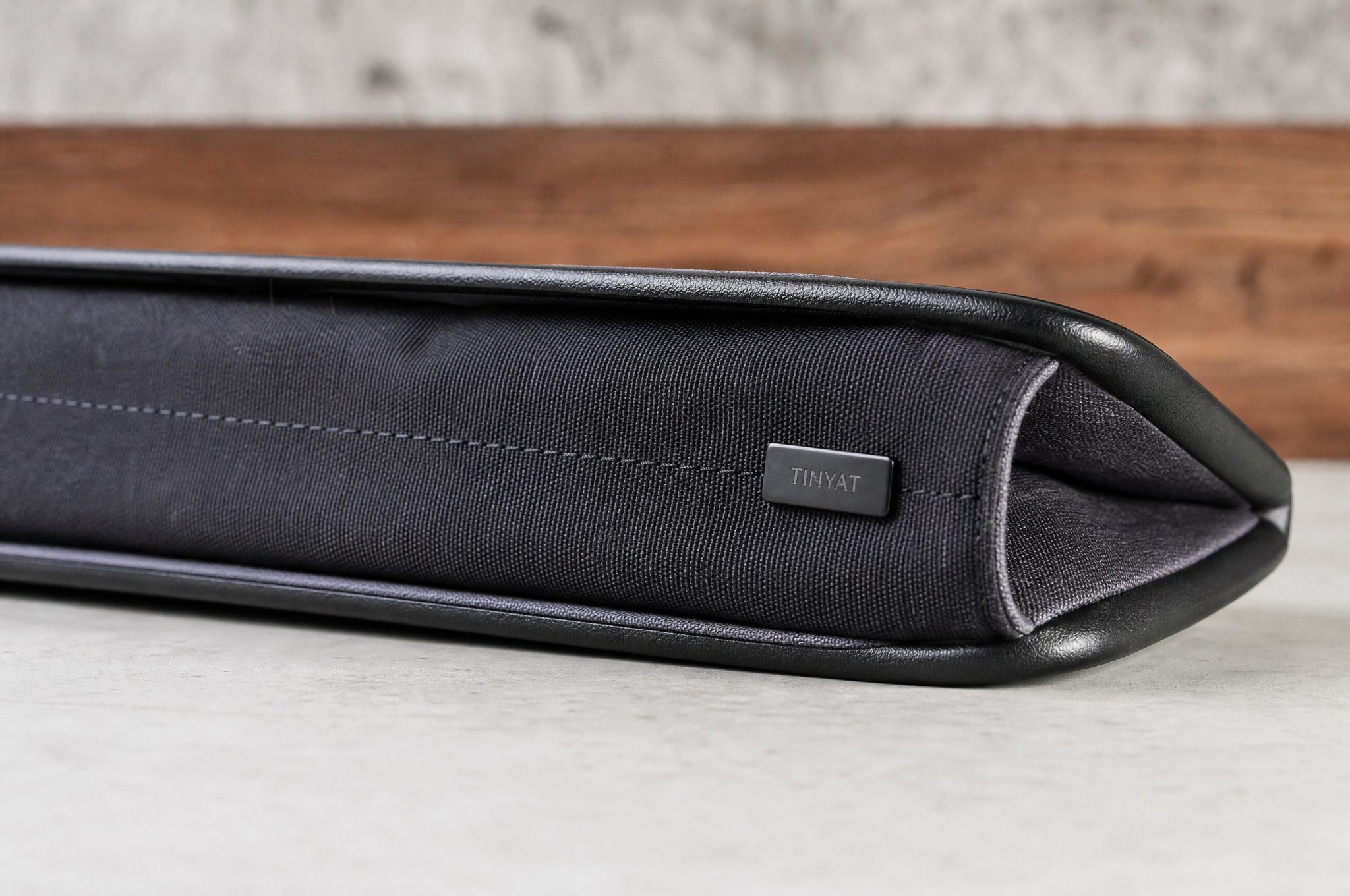
The first is the bottom edge. A slim bag sets down on its base hundreds of times, and a false bottom that is only lining thickness means the device corner meets the table through one layer. Our raised false bottom is 12 mm of foam on a board, and it costs about 0.08 USD and 10 g.
Secundus est marginis cernitur. In sacculo 25 mm profundo, cernitur prope instrumentum sedet, et cursor qui contra chassim premit eum notat. Parietem manicae 3 mm intra lineam cernitur ponimus et 2 mm laminam spumeam post cernitur addimus, quae est unica minima tutela in tenui structura.
Tertius est angulus. Instrumentum 14-pollicare, 330 per 225 mm, in sacculo cum 15 mm spatii liberi situm est, quod motum significat. Instrumentum mobile in tenui sacculo directe impetus angulares accipit; ideo manica vel aptius adhaeret vel fasciculum habet. Aptiorem adhaesionem praeferebamus, cum 12 mm spatii liberi totalis, quia fasciculus retentivus crassitudinem et claviculam addit quam utens tollit.
Quid Fabricator Sacculorum Personalium Pro Laptop 14-Pollicarum Experitur
Programmata tenuia certum experimentorum ordinem accipiunt, quia experimenta cadentis communia nimis indulgent.
Experimentum cadentis: 900 mm in cementum, sex facies, simulacrum instrumenti 2,2 kg intus
Experimentum basium: sacculus verticaliter tenetur et in basi acie cadit, ter
Compression: onus distributum 30 kg per 24 horas, inspiciens deformationem permanentem
Zip abrasion: 4,000 cycles on the main opening with the device inside
Corner foam check: 3 mm minimum remaining thickness after 500 handling cycles
Depth verification: external depth measured at three points, 26 mm maximum
The compression test is the one that surprises buyers. A slim bag loaded in a suitcase or under a stack in a warehouse takes a sustained load, and EVA recovers while cheap polyurethane foam does not. We specify closed-cell EVA precisely because it returns to thickness, and we reject foam that shows more than 8 percent permanent set.
The trade-off in a slim build
A 14 inch bag at 26 mm external depth holds a device, a charger, a phone, and about 20 sheets of paper. It does not hold a folder of 40 sheets, a lunch, or a water bottle, and no amount of layout planning changes that. A buyer who needs the capacity should look at a slim 15.6 inch brief rather than a 14 inch bag with an extra pocket.
We are also honest about price. The board, the EVA, the false bottom, and the slower assembly on a slim bag put a 14 inch brief at roughly 5.80 to 6.40 USD FOB at 1,000 units, which is above what some buyers expect for a smaller bag. The material cost is lower than a 17 inch build and the labour cost is not, because thin panels are harder to sew straight.
What the buyer sees when a slim sample is handled
From your side, the sample feels light and rigid, which reads as quality. Set it on a table and press the face with a thumb: if the panel deflects more than 3 mm, there is no board and the drop protection is nominal, whatever the foam specification says. Then put a device in and shake the bag gently. Movement of more than 5 mm at the corners means the sleeve is a pocket.
A Slim Build Sheet
Send these values with the brief.
Device: 330 by 225 by 18 mm, 14 inch class
External depth target: 26 mm maximum
Sleeve internal: 345 by 240 by 25 mm
Shell: 600D polyester at 0.62 mm
Tabula structurale: 2 mm PE in utraque facie magna
Cuscinus: 4 mm EVA cellula clausa plus 3 mm spuma marginis
Falsum fundum: 12 mm elevatum, spuma super tabulam
Margines cernuendi: paries maniculae 3 mm intra lineam cernuendi, lamina spumosa 2 mm retro
Spatium dispositivi: 12 mm totale, nulla fascia retentionis
Norma cadentis: 900 mm, sex facies, simulacrum 2,2 kg
Compression: 30 kg per 24 horas, sub 8 percentu permanentis
Verificatio: profunditas mensurata in tribus punctis, plus deflexio pollicis sub 3 mm
Ista ultima linea est examen productionis quod quisque potest agere pollice et regula, quare in schedula ponitur.
Mitte Altitudinem Cadentis, Non Profunditatem
Dic nobis normam cadentis quam mercatus tuus exigit et instrumentum quod aptare debes, et nos tibi reddemus stratificatum qui eam adimplere potest in tenuissima profunditate quam structura permittit. Si profunditas quam vis non sufficit ad protectionem quam requiris, tibi indicabimus quae numerus mutari debeat, ne sacculus mittatur qui bene videtur sed nihil protegit.
Contact [email protected] or visit www.tianqinbag.com ad petendum exemplaria, ad obtinendum pretium fabricae, aut ad incipiendum proiectum OEM/ODM cum Quanzhou Tianqin Bags Co., Ltd. Tempus ducens ad praeparandum exemplaria est 7–15 dies operis. Septemdecim annos fabricantes saccorum in Quanzhou; exportationes ad plus quam 50 nationes; MOQ a 300 ad 500 pecia per colorationem, secundum materiam.

 Nuntii Calidi