EN



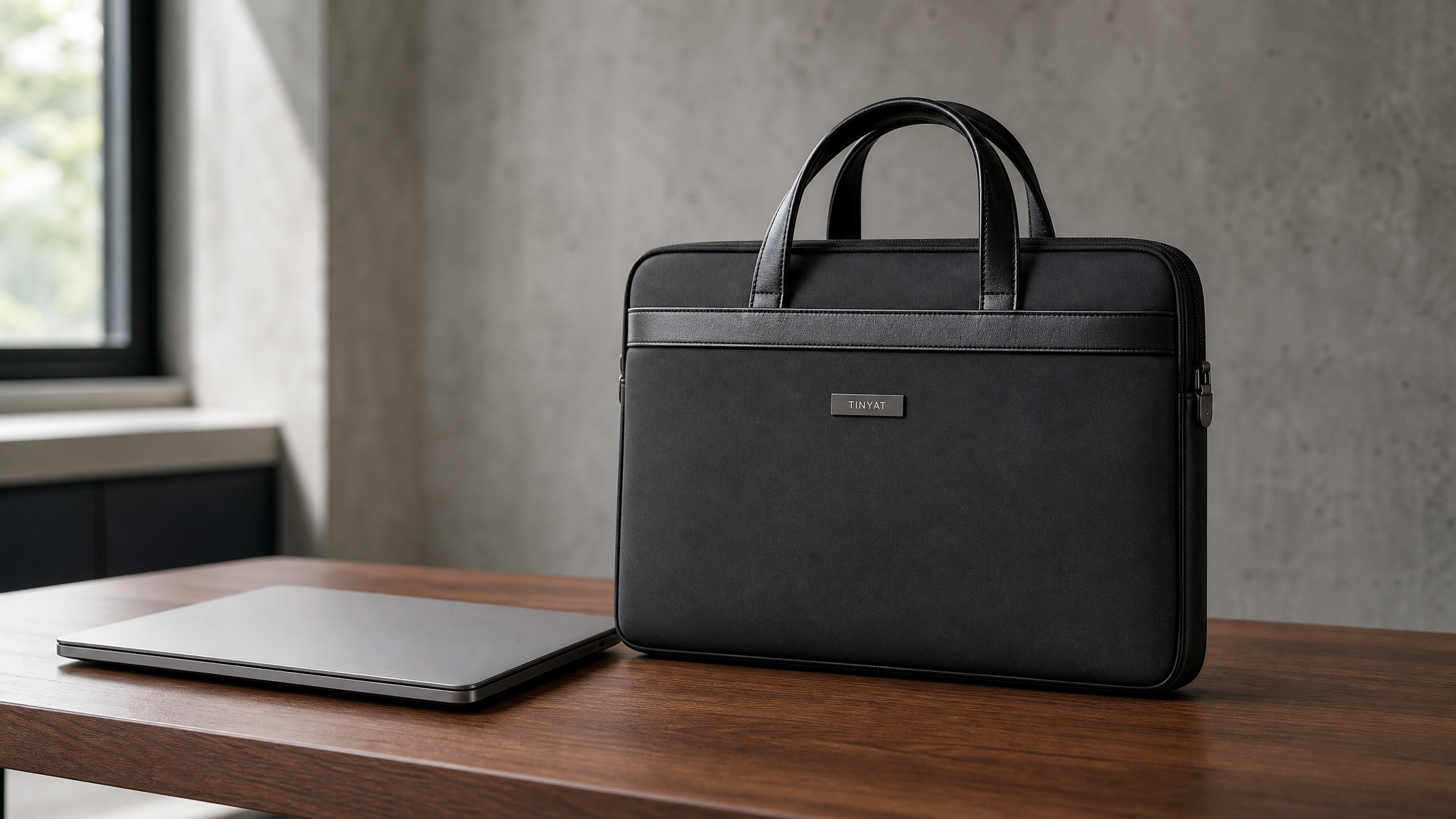
A 25 mm deep laptop bag is a hard engineering problem, because protection comes from thickness and thickness is what the design is trying to remove. Any custom 14 inch laptop bag manufacturer faces the same arithmetic: an 18 mm device in a 25 mm bag leaves 7 mm of padding split between two faces, the edges, and the bottom. Every one of those millimetres is a decision, and the discipline is spending them in the right order.
Slim Is A Protection Problem In Disguise
Buyers brief slim bags as a shape request. They are actually specifying a drop performance, whether or not they say so.
The physics is simple. A device dropped in a bag decelerates over the distance the padding allows. With 4 mm of foam on a face, the deceleration distance is short and the force on the chassis is high. With 10 mm, the same drop spreads over more than twice the distance, and the corner that would have cracked survives.
So the first question on a slim brief is not depth. It is what drop height the bag must survive, and from where. A bag that lives on a desk and a train needs 600 mm onto a hard floor. A bag that goes into a rucksack or an overhead bin needs 900 mm.
The Thinnest Stack That Survives A Drop
Four layers do the work in a slim build, and the order matters more than the total.
Outer shell: 600D polyester at 0.62 mm, or a 900D at 0.80 mm where abrasion is heavier
Structural layer: 2 mm PE or polypropylene board on the two large faces, which spreads impact across the panel
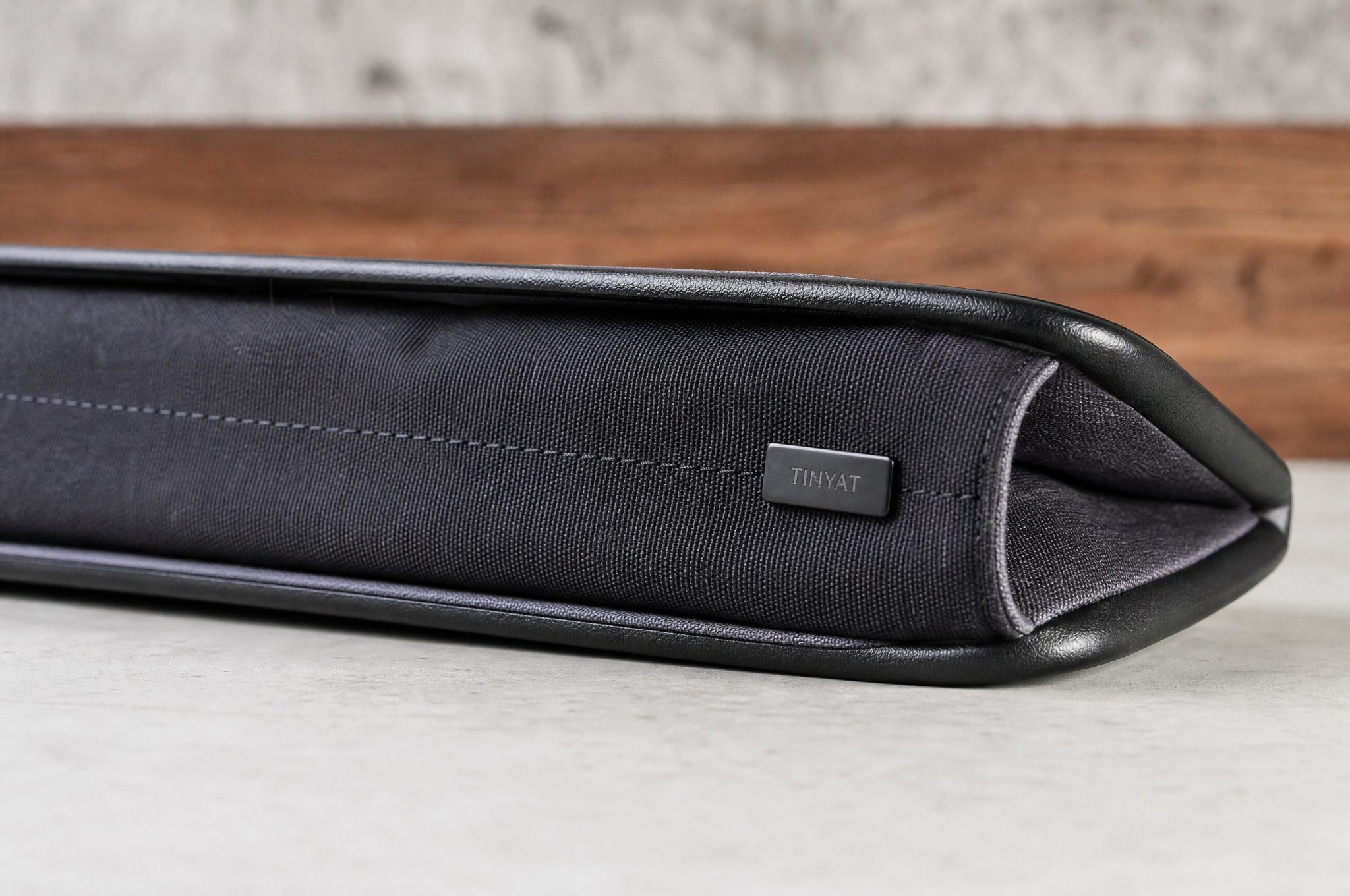
Cushion layer: 4 mm closed-cell EVA against the device, plus 3 mm foam at the edges
Inner lining: 210D polyester, brushed, with a raised false bottom of 12 mm
That stack lands around 24 to 26 mm external depth on a 14 inch sleeve with an 18 mm device inside, and it passes a 900 mm drop onto concrete when the board is present.
The board is the part buyers cut first and should cut last. Foam alone spreads force locally, and a 4 mm foam layer under a corner impact deforms fully and transfers the load. A 2 mm board spreads that load over 60 mm of panel, and the foam then has something to work against. A slim bag with 8 mm of foam and no board performs worse than one with 4 mm of foam and a 2 mm board, at the same thickness.
Where Slimming Goes Wrong First
Three failure points appear in almost every slim program we build.
The first is the bottom edge. A slim bag sets down on its base hundreds of times, and a false bottom that is only lining thickness means the device corner meets the table through one layer. Our raised false bottom is 12 mm of foam on a board, and it costs about 0.08 USD and 10 g.
The second is the zip margin. On a 25 mm deep bag the zip sits close to the device, and a slider pressed against a chassis marks it. We set the sleeve wall 3 mm inside the zip line and add a 2 mm foam flap behind the zip, which is the single cheapest protection in a slim build.
The third is the corner. A 14 inch device at 330 by 225 mm sits in a bag with 15 mm of clearance, which means it moves. A moving device in a slim bag takes corner impacts directly, so the sleeve needs either a closer fit or a strap. We prefer the closer fit, at 12 mm total clearance, because a retention strap adds thickness and a buckle that the user removes.
What A Custom 14 Inch Laptop Bag Manufacturer Tests
Slim programs get a specific test set because standard drop tests are too forgiving.
Drop test: 900 mm onto concrete, six faces, with a 2.2 kg device dummy inside
Base drop: bag held vertically and dropped on the base edge, three times
Compression: 30 kg distributed load for 24 hours, checking for permanent set
Zip abrasion: 4,000 cycles on the main opening with the device inside
Corner foam check: 3 mm minimum remaining thickness after 500 handling cycles
Depth verification: external depth measured at three points, 26 mm maximum
The compression test is the one that surprises buyers. A slim bag loaded in a suitcase or under a stack in a warehouse takes a sustained load, and EVA recovers while cheap polyurethane foam does not. We specify closed-cell EVA precisely because it returns to thickness, and we reject foam that shows more than 8 percent permanent set.
The trade-off in a slim build
A 14 inch bag at 26 mm external depth holds a device, a charger, a phone, and about 20 sheets of paper. It does not hold a folder of 40 sheets, a lunch, or a water bottle, and no amount of layout planning changes that. A buyer who needs the capacity should look at a slim 15.6 inch brief rather than a 14 inch bag with an extra pocket.
We are also honest about price. The board, the EVA, the false bottom, and the slower assembly on a slim bag put a 14 inch brief at roughly 5.80 to 6.40 USD FOB at 1,000 units, which is above what some buyers expect for a smaller bag. The material cost is lower than a 17 inch build and the labour cost is not, because thin panels are harder to sew straight.
What the buyer sees when a slim sample is handled
From your side, the sample feels light and rigid, which reads as quality. Set it on a table and press the face with a thumb: if the panel deflects more than 3 mm, there is no board and the drop protection is nominal, whatever the foam specification says. Then put a device in and shake the bag gently. Movement of more than 5 mm at the corners means the sleeve is a pocket.
A Slim Build Sheet
Send these values with the brief.
Device: 330 by 225 by 18 mm, 14 inch class
External depth target: 26 mm maximum
Sleeve internal: 345 by 240 by 25 mm
Shell: 600D polyester at 0.62 mm
Structural board: 2 mm PE on both large faces
Cushion: 4 mm closed-cell EVA plus 3 mm edge foam
False bottom: 12 mm raised, foam on board
Zip margin: sleeve wall 3 mm inside the zip line, 2 mm foam flap behind
Device clearance: 12 mm total, no retention strap
Drop standard: 900 mm, six faces, 2.2 kg dummy
Compression: 30 kg for 24 hours, under 8 percent set
Verification: depth measured at three points, plus thumb deflection under 3 mm
That last line is a production check anyone can run with a thumb and a ruler, which is why it is on the sheet.
Send The Drop Height, Not The Depth
Tell us the drop standard your market expects and the device you need to fit, and we will return a stack that meets it at the thinnest depth the construction allows. If the depth you want cannot carry the protection you need, we will tell you which number has to move rather than shipping a bag that looks right and protects nothing.
Contact [email protected] or visit www.tianqinbag.com to request samples, get a factory quote, or start an OEM/ODM project with Quanzhou Tianqin Bags Co., Ltd. Sampling lead time is 7-15 working days. Seventeen years of bag manufacturing in Quanzhou, exports to more than 50 countries, MOQ from 300 to 500 pcs per colourway depending on material.

 Hot News