
 EN



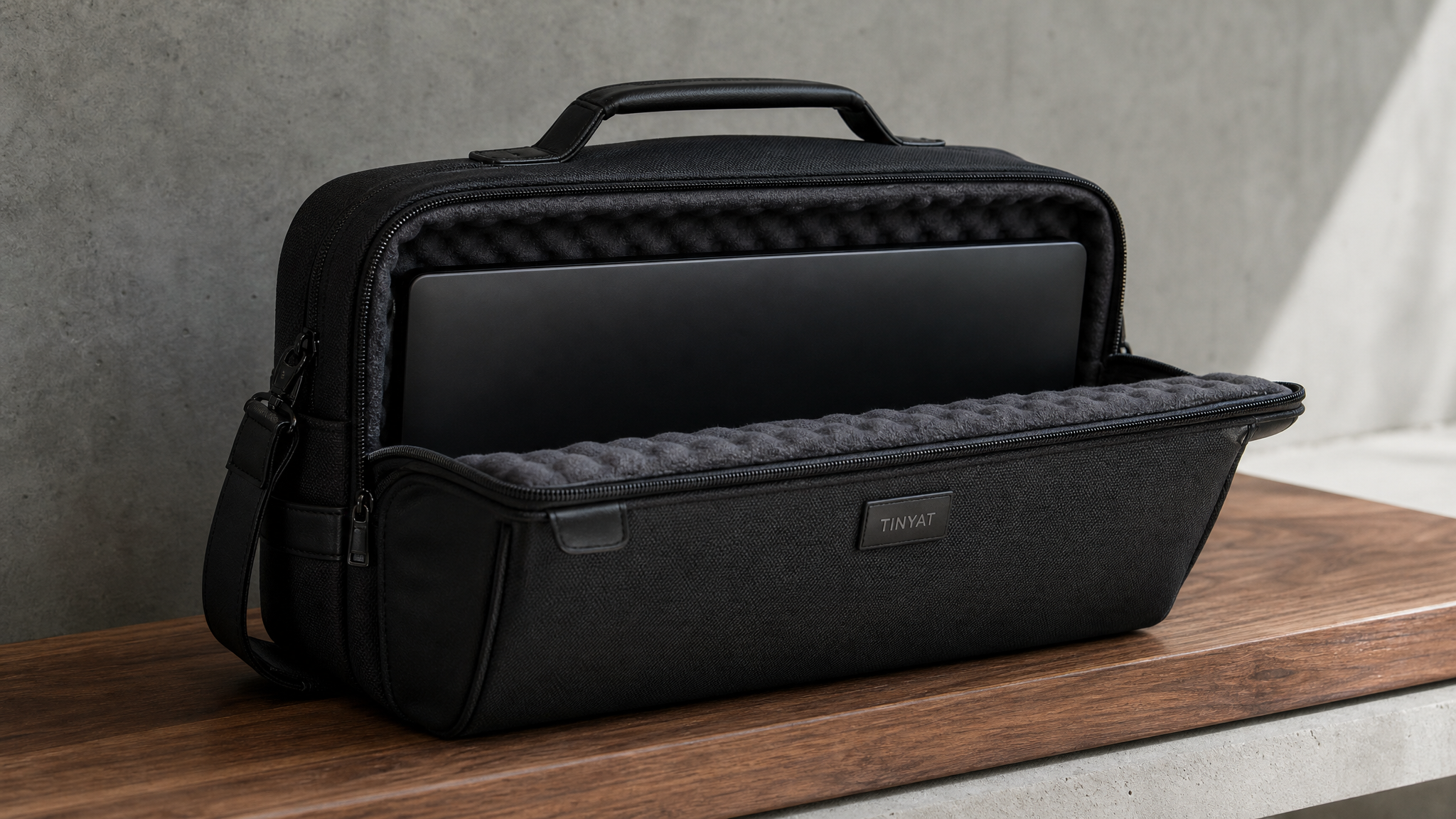 A 17 inch workstation with its brick is a 4 kg load, and a bag carrying it is held by two small areas: a handle grip and a strap attachment. Any custom 17 inch laptop bag manufacturer is designing a structure rather than choosing a fabric. The chain runs from the device sleeve through the base panel, up the side walls, and into the handle patch, and it either holds under load or it fails at the point where the chain is broken.
The Handle Is The Structure
A handle looks like a trim item and behaves like a structural member. On a 4 kg bag it carries the full load every time the bag is lifted, and on a bag with a 3.6 kg device it also carries the bending moment of a body that is 415 mm long.
Three things make a handle survive that. The first is a webbing run that continues down the front and back panels past the handle patch, rather than stopping at the patch. The second is a 25 mm bar-tack block on each end, plus a second bar-tack where the webbing meets the panel. The third is a grip that spreads the load over at least 140 mm, because a short grip concentrates pressure and the user shifts to one finger.
Our standard heavy bag handle runs 200 mm of webbing down the panel on each side, under a 2 mm board, with a 140 mm grip wrap and four bar-tacks. It adds about 18 g and 0.09 USD. The version without the panel run looks identical and fails at the patch seam.
Bottom Panels And Corner Loads
The base of a 17 inch bag takes more abuse than any other surface. It is set down on concrete, dragged across a floor, and dropped from car seat height.
Base panel: double layer, 1680D over 600D, or a single 1680D with a 1.8 mm PE board insert
Corner reinforcement: a bar-tack or a riveted corner patch at each of the four base corners
Base seam: bound rather than folded, and stitched at 10 to 12 stitches per inch
Board position: sandwiched between two layers, never floating loose in a pocket
Feet: optional, 6 mm, and they raise the base by enough to stop the fabric abrading
The unglamorous item here is the board position. A loose board that can slide inside its pocket ends up 20 mm off centre after a month, and the bag then leans. We stitch the board pocket closed on all four sides, which costs 20 seconds of labour and stops the movement.
Base seam construction is the second. A folded base seam on a heavy bag concentrates load on a single stitch line. A bound seam distributes it across two lines plus the binding, and on our 400 N base burst gate the bound version is the one that passes.
Strap Attachments And The D-Ring Reality
A 17 inch bag is often carried on a shoulder strap, and the attachment is where the load concentrates hardest.
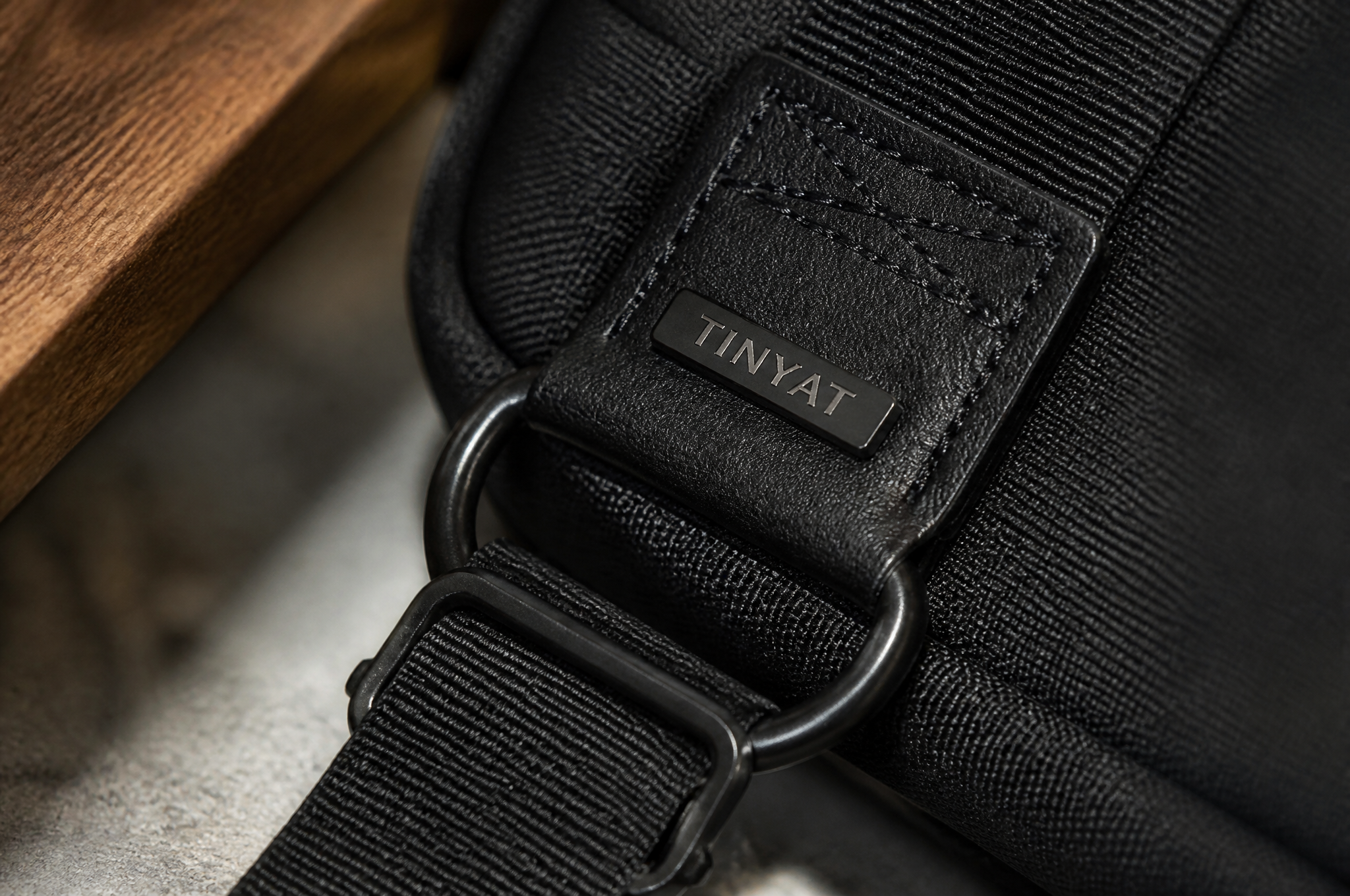
D-ring: 4 mm wire, zinc alloy, with a welded joint rather than a butted one
Attachment: a webbing loop through a bar-tacked tab, not a rivet directly into the shell
Washer: 8 mm on the inside of any rivet, because a rivet into a single shell layer pulls through
Strap hardware: metal or a heavy acetal, with a 40 mm swivel that does not bind
Pad: 200 mm long, 45 mm wide, because a point load over 4 kg is uncomfortable within 20 minutes
The washer line is the cheapest fix in this article. A rivet set into one layer of 600D holds until someone lifts the bag by the strap with the bag full, and then the shell tears around the rivet head. An 8 mm washer spreads that load over about 50 square mm and costs almost nothing.
We pull test every strap attachment at 600 N for 10 seconds on the first five bags of a heavy program, and we test the swivel at 500 cycles to check for binding.
What A Custom 17 Inch Laptop Bag Manufacturer Load Tests
Static pull tests are necessary and insufficient on a heavy bag. Our test set for 17 inch programs adds these:
Handle pull: 600 N static, both ends, including bar-tacks
Strap attachment: 600 N static, plus 500 swing cycles with a 4.5 kg load
Base burst: distributed load to 400 N, checking the seam and the board pocket
Bag drop: 800 mm onto the base and each corner, with a 4 kg dummy inside
Zipper: 5,000 cycles on the main opening with the bag loaded
Panel stiffness: 15 mm maximum deflection under 4 kg on a 350 mm span
Stitch density: 10 to 12 per inch on the base and the handle run
The swing test is the one that finds attachment problems. A static pull loads the attachment in shear, while a walking swing loads it in peel and fatigue, and a tab that survives 600 N can delaminate from the shell at cycle 380.
Where heavy structure costs you
Every element above adds mass and money. A 17 inch bag built to this standard lands at 1,050 to 1,200 g empty and roughly 1.40 USD above a 15.6 inch build of the same pattern at 1,000 units. The bag is also 60 mm longer, which changes the carton and therefore the freight.
There is a price floor we state plainly: below about 8.20 USD FOB, a 17 inch bag keeps the sleeve dimension and loses the base board or the handle panel run. We will still build it, and we will recommend printing a 6 kg rated load instead of the 9 kg the customer will assume, because an honest rating protects the brand better than a structure that is not there.
What the buyer sees when a full bag is lifted
From your side, pick the sample up by the handle with a device and a brick inside and hold it for thirty seconds. The handle either stays put at the top of the bag or the panels pull inward under it. Then carry it on the strap for two minutes: a 4 kg bag on an unlined 40 mm strap makes itself known quickly. Those two checks tell you more than any statement about 1680D fabric.
A Load Bearing Sheet
Send these values with a 17 inch brief.
Device: 415 by 285 by 32 mm, 3.6 kg with battery
Power brick: 620 g, separate pocket
Rated load: 9 kg
Handle: 200 mm webbing run each side, 140 mm grip, four 25 mm bar-tacks
Handle pull gate: 600 N static
Base: double layer with 1.8 mm PE board, bound seam
Base burst gate: 400 N distributed
Corners: riveted patch each of four base corners, 8 mm washer
Strap: 45 mm webbing, 200 mm pad, welded D-ring, 600 N gate
Stitch density: 10 to 12 per inch on base and handle
Verification: 800 mm drop with 4 kg dummy, plus 500 swing cycles
That verification line is the one to insist on, and it should be photographed rather than described.
Send The Weight, Not The Screen Class
Send us the device weight, the brick weight, and the load you expect the bag to carry. We will return a structure schedule naming the board, the handle run, the base construction, and the gate for each, with the cost per unit at your quantity. If your price cannot carry the structure, you will see which element has to go and what load rating the bag can honestly claim.
Contact [email protected] or visit www.tianqinbag.com to request samples, get a factory quote, or start an OEM/ODM project with Quanzhou Tianqin Bags Co., Ltd. Sampling lead time is 7-15 working days, and heavy programs are built with the board and reinforcement specified. Seventeen years of bag manufacturing in Quanzhou, exports to more than 50 countries, SGS test reports covering REACH, CPSIA and Prop 65 on request.


 Hot News


