
 EN



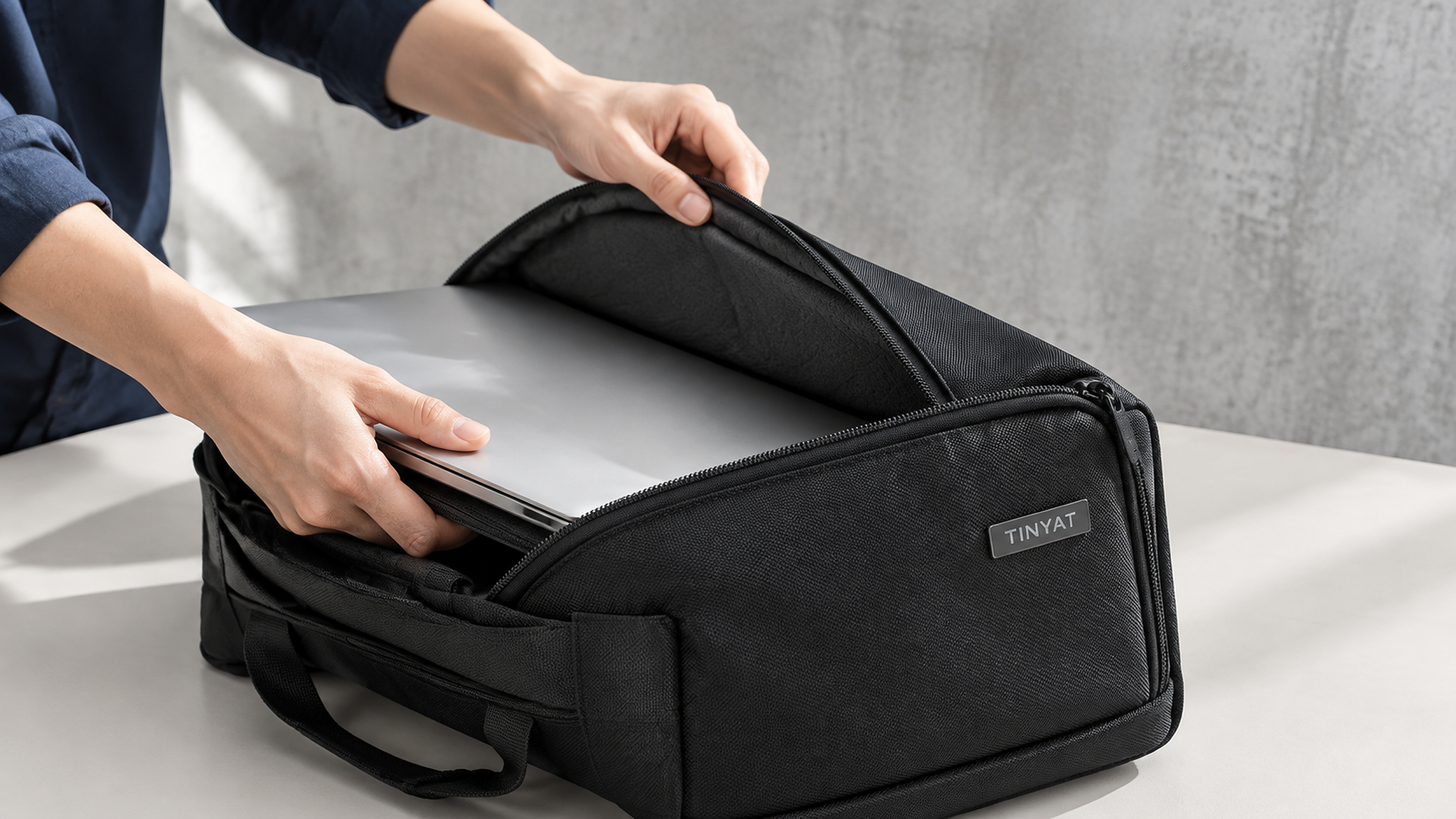 Two bags from the same design file can differ by 8 mm in the same compartment, and that difference decides whether a device goes in without a shove. The fit claim on a listing is a single number; the bag is a stack of tolerances. When you brief a custom 15.6 inch laptop bag manufacturer, the useful question is not what the internal size is, it is what the internal size holds on the smallest and largest unit in the run. That band is what a tolerance sheet records.
A Fit Claim Is A Tolerance Claim
A nominal dimension is a target. A tolerance is the range around it that the factory accepts. A sleeve specified at 400 mm internal length with a 4 mm tolerance will produce bags measuring 396 to 404 mm, and the buyer who planned clearance against 400 has half their run tighter than they assumed.
That matters because clearance is small. A typical 15.6 inch chassis measures 380 mm by 258 mm by 24 mm. Against a 396 mm opening, length clearance is 16 mm, which is comfortable. Against a bag that came in at the low end of a wider tolerance band, clearance is 8 mm, and a device with a rubber bumper will resist entry.
The fix is not a bigger bag. It is a narrower tolerance on the two dimensions that matter, and a measured report rather than a drawing.
Depth is the third dimension and the one buyers leave undefined. A 15.6 inch chassis is 24 mm thick, and a sleeve padded at 8 mm per side plus a lining lands at 36 mm internal. As foam compresses under load, a bag measured at 36 mm empty behaves like 33 mm with a device inside, which is still enough and only just. Specify the depth as a tested value with the device in place, not as a flat measurement.
Where The Millimetres Come From
Tolerance accumulates through four steps, and each one contributes a known amount.
Cutting is the first. Our automated table holds 2 mm on cut parts. A factory cutting by hand or with a dull blade runs wider, and a curved panel drifts more than a straight one.
Sewing is the second, and it is the largest contributor. Seam allowance take-up varies with the operator and the fabric, and we hold 5 mm on a sewn compartment. On a sleeve with four seams, the error can arrive on the same side twice or cancel out, which is why measuring one bag tells you almost nothing.
Material behaviour is the third. A coated 600D shell relaxes after cutting, and a 210D lining can shrink about 1.5 percent through the fusing and pressing steps. On a 400 mm panel that is 6 mm of movement, and it lands in the sleeve because the lining is the inner wall.
Foam compression is the fourth. A sleeve padded at 8 mm per side compresses to 6 to 7 mm under a loaded device, which means the measured internal depth when empty is not the depth the device experiences.
How To Measure A Sewn Compartment
Most fit disputes come from measuring the wrong thing, in the wrong place, on the wrong bag.
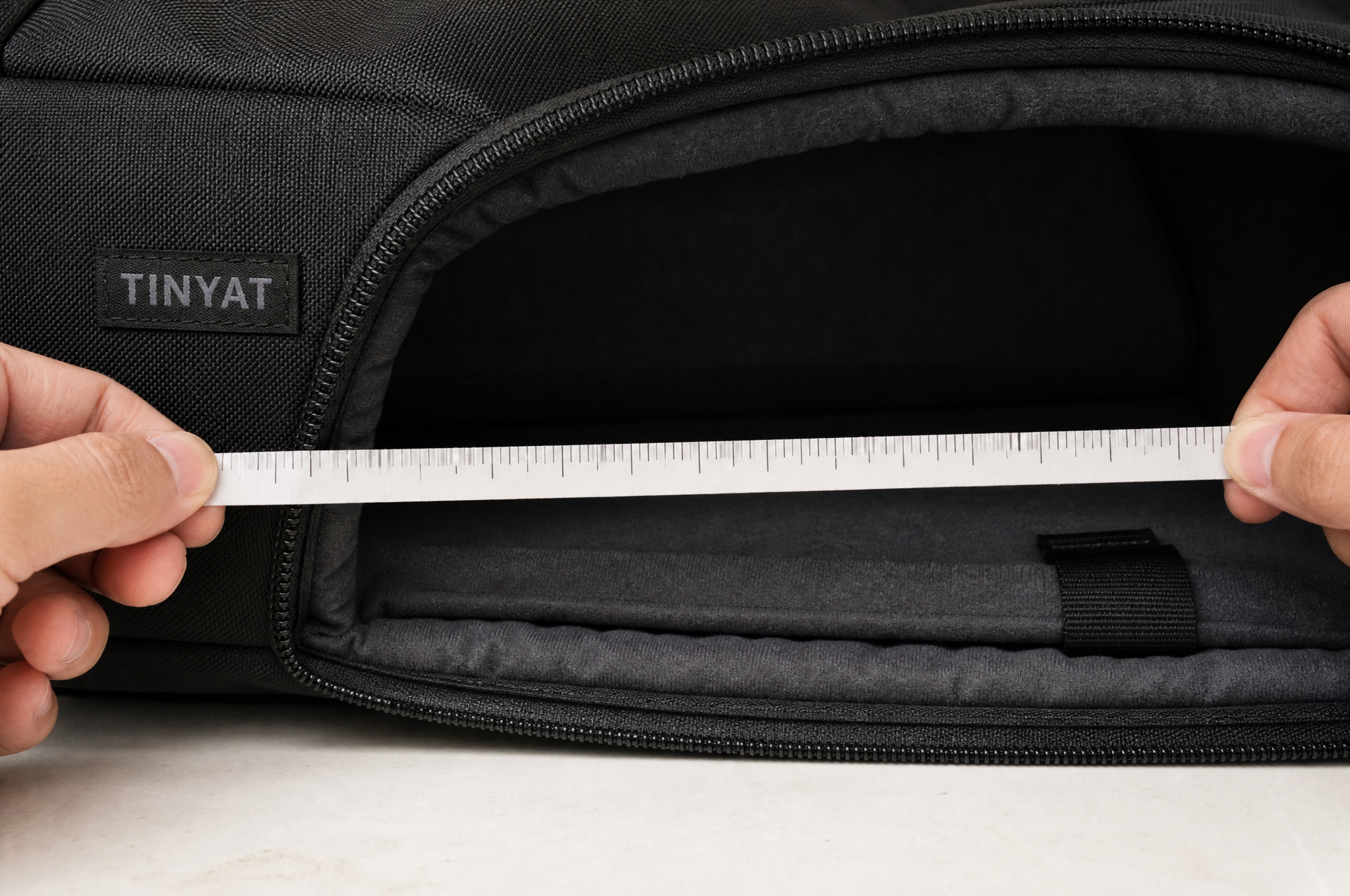
Measure inside the seam line, not between the outer panel edges
Measure at three points along the length and take the lowest value
Measure with the sleeve empty and unzipped, then again with a device inside
Measure depth at the base and at 100 mm up, because a sleeve tapers at the corner
Measure the smallest bag in the batch, not the sample that was approved
Record the device used for the check, with its bumper or shell noted
A 4 mm difference between the top and base of a sleeve is normal and harmless. A 4 mm difference between two bags from the same lot is a process problem, and it usually traces to a change of operator at the sleeve station rather than to the pattern.
What A Custom 15.6 Inch Laptop Bag Manufacturer Holds
On 15.6 inch programs we hold a tighter band than the general gate, because the market is the least forgiving on fit.
Cut tolerance: plus or minus 2 mm on sleeve panels
Sewn tolerance: plus or minus 3 mm on sleeve length and width, against a general 5 mm
Internal length: 400 mm nominal, accepting 397 to 403 mm
Internal width: 272 mm nominal, accepting 269 to 275 mm
Internal depth: 36 mm nominal with 8 mm foam per side
Lining shrinkage allowance: 1.5 percent added at cutting
Verification: three bags measured per 500 units, recorded on the run card
The verification line is the difference between a claim and a control. We measure three finished bags per 500 units with a steel rule and log the values, because a batch that drifts is visible in three measurements long before it becomes a return.
Why the tighter band costs money
A 3 mm sewn tolerance instead of 5 mm means slower work at the sleeve station, a template at the machine rather than a tape measure, and more re-checks. On a 1,000 unit order that is roughly 0.06 USD per bag and a slightly longer line time.
There is a limit to how far this goes. Below a 3 mm band, the seam allowance take-up on a coated fabric becomes the dominant variable and holding it requires a different construction, such as a bound sleeve seam, which adds cost and a visible edge inside the bag. We will not promise a 2 mm sewn tolerance on a standard sleeve, because it would not hold across a production run and a promise that fails in month two is worse than a wider band stated honestly.
What the buyer sees when the devices arrive
From your side, the test is the largest laptop in your customer base, not the one on the tech pack. A bag that measures 400 mm internally will still feel tight to a customer whose device has a snap-on shell, and the review will say the bag does not fit rather than that the shell does not fit. Publish the internal dimension and the tolerance band, and the customer can measure their own device against it.
A Tolerance Sheet
Put these values in the tech pack and in the supplier's measurement report.
Device reference: 380 by 258 by 24 mm, largest in range
Internal length: 400 mm nominal, band 397 to 403 mm
Internal width: 272 mm nominal, band 269 to 275 mm
Internal depth: 36 mm nominal, 8 mm EVA per side
Cut tolerance: plus or minus 2 mm
Sewn tolerance: plus or minus 3 mm on the sleeve
Measurement points: three per dimension, lowest value reported
Sample size: three bags per 500 units, logged on the run card
Device dummy: used at the line, with a bumper fitted
Reporting: values to the buyer with the inspection report
The device dummy line is the practical control. A line with a dummy matching the largest device catches a tight sleeve before packing rather than after delivery.
Send A Device, Ask For The Measurement Report
Send us the device you need to fit, including any shell or bumper, plus the tolerance band you can accept. We will confirm whether that band is realistic for the construction and the price, and we will send measured values from the first three bags of the run rather than a drawing.
Contact [email protected] or visit www.tianqinbag.com to request samples, get a factory quote, or start an OEM/ODM project with Quanzhou Tianqin Bags Co., Ltd. Sampling lead time is 7-15 working days, and samples can be built around your own device. Seventeen years of bag manufacturing in Quanzhou, exports to more than 50 countries, SGS test reports covering REACH, CPSIA and Prop 65 on request.


 Hot News


