 ×
×
Laptop backpack specifications typically list maximum load capacity (what the bag can hold) but rarely address the ergonomic reality of carrying that load. A bag with a 15 kg rated capacity, filled to 80% capacity with a laptop, accessories, and documents, is a bag that many users will not carry comfortably for more than 20 minutes of walking.
The useful weight range for a daily carry laptop backpack — where carry comfort and load capacity are both served — is approximately 4–8 kg total loaded weight. Above 8 kg, the ergonomic demands of daily carry exceed what shoulder strap designs in standard laptop backpacks can distribute comfortably without a hip belt or waist strap.
The total loaded weight of a laptop bag has two components: the contents (not controlled by the bag specification) and the empty bag weight (controlled entirely by the specification). Reducing empty bag weight directly increases the useful load the user can carry before hitting the ergonomic limit.
A well-specified 25L commuter bag weighs 700–900g empty. A poorly specified bag at the same volume weighs 1,200–1,500g empty because of heavy hardware, thick panels, and oversized construction.
The 300–600 g difference in empty weight is the difference between a bag that feels lightweight at full daily load and one that feels burdensome before anything is put in it.
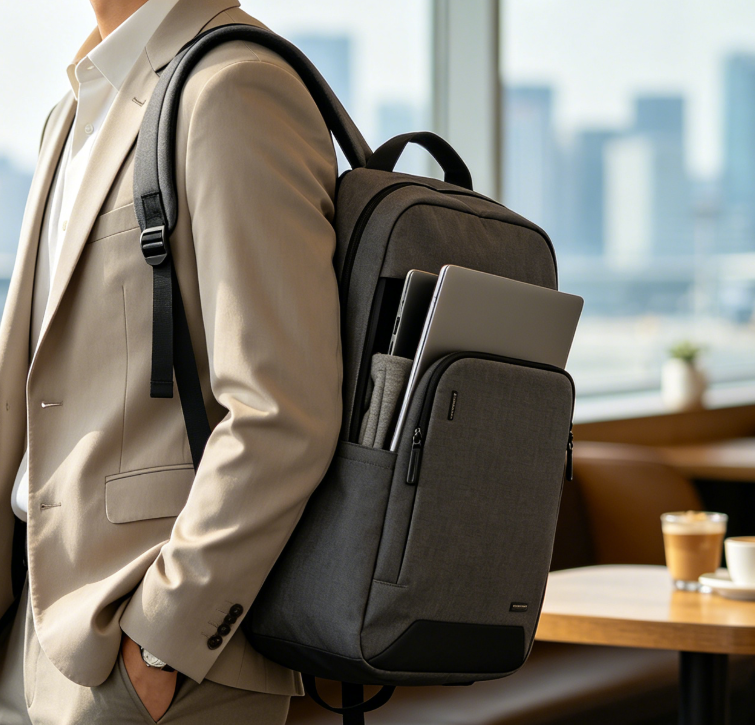
The path to lower empty bag weight while maintaining laptop protection is structural minimalism in non-protective components:
Front panel pocket padding: a laptop backpack does not need padded front pockets. Front pockets that carry documents and accessories require structural rigidity (to maintain pocket shape) but not foam padding. Eliminating front panel padding removes 50–100 g without affecting function.
Outer shell denier optimization: using 420D nylon (instead of 600D) for the main body panels while maintaining 600D or higher in high-wear zones (base, strap attachment points) reduces weight without sacrificing durability at stress points.
Selection of hardware material: aluminum hardware instead of zinc alloy reduces hardware weight by 30–40% at equivalent strength for lower-load components. Suitable for adjustment slides and D-rings in standard-use bags; zinc alloy remains suitable for primary load-bearing buckles.
Empty bag weight and maximum load capacity should both appear in product documentation for corporate buyers specifying employee bags. Users who understand both numbers can make informed decisions about how they pack and carry the bag.
Organizations that issue laptop backpacks without weight guidance frequently find that employees overload the bags — particularly when the bag design is large enough to accommodate everything they want to carry. This leads to accelerated bag wear, premature hardware and strap failures, and accumulated ergonomic impact on the user.
A simple inclusion in the bag's onboarding materials — "recommended maximum daily load: 7 kg" with a note explaining why — is an inexpensive intervention that extends product life and reduces injury risk.
Build both empty bag weight and maximum useful load weight into your specification. Target empty bag weight based on the use case: under 800 g for daily commuter bags, under 1,200 g for travel bags, no weight target for field use bags where durability takes precedence over weight.
For corporate programs: specify empty bag weight in the purchase order as a maximum figure, not a target. Ask the factory to confirm compliance on the pre-production sample with a documented weight measurement. A 50 g deviation is acceptable; a 300 g deviation indicates a material or construction departure from the specification.
 Nuntiae Calidae


 EN
EN