 ×
×
Buyers spend time specifying outer fabric, zippers, and hardware. The interior lining — the material in direct contact with the laptop and electronics every day — is usually left to the factory's discretion. This is a mistake.
The lining material determines whether laptop surfaces scratch over repeated use, whether the interior accumulates lint and debris, whether the compartment repels or traps moisture, and whether the bag develops odors during use. For a product whose primary function is protecting expensive electronics, the lining specification deserves the same attention as the outer shell.
Polyester taffeta (190T, 210T): Materialis internus communissimus in medio mercatu. Levis, levis ad tactum, in multis coloribus disponibilis, et pretio exiguo. Satis idoneus ad usum interiorem generalem. Non idoneus ad superficiem directam contactus cum laptop — taffeta polyester est adeo abrasiva in textura subtili ut, tempore, superficies scindat tectorias molles schermorum et casus alluminii laptop.
Nylon ripstop: Resistentior ad attritionem quam taffeta polyester et levior. Optima electio ad materialis interni principale compartimenti. Textura ripstop resistit lacerationibus propter contenta interiora acuta (cavi de replectio, stilographi mechanici).
Microfibra vel tricot internus: Electio praestantissima pro ipsa custodia laptop. Microfibra est tam mollis ut non scindat superficies laptop, repellit pulverem, et creat limpidiorem interfaciem inter instrumentum et sacculum. Praemium pretii modicum est — saepe $0.30–0.80 per sacculum additum.
Anti-scratch neoprene: Used in high-quality laptop sleeves. Provides both cushioning and scratch protection. Heavier than fabric options but delivers a premium feel and meaningful additional protection.
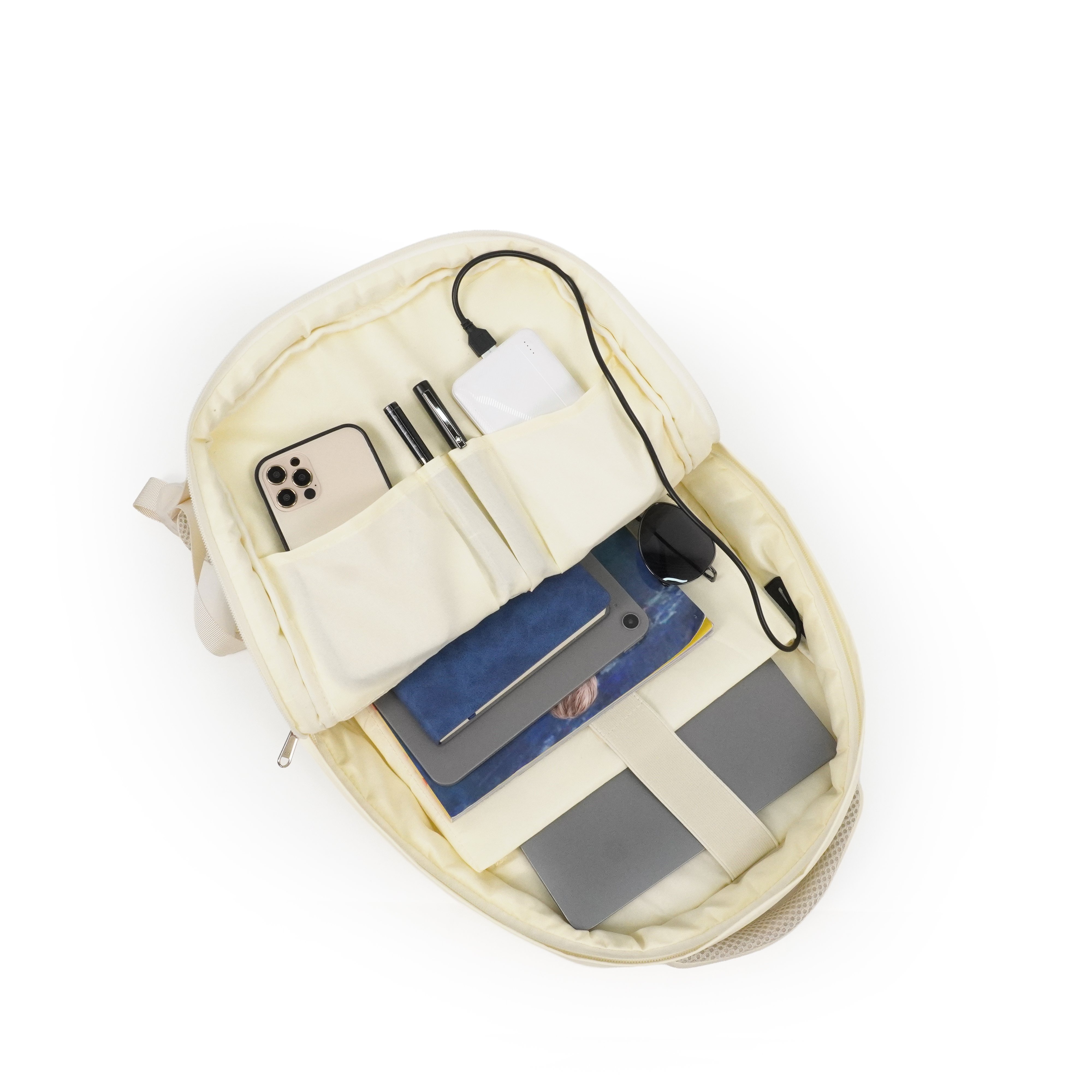
If a laptop backpack is used in rain, brought from cold outdoor environments to warm indoor spaces, or carried in humid conditions, moisture accumulation in the laptop compartment is a real risk. Condensation forms on cold surfaces when brought into warm environments — a cold laptop in a sealed compartment with a non-breathable lining can accumulate surface moisture.
For buyers sourcing bags for high-humidity markets or for use in variable-temperature environments, specify a moisture-wicking lining for the laptop compartment. Some technical bag manufacturers use perforated foam or mesh panel interiors specifically to allow air circulation and reduce condensation risk.
Standard polyester lining generates static electricity through triboelectric charging — friction between the fabric and electronics surfaces. For most use cases, this is not a meaningful risk. For specialized applications (bags used in electronics manufacturing environments, military or field communications equipment), antistatic lining materials (carbon-fiber blended fabrics or ESD-rated materials) should be specified.
This is a niche requirement for most commercial buyers, but worth noting for any application where the bags will be used near sensitive electronic components or in environments with ESD protocols.
For the main compartment: 210T nylon ripstop or equivalent, smooth finish, minimum 80 gsm. For the dedicated laptop sleeve: microfiber or soft tricot, minimum 180 gsm, confirmed non-abrasive against aluminum and glass surfaces by physical test.
Testa materiam tectricem in exemplari praeproductionis fricando eam contra fragmentum vitri ostensionis levi pressione per 30 secundas. Examina superficiem vitri sub fonte lucis ad microscraturationes. Hoc tempus est 2 minuta et certum indicat utrum materia specificata sit tuta ad contactum directum cum computatro portatili.
 Nuntiae Calidae


 EN
EN