 ×
×
Buyers spend time specifying outer fabric, zippers, and hardware. The interior lining — the material in direct contact with the laptop and electronics every day — is usually left to the factory's discretion. This is a mistake.
The lining material determines whether laptop surfaces scratch over repeated use, whether the interior accumulates lint and debris, whether the compartment repels or traps moisture, and whether the bag develops odors during use. For a product whose primary function is protecting expensive electronics, the lining specification deserves the same attention as the outer shell.
Polyester taffeta (190T, 210T): The most common lining material in the mid-market. Lightweight, smooth, available in a wide color range, and low cost. Adequate for general interior use. Not suitable as a direct laptop contact surface — polyester taffeta is abrasive enough at fine texture levels to scratch soft-coat screen surfaces and laptop aluminum casings over time.
Nylon ripstop: More abrasion-resistant than polyester taffeta and lighter. Good choice for main compartment lining. The ripstop weave pattern provides tear resistance in the event of sharp interior content (charging cables, mechanical pencils).
Microfiber or tricot lining: The premium choice for the laptop sleeve itself. Microfiber is soft enough that it will not scratch laptop surfaces, repels dust, and creates a cleaner interface between the device and the bag. Cost premium is modest — typically $0.30–0.80 per bag additional.
Anti-scratch neoprene: Used in high-quality laptop sleeves. Provides both cushioning and scratch protection. Heavier than fabric options but delivers a premium feel and meaningful additional protection.
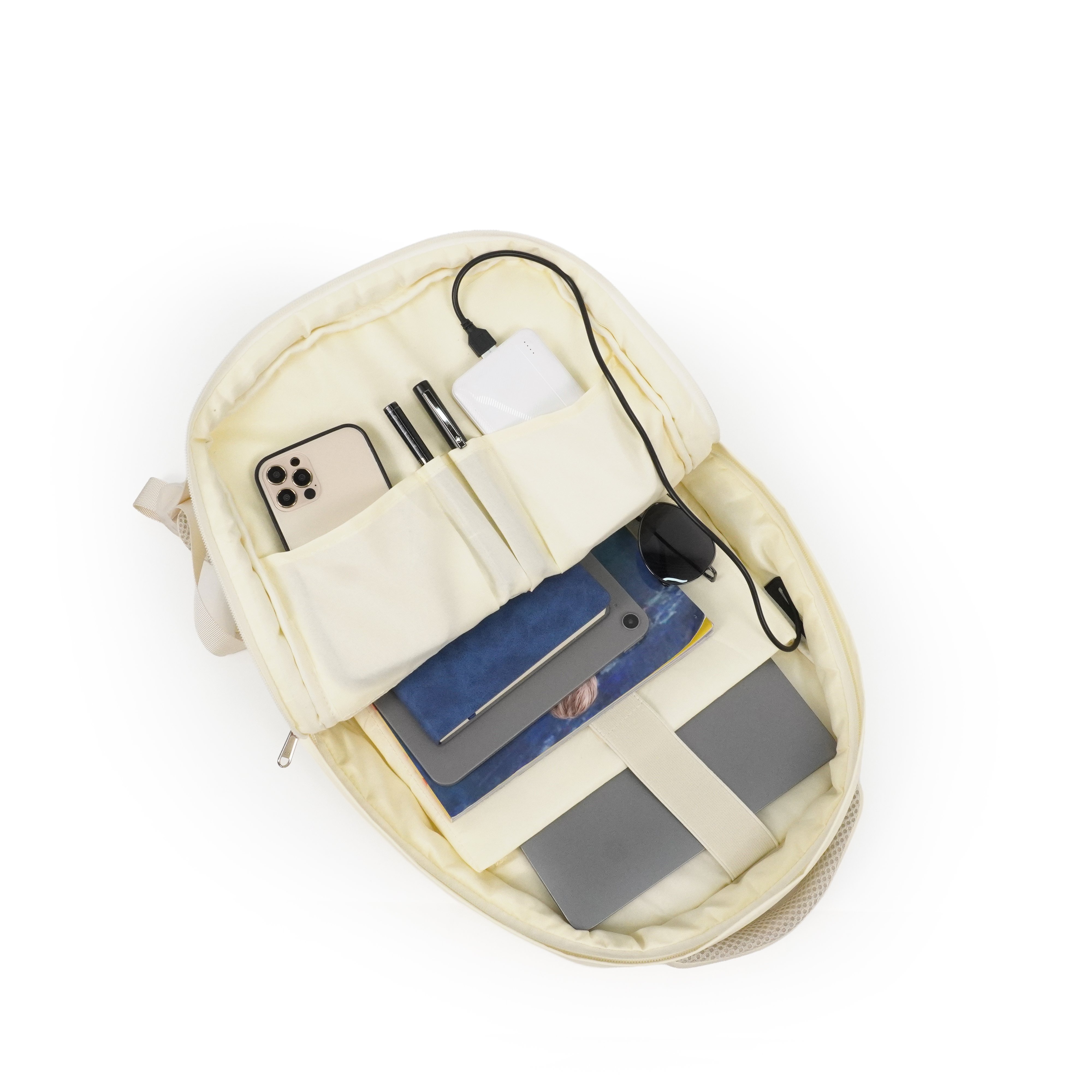
If a laptop backpack is used in rain, brought from cold outdoor environments to warm indoor spaces, or carried in humid conditions, moisture accumulation in the laptop compartment is a real risk. Condensation forms on cold surfaces when brought into warm environments — a cold laptop in a sealed compartment with a non-breathable lining can accumulate surface moisture.
For buyers sourcing bags for high-humidity markets or for use in variable-temperature environments, specify a moisture-wicking lining for the laptop compartment. Some technical bag manufacturers use perforated foam or mesh panel interiors specifically to allow air circulation and reduce condensation risk.
Standard polyester lining generates static electricity through triboelectric charging — friction between the fabric and electronics surfaces. For most use cases, this is not a meaningful risk. For specialized applications (bags used in electronics manufacturing environments, military or field communications equipment), antistatic lining materials (carbon-fiber blended fabrics or ESD-rated materials) should be specified.
This is a niche requirement for most commercial buyers, but worth noting for any application where the bags will be used near sensitive electronic components or in environments with ESD protocols.
For the main compartment: 210T nylon ripstop or equivalent, smooth finish, minimum 80 gsm. For the dedicated laptop sleeve: microfiber or soft tricot, minimum 180 gsm, confirmed non-abrasive against aluminum and glass surfaces by physical test.
Test the lining material on the pre-production sample by rubbing it against a piece of display glass with light pressure for 30 seconds. Examine the glass surface under a light source for micro-scratches. This takes 2 minutes and tells you definitively whether the specified material is safe for direct laptop contact.
 Hot News


 EN
EN