In global procurement, "transparency" is often an abstract term. However, for veteran supply chain managers, transparency has a physical manifestation: **Organized Material Stacking**.
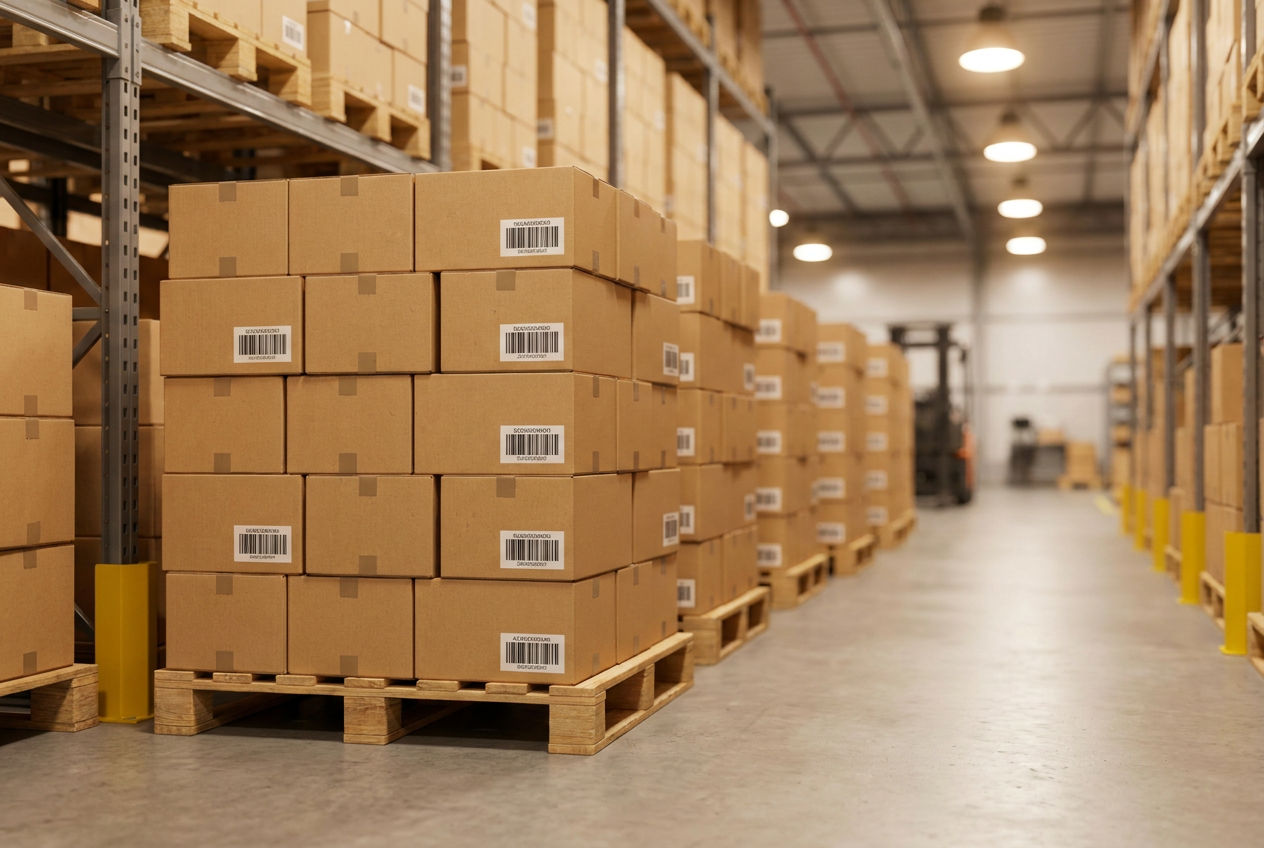
The way a factory manages its raw materials and work-in-progress (WIP) on the floor is a definitive **Proxy** for its operational integrity. It is the difference between a supplier that is truly in control and one that is merely "getting by."
1. Traceability as a Legal Mandate
In the modern regulatory environment—governed by standards like the EU’s General Product Safety Regulation (GPSR) and US CPSC requirements—**Traceability** is no longer optional; it is a legal mandate.
- **Risk Isolation:** Organized stacking is the foundation of effective **Risk Isolation**. If a material defect is discovered, a structured warehouse allows the supplier to immediately identify and quarantine specific batches, preventing a localized issue from escalating into a full-scale recall.
- **Batch Integrity:** By strictly separating production runs, we eliminate the "mixed-material risk" that often leads to inconsistent product performance.
2. Eliminating Ghost Inventory and Boosting Velocity
Disorganized floors create **Ghost Inventory**—materials that exist in the system but cannot be found on the floor.
- **Maximizing Inventory Velocity:** High **Inventory Velocity** is the hallmark of an efficient supply chain. Organized stacking ensures that materials flow seamlessly from intake to production. When workers spend zero time "hunting" for parts, lead times shorten and agility increases.
- **Real-Time Accuracy:** A visual grid system allows for instant "at-a-glance" auditing, ensuring that the stock levels reported in the ERP system match the physical reality on the floor.
3. TCO Optimization and the "Chaos Tax"
Buying from a disorganized factory often incurs a "Chaos Tax"—hidden costs embedded in the **Total Cost of Ownership (TCO)**.
- **Labor Efficiency:** Efficiency is the byproduct of order. A structured material environment minimizes non-value-added movements, allowing the supplier to maintain competitive pricing without compromising on quality.
- **Space Management:** Disorganized stacking wastes expensive floor space and leads to material damage. Professional organization maximizes the utility of every square inch, ensuring that overhead costs are optimized.
4. Scalability and Predictability
A factory that cannot organize its floor cannot scale its operations.
- **Predictable Throughput:** Organized stacking ensures that production remains predictable even during seasonal peaks. It provides the "Operational Buffer" needed to handle surges in demand without collapsing into logistical chaos.
- **Strategic Resilience:** For Western partners, a structured floor is evidence of a supplier’s ability to grow alongside their brand, providing a stable foundation for long-term scalability.
Conclusion
Material stacking is not a matter of aesthetics—it is a critical **Metric** of supply chain resilience. It demonstrates a commitment to traceability, efficiency, and risk management that defines the top 1% of global suppliers.
**Are you ready to de-risk your inventory pipeline?**
Our rigorous stacking protocols and real-time traceability systems ensure that your supply chain remains transparent and resilient. **[Request our Quality Management Scorecard]** or **[Download our Material Handling Protocol]** to see how we define manufacturing excellence.
 ×
×
 Hot News


 EN
EN