 ×
×
Stay ahead of the market with these 2025 travel backpack trends. From sustainable materials to smart features, here is what today's buyers actually want.
────────────────────────────────────────────────────────────
The travel backpack market does not stand still. Features that were premium upgrades two years ago are now baseline expectations. Materials that were niche are going mainstream. And buyer preferences are shifting in ways that create real opportunities for brands paying attention.
Here is what is moving in travel backpacks right now — and what it means for your sourcing decisions.
────────────────────────────────────────────────────────────
Recycled PET (RPET) fabric was a differentiator in 2022. In 2025, it is table stakes. Buyers increasingly filter their search by sustainable materials, and retailers are setting sustainability requirements for the brands they stock.
The good news: RPET fabric quality has improved dramatically. Early recycled polyester felt rough and had inconsistent coloring. Today's RPET is nearly indistinguishable from virgin polyester in feel and performance — and the cost gap has narrowed to the point where it is a rounding error on the final product price.
Airlines have tightened carry-on rules, and travelers have adapted. The sweet spot in travel backpack sizing is now the "personal item" category — bags that fit under an airline seat while maximizing every cubic inch of allowed space. Dimensions around 45 x 35 x 20 cm are becoming the most requested spec.
Lockable zippers, RFID-blocking pockets, and slash-resistant panels were once features for specialty "travel security" brands. Now they are appearing on general-purpose travel backpacks. Buyers see them as insurance — they may never need the anti-theft features, but they feel better knowing they are there.
A discreet pocket on the back panel for passport and wallet. A hidden compartment in the luggage strap sleeve. A secret pocket inside the water bottle holder. These small design touches show up repeatedly in positive reviews because they solve a real travel anxiety: keeping valuables safe in crowded spaces.
Quanzhou Tianqin Bag Co., Ltd. has incorporated these hidden-pocket designs into multiple client projects, refining the approach based on real customer feedback — for example, adding soft lining to hidden passport pockets so documents do not get scratched against zipper teeth.
A USB pass-through port (not a built-in battery, just the cable routing) costs pennies to add during manufacturing and generates outsized positive mentions in product reviews. If your travel backpack does not have one, buyers notice.
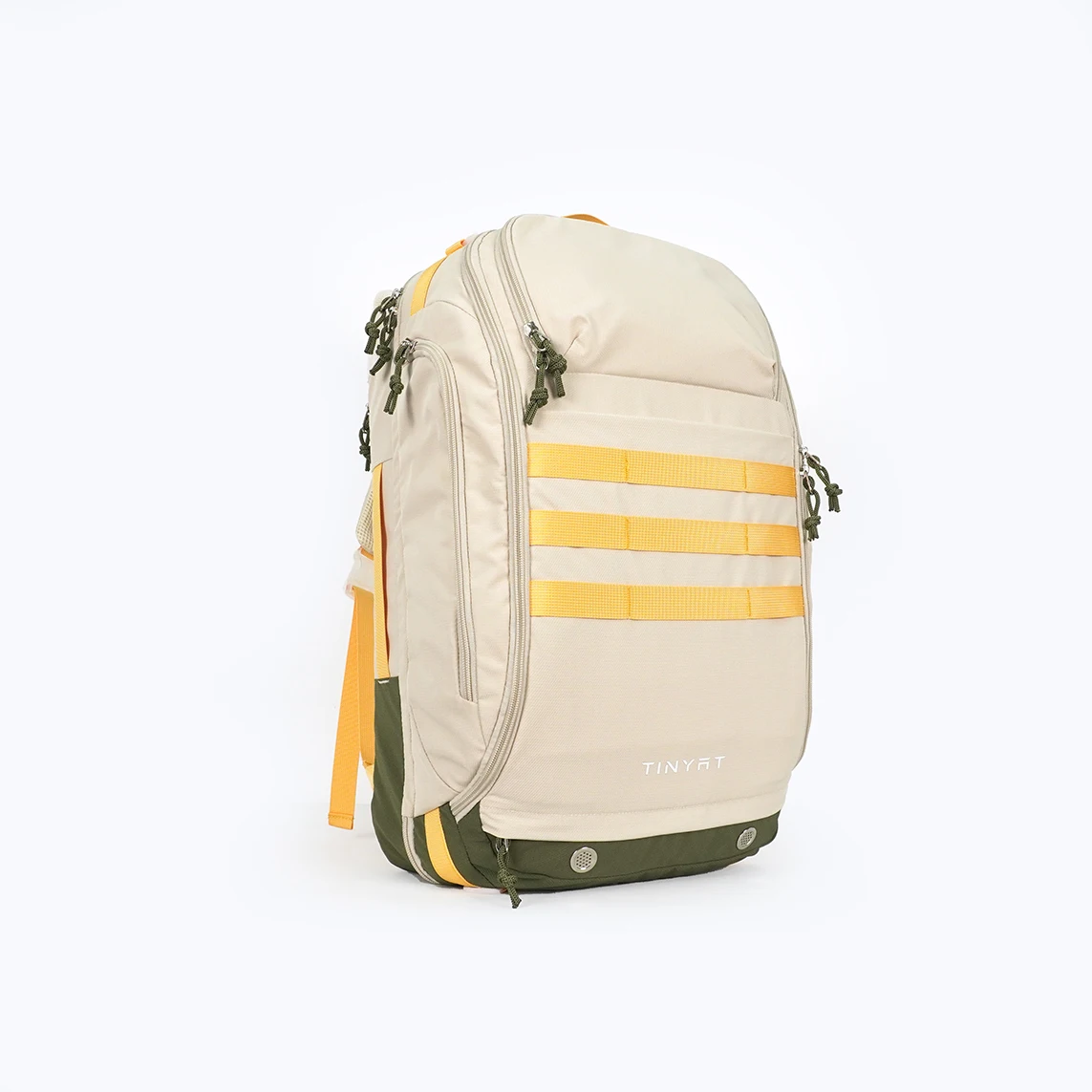
The era of "any color as long as it is black" is ending. Travelers are choosing backpacks in olive green, dusty blue, terracotta, and muted burgundy — colors that stand out on a baggage carousel without being loud. Offering three to four color options instead of just black significantly broadens your addressable market.
────────────────────────────────────────────────────────────
Travel backpack trends in 2025 are not about radical reinvention. They are about doing the basics exceptionally well and adding features that solve real travel friction points. The brands winning right now are the ones that treat their backpack as a product that gets better with every production run — not a static design that ships the same way year after year.
*Sourcing travel backpacks with the features buyers actually want? TINYAT offers sustainable materials, anti-theft options, and design flexibility backed by 18 years of manufacturing experience. Contact us to develop your next travel backpack.*
 Hot News


 EN
EN