
 EN



Anti-theft is no longer a niche add-on. In 2026 it is a category headword, and it is pulling orders that used to sit in the general commuter bucket. What matters for a buyer is that the word covers a wide spread of actual construction, from a decorative rear pocket to a genuinely reinforced panel program, and the cost gap between those two extremes is large.
Where the Demand Is Coming From
Three drivers show up in buyer conversations.
Urban commuting volume. City riders and transit commuters in large metros want a bag that cannot be opened from behind while it is being worn.
Device value. A 15.6-inch business laptop plus accessories can now exceed USD 2,000 in replacement value, which changes what a customer will pay for protection.
Travel retail overlap. Anti-theft features sell into carry-on programs where the bag is worn in crowded spaces rather than stored in an overhead bin.
Distribution shifted as well. Two years ago most anti-theft enquiries came from specialist security and travel brands. In 2026 they arrive from general stationery and office supply distributors who want one security-accented style inside an otherwise standard range, which changes what they expect the features to cost. Bike share and last-mile delivery riders also buy replacement bags more often than commuters do, which makes them a durable segment rather than a one-off purchase.
In our order book, anti-theft labelled styles have grown from a small share of business backpack volume to roughly one in four new business briefs in 2026, and the requests are increasingly specific about construction rather than about the label alone.
The first question most buyers ask us is what anti-theft has to include before they can use the term on packaging. There is no single legal definition, which is exactly why a written spec sheet matters.
The Feature Specs Behind the Claim
Lockable Zipper Systems
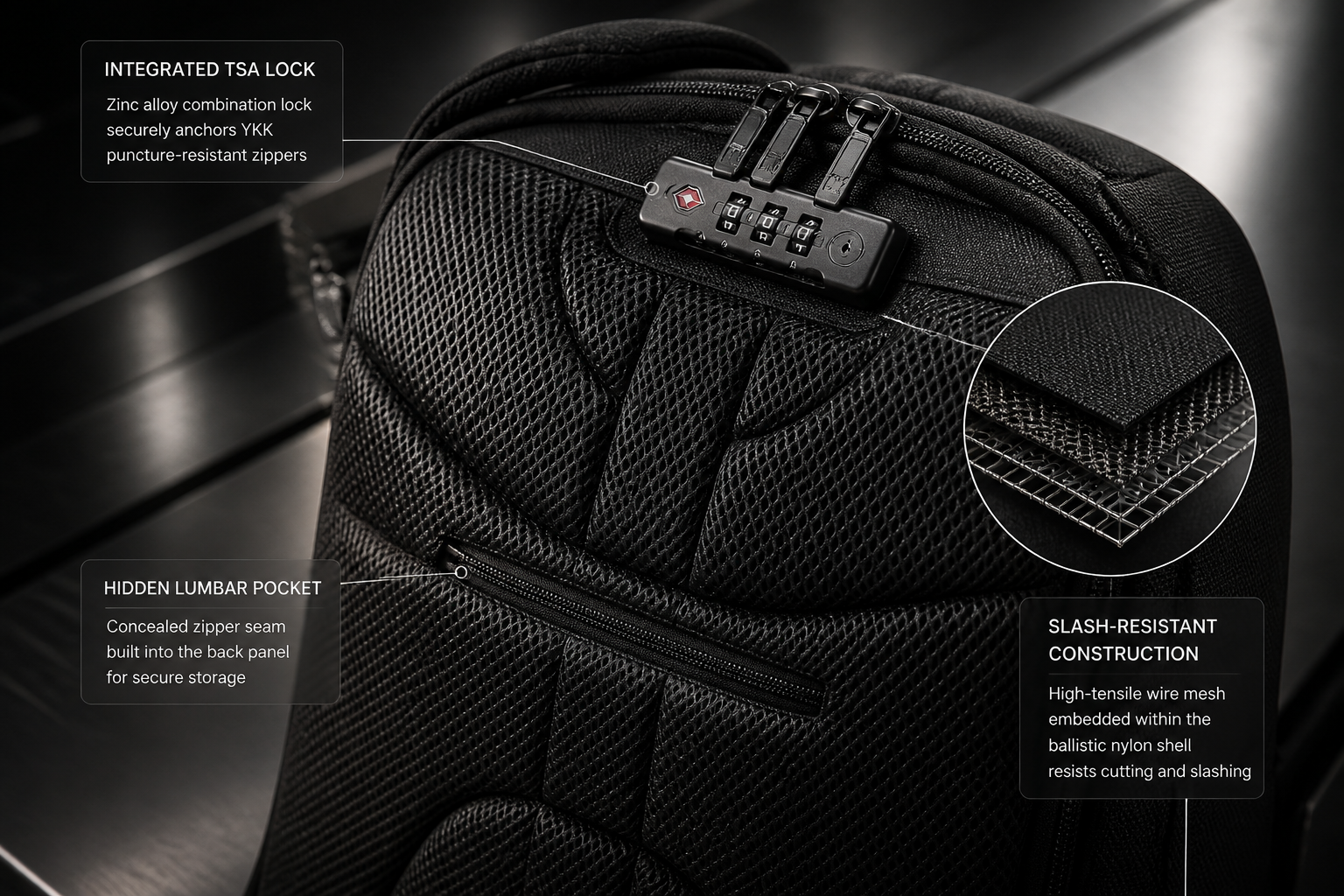
The practical versions use zipper pull loops sized to meet, so a small padlock or a combination carabiner can join them. Loop diameter decides whether it works: under 5 mm and most locks will not pass through. A stronger version uses a lockable slider body, which costs more and limits which sliders are available.
Hidden Pocket Placement
The rear panel pocket, worn against the back, is the standard. Placement high and tight against the spine reduces access while the bag is worn. A back panel pocket that runs the full width looks generous in a photo but is easier to reach in a crowd, which is the opposite of the intent.
Slash-Resistant Panels
These use aramid or steel mesh inserts laminated between shell and liner, or a cut-resistant fabric panel over the front and base. Real slash resistance adds weight: a mesh-lined front panel typically adds 120 to 180 grams.
Cost Per Feature
Buyers ask for this comparison constantly, so here is our working view at the factory, per unit, on a 600-unit order.
Lockable zipper pull loops: about USD 0.15 to 0.30 depending on hardware grade.
Lockable slider bodies: about USD 0.60 to 1.20.
Hidden rear panel pocket: about USD 0.40 to 0.70 in labor and material.
Slash-resistant front panel insert: about USD 1.80 to 3.50.
Slash-resistant base panel only: about USD 0.90 to 1.60.
RFID-blocking interior card sleeve: about USD 0.30 to 0.50.
Branded padlock included in the pack: USD 1.50 to 4.00 depending on lock grade.
A full anti-theft build can therefore add USD 4.00 to 9.00 to unit cost. That is real money on a backpack that retails at USD 59.90, and it is the single most common reason programs get cut back after quoting.
Volume moves these numbers more than buyers expect. At 3,000 units the same feature set drops by roughly 8 to 12 percent, because hardware and inserts are bought on higher quantity breaks. At 300 units it rises by 15 percent or more, mostly through setup and small-lot material premiums. The returns math matters as much as the cost math: one returned bag erases the margin on roughly eight to twelve units, depending on FOB and freight.
What Anti-Theft Does Not Solve
An honest limitation: most anti-theft construction reduces opportunity, it does not stop a determined attacker. Slash-resistant panels resist casual cutting, not sustained effort with the right tool. Lockable zippers stop quick access, not someone carrying the entire bag away.
We are also blunt that a decorative version creates risk. If a bag is marketed as anti-theft but the rear pocket is a shallow open slip, the claim invites returns and complaints. Adding a hidden pocket without closing the main opening with a lockable pull leaves the most common theft route untouched.
The other trade-off is weight and comfort. A mesh-lined front panel plus a reinforced base plus lockable sliders can push a 25L bag from about 900 grams to nearly 1,200 grams. On a daily commute bag that is noticeable, and some buyers reject the weight increase even when they like the feature list.
There is also a channel truth buyers should hear. Anti-theft labeling raises conversion in some places and does nothing in others. In a department store office supply aisle the word barely moves a shopper. In an online listing aimed at commuters and travellers it is one of the strongest hooks available in the title, which is why the same bag can be marketed very differently across two channels.
A Spec Sheet Checklist for Anti-Theft Programs
Use this when writing the brief or approving a sample.
State explicitly which openings are lockable, not just that the bag is lockable.
Specify the pull loop inner diameter in millimetres so a padlock can be confirmed to fit.
Specify the hidden pocket depth and closure type, zip or slip.
Confirm whether the hidden pocket sits against the wearer's back or on the side panel.
Ask for the slash-resistant insert location and the test method behind the cut claim.
Confirm the added weight of every reinforcement in grams, per panel.
Ask whether the RFID sleeve blocks 13.56 MHz only, or both common frequencies.
Confirm whether the padlock is included in the unit spec and carton, or excluded.
Check the artwork claims against the construction, since returns come from mismatch.
Ask for an abrasion check on the coated panels so the surface survives daily use.
How to Build an Anti-Theft Range That Holds Margin
Pick the features with the highest customer-visible value per dollar. On most programs that means lockable zipper pull loops, a properly designed rear panel pocket and a slash-resistant base panel rather than a full front insert. Those three together typically land under USD 2.50 per unit and cover the theft routes customers actually experience.
Reserve the full package for one premium style where the retail ticket can carry it. Then verify that the claim matches the construction before artwork goes to print.
Match the lock mechanism to the buyer as well. A combination carabiner sells better in online channels because the feature works the moment the bag arrives. A padlock priced separately often turns into a complaint on arrival, so if the lock is part of the promise, include it in the unit specification and in the carton count.
At Tianqin we build the rear pocket into the back panel pattern rather than adding it as a patch, which keeps the profile flat against the wearer and avoids the bulky look that makes some anti-theft bags hard to sell in a store. We also test every lockable pull loop with a 5 mm gauge pin before bulk approval, because a loop that looks correct in a photo can still fail a real padlock.
Send your anti-theft brief to [email protected] or visit www.tianqinbag.com for samples and a factory quote. Sampling runs 7-15 business days.

 Hot News


