 ×
×
Bluesign is a Swiss-based standard and certification system focused on responsible textile manufacturing — specifically on the input side of the production process: chemicals, water, energy, and emissions at the fabric mill level.
Bluesign-certified fabrics are produced using approved chemical management systems, resource-efficient processes, and with compliance with Bluesign's restricted substances list (which is more comprehensive than REACH for many chemical categories). The certification is held by the fabric mill, not the bag factory.
When a fabric carries the bluesign APPROVED label, it means:
The fabric was produced at a bluesign-certified facility using bluesign-approved chemicals only. The chemical inventory at the certified facility has been audited against bluesign's restricted substances list.
The production process meets bluesign's resource productivity benchmarks — water consumption, energy consumption, and wastewater treatment standards are documented and compliant.
The fabric passes bluesign's product testing requirements, which include chemical residue testing comparable to or more stringent than OEKO-TEX STANDARD 100 for most parameters.
Bluesign is particularly strong in chemical management at the fiber and fabric production stage — earlier in the supply chain than most other textile certifications, which focus on the finished product.
Bluesign certification is widely used in the outdoor and technical apparel industry — brands like Patagonia, The North Face, and Arc'teryx have significant bluesign-certified material commitments. For laptop backpack buyers sourcing for outdoor, technical, or premium consumer markets, bluesign fabric specification aligns with the sustainability expectations of these market segments.
For standard corporate gifting or B2B distribution markets, bluesign certification is a genuine sustainability differentiator but not typically a baseline requirement. Its value depends on whether the target market or end-user audience recognizes and values the certification.
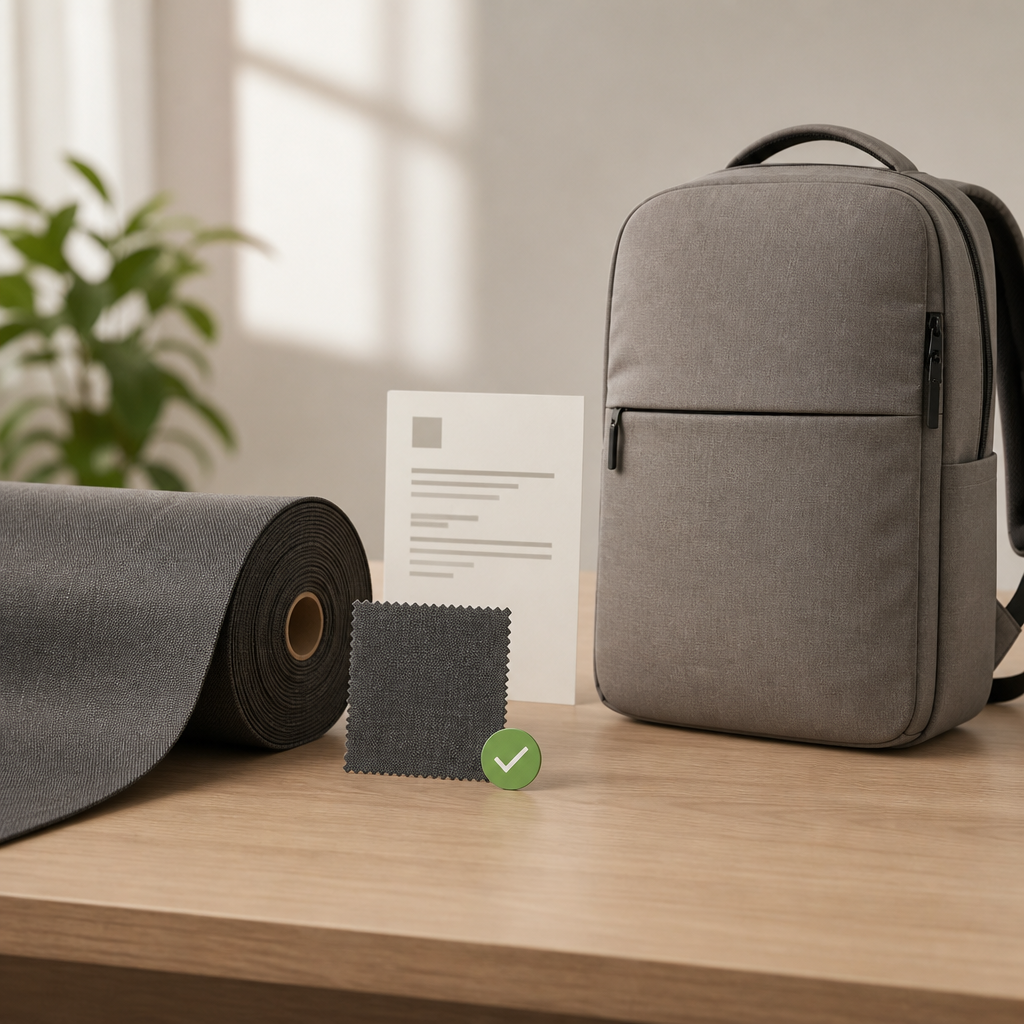
Not all fabric mills produce bluesign-certified options for laptop backpack fabrics. The bluesign website maintains a fabric database (bluesign.com) where buyers can search for approved fabrics by material type, weight, and certification level.
When specifying bluesign fabric to a bag factory, confirm that the factory's fabric suppliers are on the bluesign certified partner list. A factory that claims to use bluesign fabric but cannot provide the fabric mill name and bluesign partner status is making an unverifiable claim.
Bluesign-certified fabrics carry a cost premium of approximately 10–20% over equivalent non-certified fabrics, reflecting the additional mill-level compliance and testing costs.
Bluesign addresses the fabric mill stage of the supply chain with high rigor. For a comprehensive sustainable sourcing strategy for laptop backpacks, bluesign at the fabric level should be complemented by: social compliance auditing at the bag factory level (BSCI, SMETA), chemical safety testing at the finished product level (OEKO-TEX STANDARD 100), and recycled content certification for recycled material claims (GRS).
Each of these certifications addresses a different stage of the supply chain and a different sustainability dimension. A bluesign fabric in a non-audited factory with no product-level chemical testing does not represent comprehensive sustainable sourcing — it represents responsible fabric sourcing, which is one element of the total picture.
 Hot News


 EN
EN