
 EN



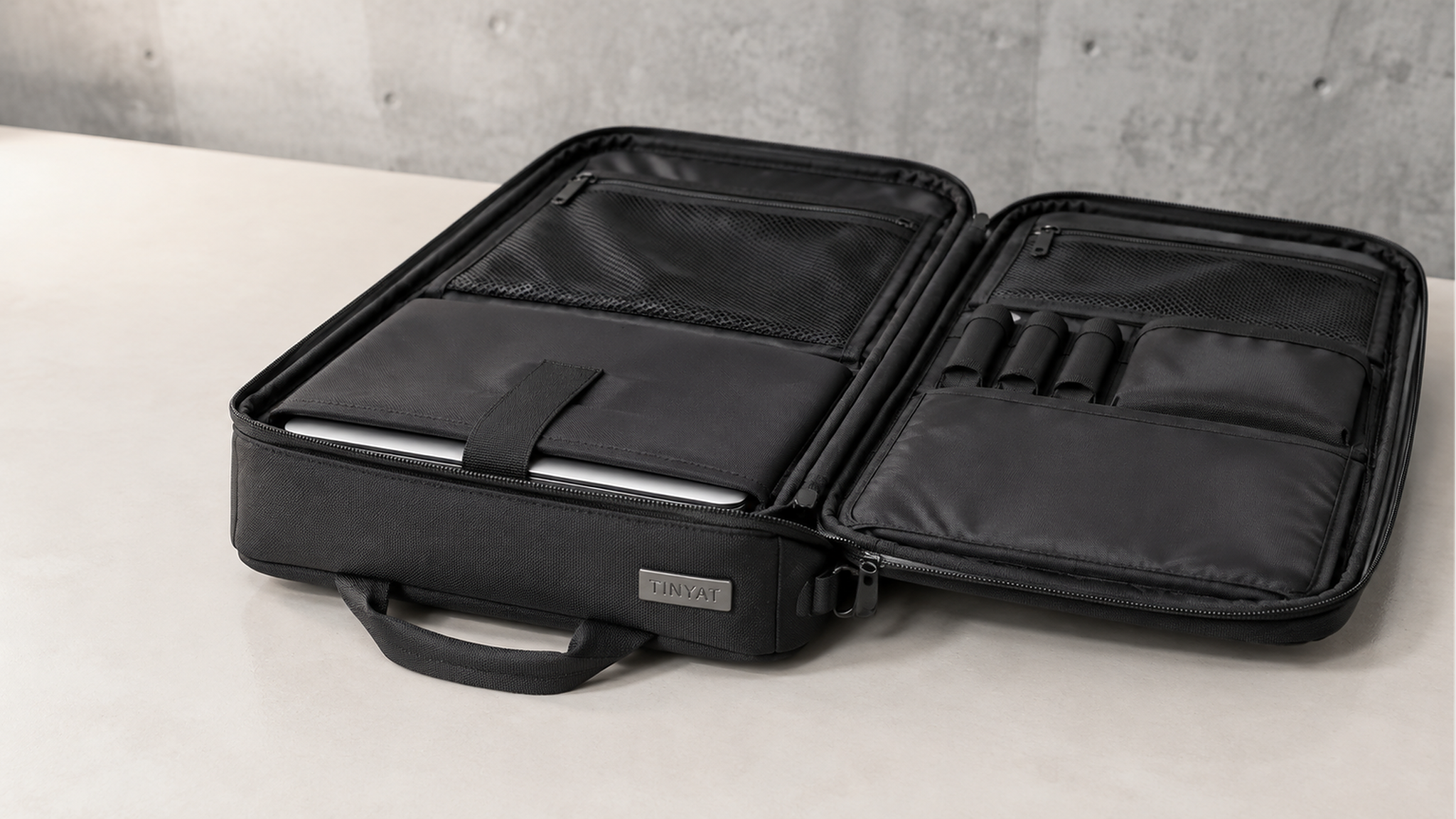
A buyer sent a layout sketch with eleven pockets and a note saying it must hold everything a sales rep carries. Eleven pockets across a 380 mm bag is an average width of 34 mm, which fits a pen and very little else. Any custom laptop bag with compartments manufacturer has seen that sketch. Layout planning is a depth and access exercise rather than a pocket count, and it starts with the sequence of things the user does, not with the features list.
Layout Is A Workflow, Not A Pocket Count
A working laptop bag supports four actions in order: open the bag, take out the device, reach for a document, and find something small without emptying the bag. Every pocket either serves one of those actions or takes space from one that does.
We ask buyers to write the sequence down before drawing anything. On a field sales program the sequence was: device out at the car, folder out at reception, business cards at the desk, and the charger stayed in the bag all day. That produced three zones and one pocket that opened wide enough to take a hand, which is a different bag from the eleven-pocket sketch and a better one.
The failure of too many compartments is not that they do not fit. It is that the user cannot remember which one holds what, so everything migrates to the largest pocket and the structure becomes decoration.
There is a second cost that stays invisible until the second order. Every zone has to be measured and cut consistently, and a layout with ten features has ten opportunities for an operator to place a seam 4 mm off. Six features that can be checked against a template in two minutes will hold their dimensions across a run better than ten that cannot.
The Three Zones A Working Bag Needs
A laptop bag that stays organised runs three zones in depth, from the wearer's body outward.
Device zone: against the back panel, a padded sleeve with a false bottom, opened by a zip that runs at least the width of the device
Document zone: a flat compartment behind the device zone, sized for A4 at 210 by 297 mm with 10 mm of clearance on each dimension, plus one divider
Utility zone: front of the bag, subdivided into a phone pocket of 85 by 160 mm, two pen slots at 20 mm, and one open pocket of at least 120 mm width
Anything beyond those three zones is a decision with a cost. A fourth zone in the gusset adds 8 mm of depth and about 0.14 USD, and it is worth it only if the workflow includes something specific, such as a tablet, a pair of glasses, or a tool.
Depth Budgeting: Where The Millimetres Go
Depth is the constraint that decides comfort and capacity at the same time. A bag with 60 mm of usable gusset depth distributes roughly like this:
Device sleeve with 8 mm foam each side: 38 mm for a 22 mm device
Document compartment and divider: 15 mm, which holds a folder of about 40 sheets
Front utility panel with a card and phone pocket: 7 mm
That is 60 mm and the bag is full. A buyer who wants a lunch box, a charger, and a water bottle in the same bag is not asking for more pockets, they are asking for more depth, and 60 mm becomes 85 mm and the bag stops looking like a laptop bag.
Our own rule on a 400 mm wide briefcase is one gusset dimension, not a tapered gusset, because a taper looks slimmer and loses depth exactly where the folder sits. We will build the taper, and we tell buyers that the document compartment then holds about 25 sheets rather than 40.
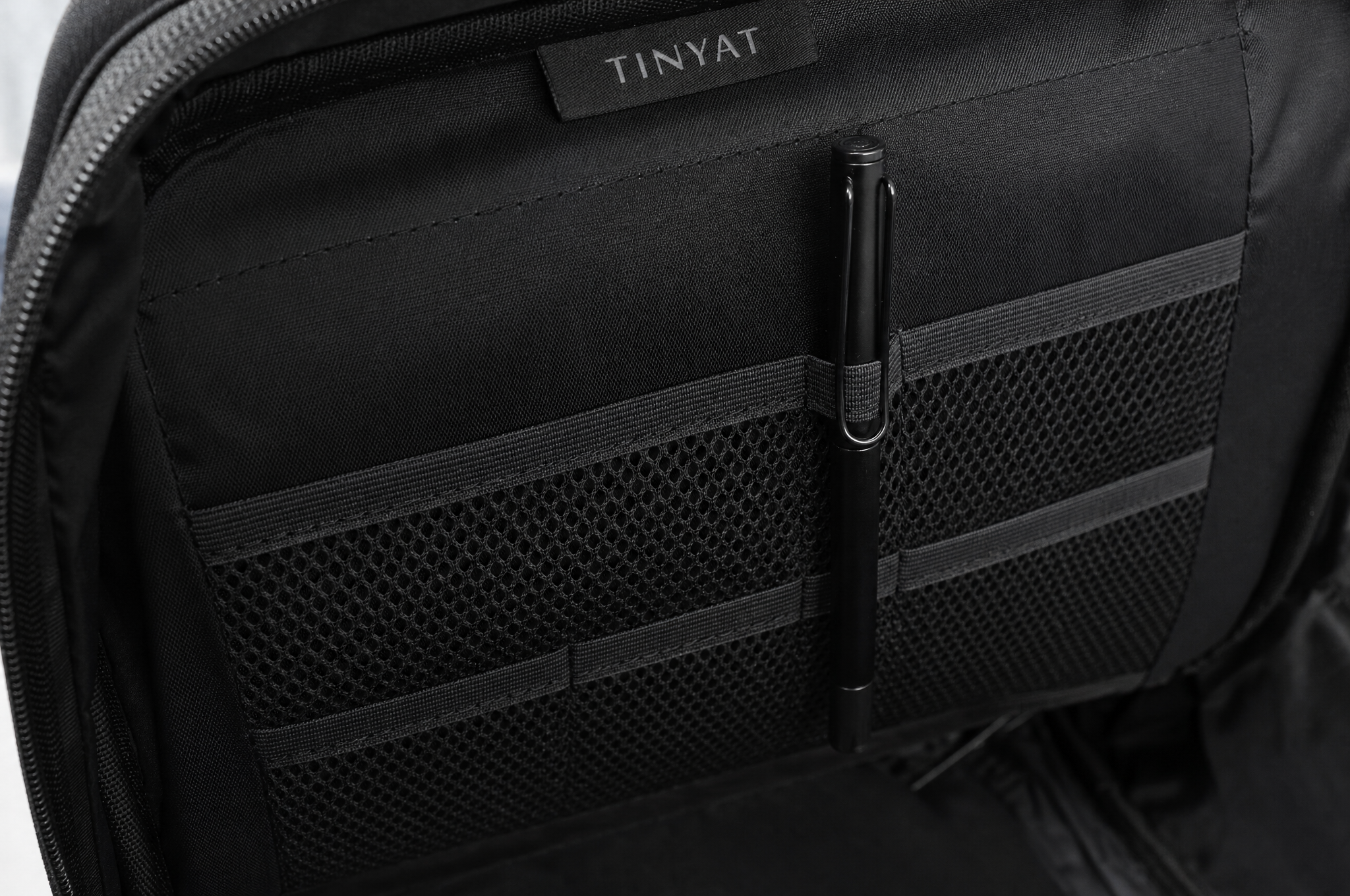
What A Custom Laptop Bag With Compartments Manufacturer Maps
Before a pattern is cut, we map every zone onto a dimension drawing with four values each.
Zone name and position in the depth stack
Internal dimensions inside the seam, not outside the bag
Opening width and opening type, meaning zip, flap, or open top
What it shares a wall with, since two zones against one panel need one structural layer
The shared-wall line is where layout plans fail. A device sleeve pressed against a document compartment with no divider means the folder edge sits against the device through one layer of lining. A 0.5 mm card edge rubbing there for a year marks the sleeve and eventually the device. We specify a 3 mm EVA divider between those two zones, which costs 0.06 USD and solves the complaint before it exists.
Zip openings get a similar check. A zip that runs 200 mm on a 380 mm panel gives a 190 mm clear opening, which will not pass an A4 folder without folding it. We plan openings at 240 mm minimum on a document zone and 400 mm on a device zone.
The limitation on layout freedom
Internal layout is the cheapest place to customise and the most expensive place to get wrong. Every extra pocket is another operation on the line, roughly 40 to 70 seconds of labour, and at 1,000 units that is real cost with no visible feature on the outside of the bag.
There is also a hard limit on complexity: past about nine internal features, our line needs a slower operation sequence and the unit price moves by 4 to 6 percent. Buyers who need ten pockets are usually better served by six better pockets.
What the buyer sees when the sample is loaded
On your side, a sample with a folder, a device, a phone, and a charger shows the truth in about a minute. Either the zip closes without force or it does not, the phone disappears into a pocket you cannot reach without opening the whole bag, and the folder creases because the opening is too narrow. Those three observations decide the layout, and none of them appear on a pocket list.
A Layout Planning Sheet
Fill these lines before the first pattern is cut.
Bag width and gusset depth: 380 mm by 60 mm usable
Device zone: 400 by 285 mm internal, 8 mm foam each side, false bottom 12 mm
Device zip opening: 400 mm clear
Document zone: A4 plus 10 mm, one divider, 15 mm depth
Document zip opening: 240 mm minimum
Utility zone: phone 85 by 160 mm, two pens at 20 mm, open pocket 120 mm
Divider between device and document: 3 mm EVA
Total pocket count: six to nine features maximum
Load test: device, folder of 40 sheets, phone, charger, then zip closed
Weight check: empty bag 620 to 780 g at 15 to 16 inch
That load test line is the tool. A layout that cannot be loaded with the real items and closed with two fingers is a layout that will be criticised in reviews for being tight.
Draw The Sequence Before The Pattern
Send us the sequence of actions your user performs and the items they carry, with rough dimensions for anything bulky. We will return a zone map with internal dimensions, opening widths, and the labour impact of each feature, so the pocket count is a decision about use rather than about a competitor's specification sheet.
Contact [email protected] or visit www.tianqinbag.com to request samples, get a factory quote, or start an OEM/ODM project with Quanzhou Tianqin Bags Co., Ltd. Sampling lead time is 7-15 working days, and 3D sampling is available before a physical sample is sewn. Seventeen years of bag manufacturing in Quanzhou, exports to more than 50 countries, SGS test reports covering REACH, CPSIA and Prop 65 on request.



 Hot News


