
 EN



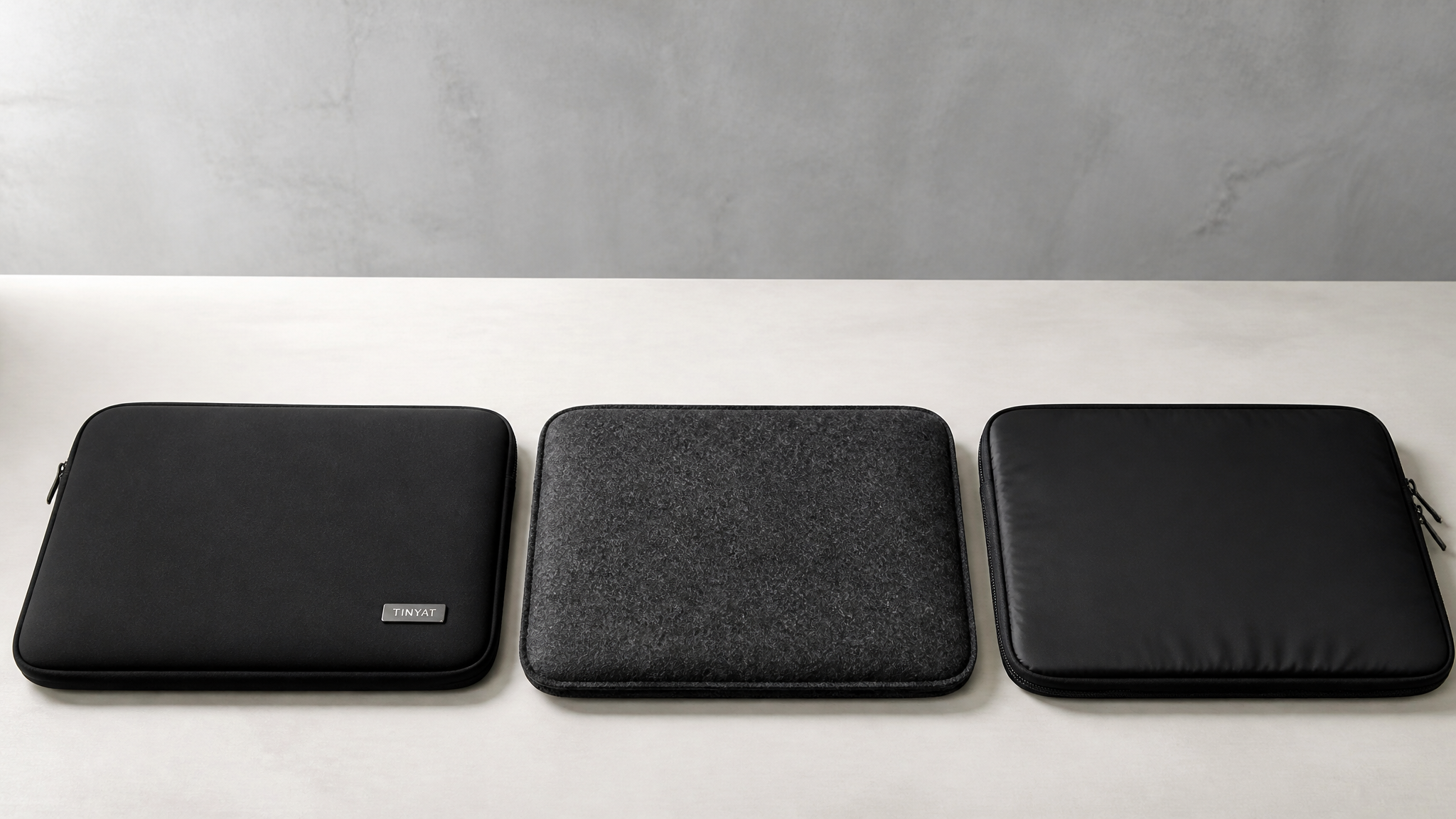
A sleeve is the simplest bag in the catalogue and the one where material choice changes the product most. Neoprene, felt, and laminated foam all look like padding in a photograph and behave completely differently in a bag: one stretches, one crushes, one holds its shape. As a custom laptop sleeve manufacturer we quote all three, and the argument for each is different. Here is what each material does, what it costs, and where it fails.
Three Materials, Three Failure Modes
A sleeve has one job, which is to protect a device inside a larger bag, and one secondary job, which is to be carried on its own. Material choice follows from which of those two matters.
Neoprene is a synthetic rubber foam, usually laminated to a fabric face, and it protects by compressing and recovering. It fails by seam separation, because a stretch material sewn with a standard straight stitch pulls the stitch line apart under load.
Felt is a non-woven wool or wool-blend textile, and it protects by absorbing energy through fibre compression. It fails by pilling and by edge fraying, and it does not recover its thickness as well as foam.
Laminated foam is an EVA or polyethylene layer bonded to a fabric face, and it protects by holding shape and spreading the load. It fails at the edge, where the lamination can lift, and it is the stiffest of the three.
None of these is better. They serve different price points, different devices, and different customers.
Neoprene: Stretch, Cost, And Seam Behaviour
Neoprene at 3 to 4 mm is the material most buyers picture when they say sleeve, because it is stretchy, forgiving, and it fits a device tightly with no pattern precision.
The construction problem is the seam. Neoprene stretches about 30 percent, so a straight stitch with a standard thread is loaded in tension every time the sleeve is pulled over a device. We overlock the seam, tape it, and use a bonded thread, and we specify a 4 mm seam allowance so the stitch line sits away from the edge. Without that, the seam opens along 20 to 40 mm within a few months of daily use.
Cost sits at the top of the three. A 4 mm neoprene sleeve for a 14 inch device lands around 1.35 to 1.75 USD at 1,000 units, depending on the face fabric and whether the seam is taped. The material is also sold in sheets with a fixed width, so a 15.6 inch sleeve often cuts with more waste than a 14 inch one, and the price difference between the two sizes is bigger than buyers expect.
Neoprene suits a sleeve carried alone and a snug fit. It will not hold a rigid shape on a shelf.
Felt And Foam: Structure Without Stretch
Felt and laminated foam compete for the same ground, which is a shaped sleeve that looks like a product rather than a bag.
Felt at 3 mm, usually a wool-polyester blend, costs about 0.85 to 1.20 USD for a 14 inch sleeve at 1,000 units. It takes a stitched edge cleanly, it holds a flat shape, and it takes a debossed or printed logo well. Its weakness is compression recovery: a felt sleeve that spends a week under a laptop in a rucksack loses thickness and does not come back fully, so the protection drops as the product ages.
Laminated EVA at 4 to 5 mm costs about 1.05 to 1.40 USD and protects better than either alternative, because the foam layer does not bottom out under a device corner. The construction is a fabric face bonded to foam with a lining behind, and the failure mode is delamination at the cut edge if the edge is not bound or turned.
We build both, and the deciding question is usually the drop standard. A felt sleeve protects against knocks inside a bag. A laminated foam sleeve with a bound edge survives a bag being dropped on a corner, because the foam holds thickness after the impact.
Where the material decision gets expensive
Two practical points that do not appear in a sample photograph.
Cutting: felt and laminate cut cleanly on an automated table with a 2 mm tolerance. Neoprene compresses under the blade, so switching a program from foam to neoprene adds a setup change and a little waste.
MOQ: all three are available from 300 pcs per colourway, but a custom face fabric on neoprene carries a mill minimum of 500 metres, which at 0.35 square metres per sleeve is roughly 1,400 units of one colour. That is the single biggest MOQ surprise in this category, and it decides more programs than the material price does.
What A Custom Laptop Sleeve Manufacturer Prices Differently
A sleeve quotation has four lines that buyers often miss, and knowing them prevents a late surprise.
Material: neoprene 4 mm, felt 3 mm, or laminated EVA 5 mm, priced per square metre and per sleeve
Edge treatment: bound, overlocked and taped, or turned, which changes labour by 20 to 40 seconds per unit
Closure: zip, flap, or open top, with a zip adding 0.22 to 0.40 USD including the puller
Logo method: deboss 90 to 150 USD die, print 120 to 180 USD screen, moulded label 380 to 550 USD
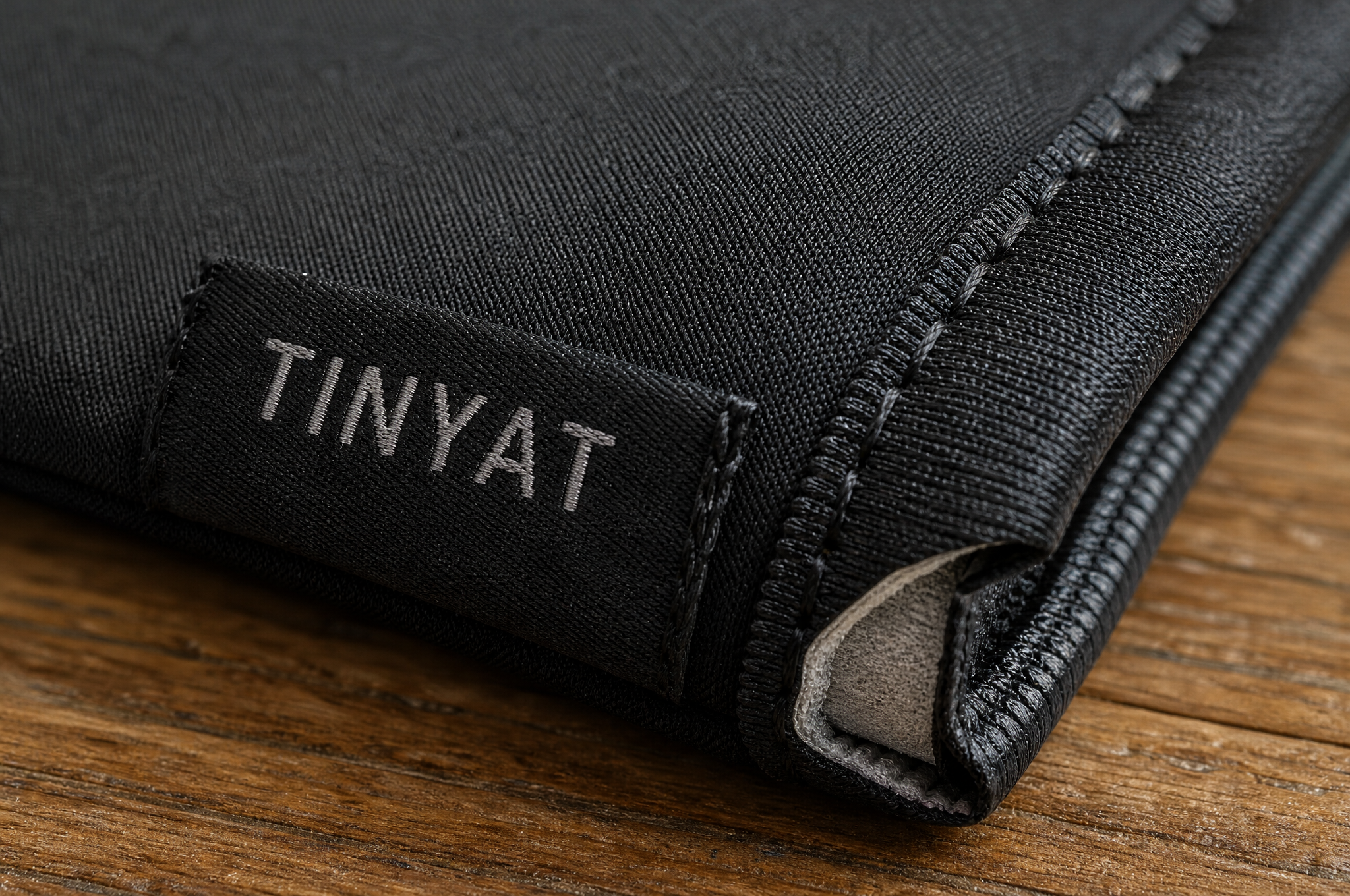
The edge treatment line is where cheap sleeves are made. A turned edge hides the cut face and costs a few seconds, a bound edge protects the foam and adds 25 seconds, and an untreated cut edge looks acceptable for about a month.
We also weigh every sleeve rather than trusting the sheet thickness, because a 4 mm neoprene sold as 4 mm can arrive at 3.2 mm. Our incoming check weighs a 200 by 200 mm sample per lot against the approved standard.
The limitation on sleeve protection
A sleeve wraps a device on five sides if it has a top opening, and four if it is a flap. The uncovered face is where a corner drop lands, and no material choice changes that. A sleeve protects against knocks and abrasion inside a bag; it is not a substitute for a padded compartment, and a listing that claims drop protection for an open-top sleeve is making a claim the product cannot support.
What the buyer sees when three samples arrive
From your side, the samples look like three versions of the same product until you handle them. The neoprene feels like a wetsuit and clings to the device. The felt feels like a tablet cover and holds a crisp shape on a table. The foam sleeve feels light and slightly stiff, and it does not slide onto a desk because the lamination grips. Customers choose on that feel, not on the drop standard, which is why buyers sometimes pick the material with the weakest protection.
A Sleeve Material Comparison
Use these lines to decide before sampling.
Neoprene 4 mm: 1.35 to 1.75 USD at 1,000 units, stretch 30 percent
Neoprene best for: snug fit, hand feel, carried-alone use
Neoprene watch: overlocked and taped seam, 4 mm seam allowance
Felt 3 mm: 0.85 to 1.20 USD, holds shape, deboss-friendly
Felt watch: compression recovery, less than 80 percent after a week loaded
Laminated EVA 5 mm: 1.05 to 1.40 USD, holds thickness, best drop performance
Laminate watch: delamination at an untreated cut edge
Edge treatment: bound adds 25 seconds, turned adds 8 seconds
MOQ: 300 pcs per colourway, 500 m mill minimum on custom neoprene face
Verification: weigh a 200 by 200 mm sample per lot, plus a corner drop at 900 mm
The verification pair covers the two things a supplier can get wrong without anyone noticing, which are thinner material than approved and a weaker edge than agreed.
Send The Device And The Use Case
Tell us the device size, whether the sleeve will be carried alone or inside another bag, and your target price. We will quote all three materials against the same device, with the edge treatment and closure costed separately, and tell you which one supports the protection claim you plan to print.
Contact [email protected] or visit www.tianqinbag.com to request samples, get a factory quote, or start an OEM/ODM project with Quanzhou Tianqin Bags Co., Ltd. Sampling lead time is 7-15 working days, and material swatches ship with the sample. Seventeen years of bag manufacturing in Quanzhou, exports to more than 50 countries, SGS test reports covering REACH, CPSIA and Prop 65 on request.


 Hot News


