 ×
×
Buyers often choose logo decoration methods based on aesthetics or price without considering the production implications. Embroidery, screen printing, and heat transfer each have different minimum order quantities, different lead time impacts, different placement flexibility, and different durability profiles under use and washing.
Making the decoration decision without understanding these implications leads to incorrect expectations about MOQ, timing, and product performance.
Embroidery stitches thread directly into the bag fabric. When done correctly, embroidery is the most durable logo decoration method — the design lasts the life of the bag and does not peel, crack, or fade under normal use.
The production implications: embroidery requires an embroidery file (DST or similar format) that must be digitized from the artwork. Digitization costs $50–150 per design and must be completed before sampling. Embroidery adds 1–2 days to the production timeline per batch (setup and machine time).
Placement limitations: embroidery works on flat and slightly curved surfaces. Bags with significant surface curvature (deep zipper pockets, shaped front panels) may not hold embroidery correctly — the design can distort or pull the fabric. Test embroidery on the specific panel and location before approving it for production.
Fabric interaction: embroidery on lightweight fabrics (below 420D) may show backing through the base fabric or cause fabric puckering. Specify tearaway backing for embroidery on lighter fabrics and cut-away backing for embroidery on stretchy or knit materials.
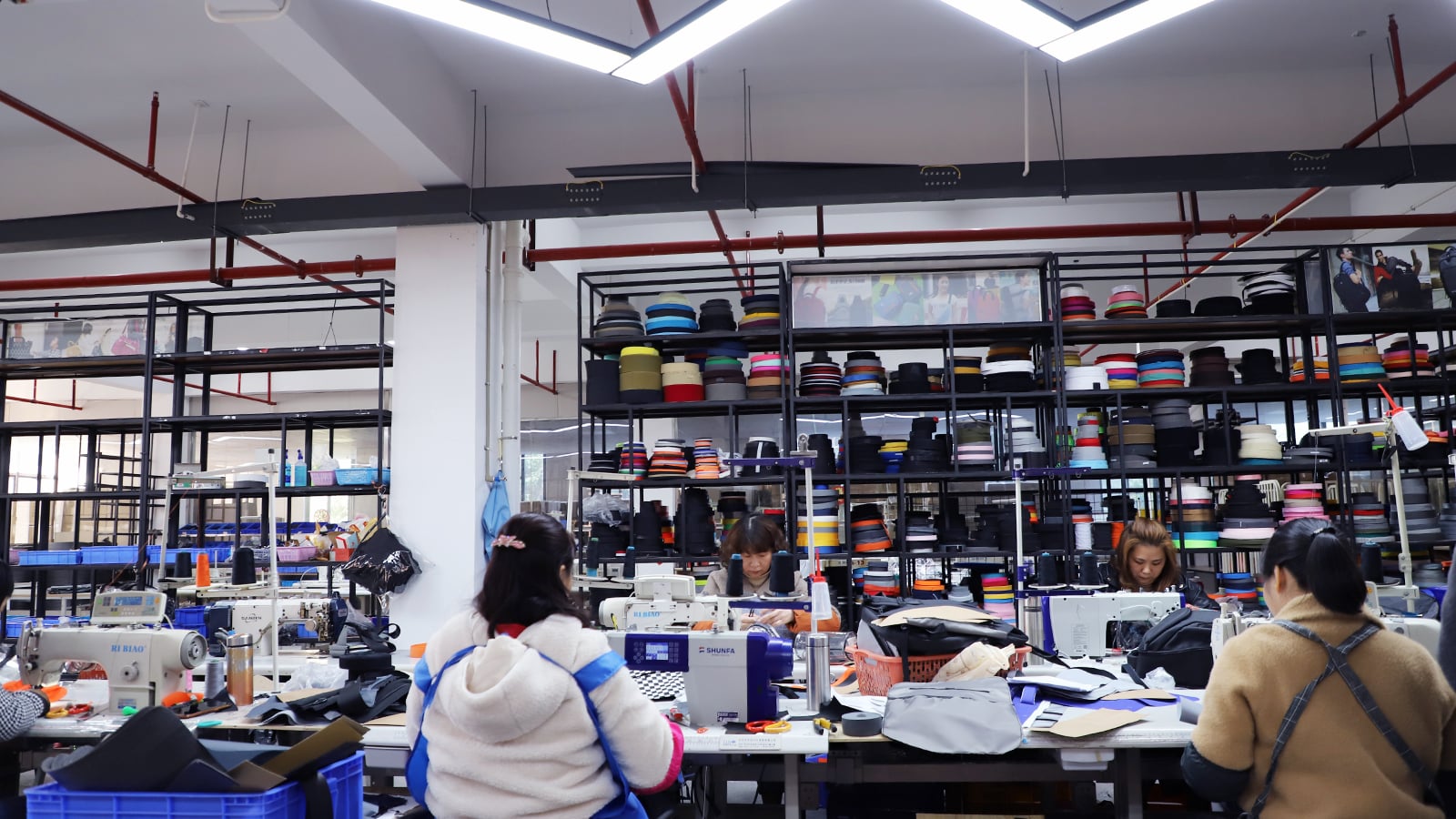
Screen printing applies ink through a stencil directly to the fabric surface. It produces vibrant, high-opacity colors and is the lowest-cost decoration method at volume.
The production implications: each screen color requires a separate screen (cost: $30–80 per color). A 3-color logo requires three screens. Screen printing has a minimum run quantity — typically 72–144 pieces per color combination — below which per-unit cost exceeds other methods.
Screen printing is applied before bag assembly in most factories — the panels are printed flat before being cut and sewn. This means all print placements must be planned into the cutting pattern. Mid-production design changes require new screens and reprinting.
Durability: screen print inks degrade faster than embroidery under abrasion, UV exposure, and washing. High-quality plastisol inks with proper cure temperatures last significantly longer than water-based inks applied without adequate heat curing.
Heat transfer applies a pre-printed film to the bag surface using heat and pressure. It offers the highest design flexibility — full color photographic images, gradients, and fine detail not achievable with embroidery or screen printing.
The production implications: heat transfer has the lowest minimum quantities (transfers can be ordered individually) and the shortest setup time. It is the most flexible option for small orders or multiple colorway variations.
Durability is the limiting factor. Standard heat transfers begin to show edge lifting and surface cracking after 12–18 months of daily use, particularly at flex points. Premium heat transfers using polyurethane film and precise application temperature hold longer, but still do not match the lifespan of embroidery on quality bags.
Surface compatibility: heat transfer requires a smooth, firm surface. It does not adhere well to textured fabrics, ripstop weaves, or mesh panels. Test adhesion on the specific fabric before specifying heat transfer as a production decoration method.
For corporate gifting bags intended to represent a brand over 2–3 years of use: embroidery is the appropriate choice if the design allows it. The durability justifies the setup cost.
For high-volume promotional bags where per-unit cost is the primary driver and the product has a short intended use life: screen printing or heat transfer at volume offers the best economics.
For small-batch or custom-colorway orders where flexibility is the priority: heat transfer with premium film is the most practical approach despite its durability trade-offs.
 Hot News


 EN
EN