
 EN



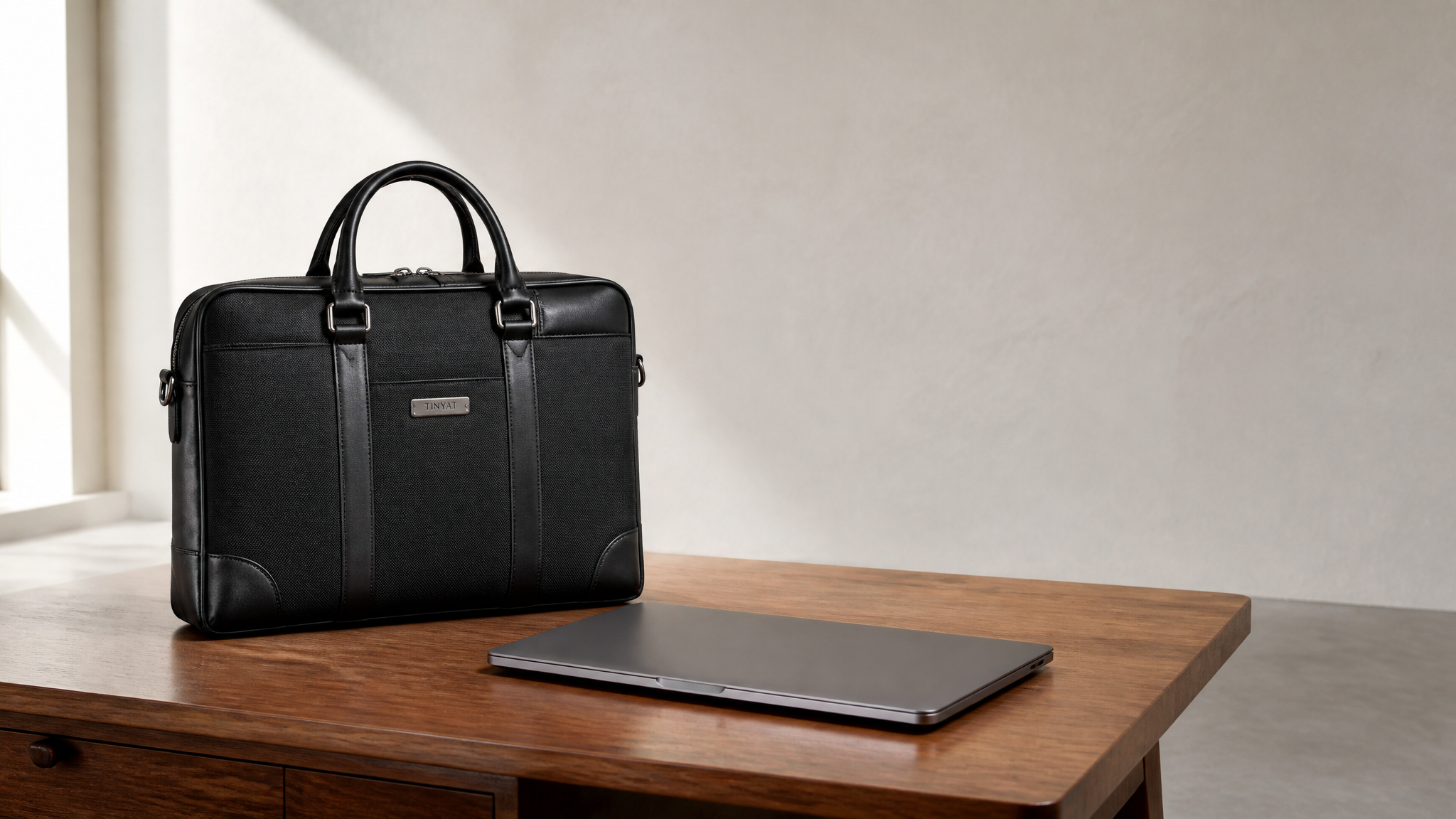 A briefcase has no visible frame. What holds its shape and takes its abuse is a set of small metal parts: the lock, the clasps, the feet, the D-rings, and the rivets that tie them to the shell. Working with a custom laptop briefcase manufacturer on structure is largely a hardware conversation, and buyers who approve the silhouette first discover in month four that the tuck lock does not latch on the tenth opening.
Hardware Is The Briefcase's Structure In Plain Sight
Three systems do the structural work on a briefcase, and all three are hardware.
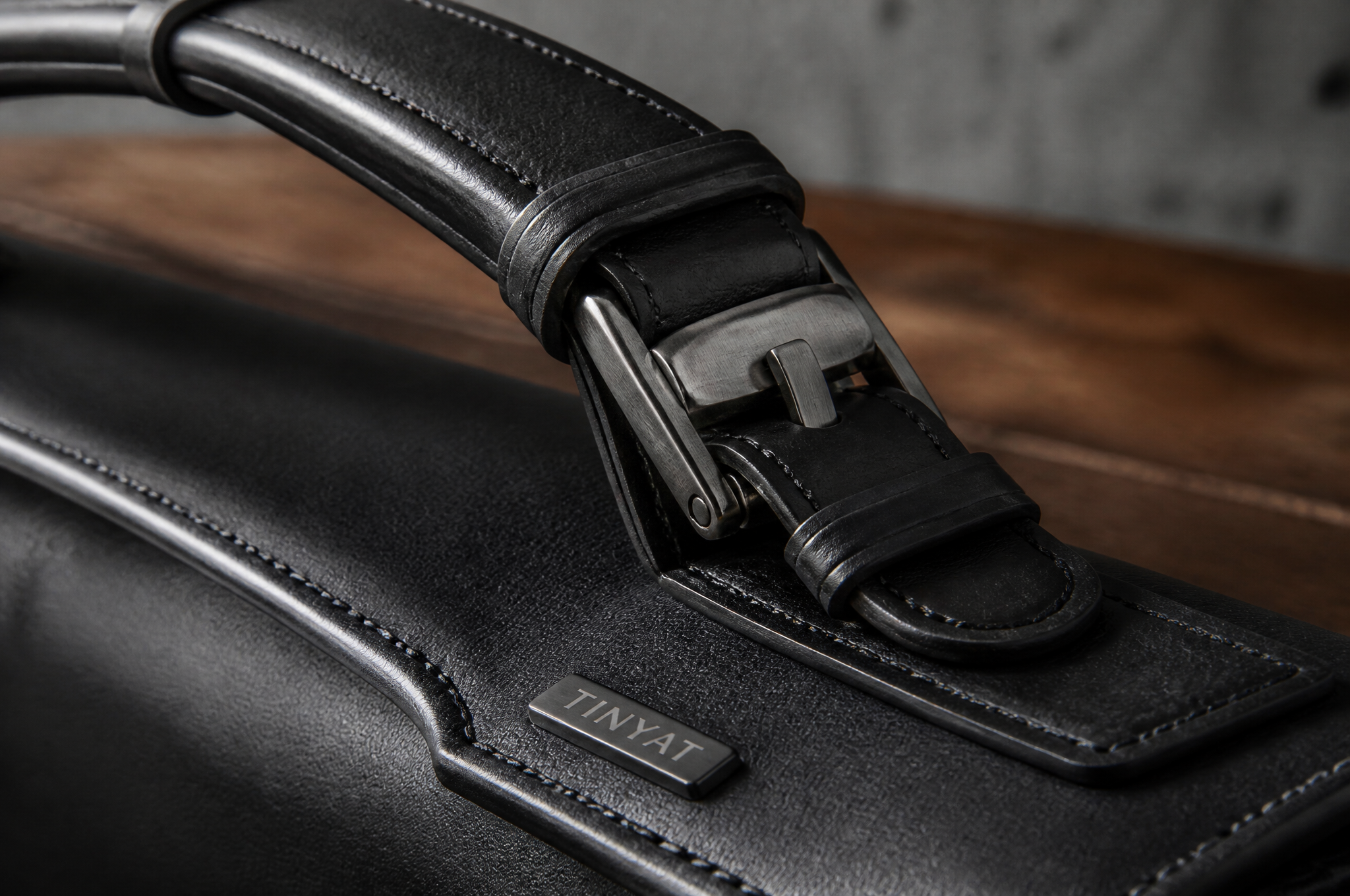
The first is the closure, which holds the bag shut and takes the load every time it is carried by the handle with the case swinging. The second is the base line, meaning the feet and the riveted corners that keep the bag off wet floors and take the impact when it is set down. The third is the attachment points, the D-rings and their backing, which convert a hand-carried case into a shoulder-carried one and take the full load when they do.
Everything else is trim. That distinction matters at quotation stage, because a buyer who moves budget from hardware to fabric gets a bag that looks better and works worse, and the failure arrives in the warranty period rather than the showroom.
Locks, Clasps, And What They Have To Survive
The closure choice drives the price and the failure mode more than any other hardware item.
Tuck lock: 4,000 to 6,000 open and close cycles, 0.28 to 0.55 USD per set, no key, and the mechanism wears at the tongue
Key lock: 500 to 1,000 key turns, 0.60 to 1.20 USD, and the key is lost within a year on most corporate programs
Combination lock: 1,500 to 3,000 dial cycles, 1.40 to 2.80 USD, and the reset mechanism is the weak point
Magnetic flap closure: 25 N hold force, no cycle limit worth quoting, and it fails by weakening rather than breaking
Snap hook and D-ring: the cheapest closure, and the one that opens accidentally in a crowded lift
For corporate programs we normally specify a tuck lock with a zinc alloy body and a stainless spring, because it has no key to lose and its failure mode is a worn tongue rather than a jammed dial. On a tender that requires a locking case, the combination unit is specified and we quote the reset mechanism separately, because that is the part that arrives as a complaint.
The test that matters more than the certificate
We cycle every lock model we use 5,000 times on a jig with a 3 kg load hanging from the case, and we record the cycle at which the latch stops engaging on the first attempt. A lock that latches on the second attempt at cycle 2,800 is already a customer complaint, even though it still latches. That criterion is written into our incoming inspection for hardware lots, and it is the single most useful number on a hardware certificate.
Feet, Rivets, And The Base Line
A briefcase is set down more often than it is carried, and the base takes all of it.
Feet: 8 to 10 mm, four or five per base, in the same finish as the lock, and attached through the base board rather than through the shell alone
Corner reinforcement: a riveted leather or 1680D patch at each base corner, 40 mm square minimum
Rivet spacing: 40 to 50 mm apart on a strap tab, so a torn rivet does not release the whole attachment
Rivet backing: an 8 mm washer on the inside face, which is what stops a rivet pulling through one layer of shell
Base board: 1.5 mm PE, positioned so the feet load the board and not the fabric between them
The feet detail is where most value programs fail. A foot riveted through a single shell layer transfers every impact into a 12 mm circle of fabric, and the fabric tears around the rivet within a season. A foot that passes through the board spreads the load across the whole base panel, and the base survives.
We also check that the feet actually raise the bag. On a 60 mm gusset case, an 8 mm foot lifts the base clear of a wet floor, and a 4 mm foot does not. That sounds trivial until a buyer in a rainy market reports water ingress through the base seam.
What A Custom Laptop Briefcase Manufacturer Specs On Hardware
Our hardware schedule for a briefcase program carries six lines, and each one is a specification rather than a preference.
Closure type and model, with a stated cycle gate and the latch criterion above
Finish and lot, one code for all visible metal, recorded on the run card
Attachment method: backed rivet, screw post with washer, or bar-tacked webbing loop
Pull gate: 90 N for any hardware attached to a panel, 600 N for any hardware on a load path
Plating and corrosion: salt spray hours stated by the buyer's market, quoted with the hardware cost
Spare parts: replacement lock and D-ring pairs supplied at 1 percent of order quantity
The spare parts line is the one buyers skip and later request in a hurry. A corporate fleet of 3,000 cases will lose keys and break tuck lock tongues, and a brand that cannot supply a replacement part sends the whole bag back into the return stream. We quote lock pairs at 1 percent of the order as standard on corporate programs, and it costs about 0.02 USD per bag.
Where the hardware budget runs out
A briefcase built with a tuck lock, four backed feet, riveted corners, and stainless springs sits about 1.10 to 1.60 USD above the same bag with a snap closure, two plastic feet, and unbacked rivets, depending on the finish and the quantities. Below roughly 7.00 USD FOB at 1,000 units, something in that list is going to move, and it is normally the backing and the feet.
We say that plainly at quotation stage, and we will build a lower-cost version. What we will not do is describe a bag with a single-layer riveted foot as suitable for a 9 kg daily load, because the return rate will make the saving meaningless.
What the buyer sees when a case is handled
From your side, the hardware test is a thirty second sequence. Open and close the lock ten times and count any second attempts. Lift the case by the handle with a device inside and listen for a click. Set it down on a hard floor and push it gently sideways to see whether it slides on its feet or grinds on the base fabric. Those three checks test closure, attachment, and base line, which is where a briefcase actually fails.
A Hardware Schedule
Send these lines with a briefcase brief before sampling.
Closure: tuck lock, zinc alloy body, stainless spring, 5,000 cycle gate
Latch criterion: engages on the first attempt at 5,000 cycles under 3 kg
Finish: matte gunmetal, one lot code, recorded on the run card
Feet: five, 8 mm, attached through the 1.5 mm PE base board
Corner patches: 40 mm square, riveted, four base corners
Rivet backing: 8 mm washer inside every rivet
D-ring: 4 mm wire, welded, 600 N pull gate, backed webbing tab
Panel attachments: 90 N pull gate, all hardware
Spares: lock pairs and D-rings at 1 percent of order quantity
Verification: lock cycle jig plus pull test, photographed per batch
That verification line is what turns a hardware list into a control, and it takes about 40 minutes per batch on our bench.
Send The Closure Requirement First
Tell us whether the tender requires a locking case, the load the bag will carry, and the finish you need to match. We will quote the closure, the base line, and the attachment method as separate lines, so you can see what each element costs and decide which one carries the price.
Contact [email protected] or visit www.tianqinbag.com to request samples, get a factory quote, or start an OEM/ODM project with Quanzhou Tianqin Bags Co., Ltd. Sampling lead time is 7-15 working days. Seventeen years of bag manufacturing in Quanzhou, exports to more than 50 countries, SGS test reports covering REACH, CPSIA and Prop 65 on request.



 Hot News


