EN



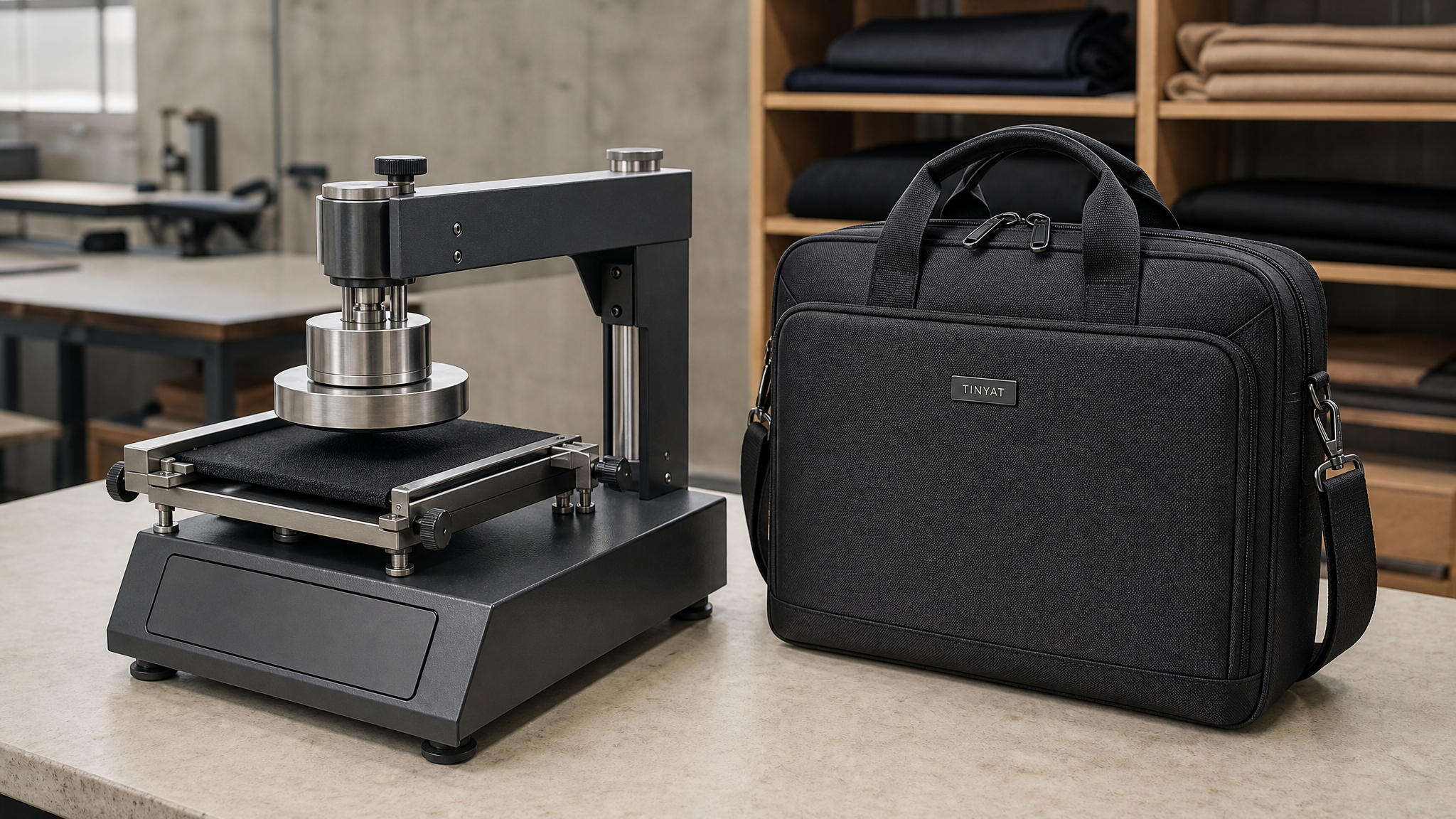 A fabric grade tells you what a mill claims. An abrasion result tells you what a bag will look like after eighteen months of desk edges, car seats, and floors. Any custom durable laptop bag manufacturer should be able to show both, because durability is measured in cycles on a specific machine with a specific abrasive rather than stated in a material name. The useful document reports four wear mechanisms rather than one.
Durability Is A Test Programme, Not A Fabric Grade
Buyers shortlist on 1680D against 600D and treat the number as a durability answer. It is an abrasion indicator, not a durability guarantee, because a bag fails in four different ways and the fabric denier speaks to only one of them.
The four mechanisms are surface abrasion, tear propagation, seam strength, and coating breakdown. A bag can pass abrasion and fail tearing at a zip end. It can pass tearing and fail because the PU coating cracked along a fold. Each has its own test and its own specification line, and the useful document is the one that reports all four rather than the one that reports a fabric weight.
We ask buyers which failure they are actually worried about, because the answers lead to different material calls. A sales bag that lives in a car boot needs abrasion and tear. A commuter bag that folds into a locker needs coating flex resistance. A bag that ships into a humid market needs coating adhesion.
Abrasion And Coating: Where Field Failure Starts
Abrasion is measured by rubbing a fabric under a defined load with a defined abrasive, and reporting either the cycles to a visual change or the cycles to fabric rupture.
Two machines dominate. The Martindale method rubs in a changing direction and suits woven shells; results are normally reported as cycles to a defined change in appearance, with 10,000 cycles a common gate for a mid-market bag shell. The Taber method uses a rotating abrasive wheel and is harsher, often used for coated surfaces and for base panels, where 500 cycles without breakthrough is a reasonable gate.
What matters as much as the machine is the failure criterion. Our reports state it: for shell panels, no visible change in appearance at 10,000 Martindale cycles; for base panels, no fabric rupture at 500 Taber cycles. A report that says a fabric was "tested to 20,000 cycles" without saying what happened at the end of them has not told you anything.
Coating behaviour is the second half of abrasion. A PU coating on a 600D shell abrades at the fold lines long before the yarn does, and the result reads to a customer as cracking rather than wear. We check coating adhesion with a cross-hatch tape test on production material and reject a lot that lifts more than 5 percent of the coating area, because a coating that lifts in the test lifts in a bag.
What A Custom Durable Laptop Bag Manufacturer Tests
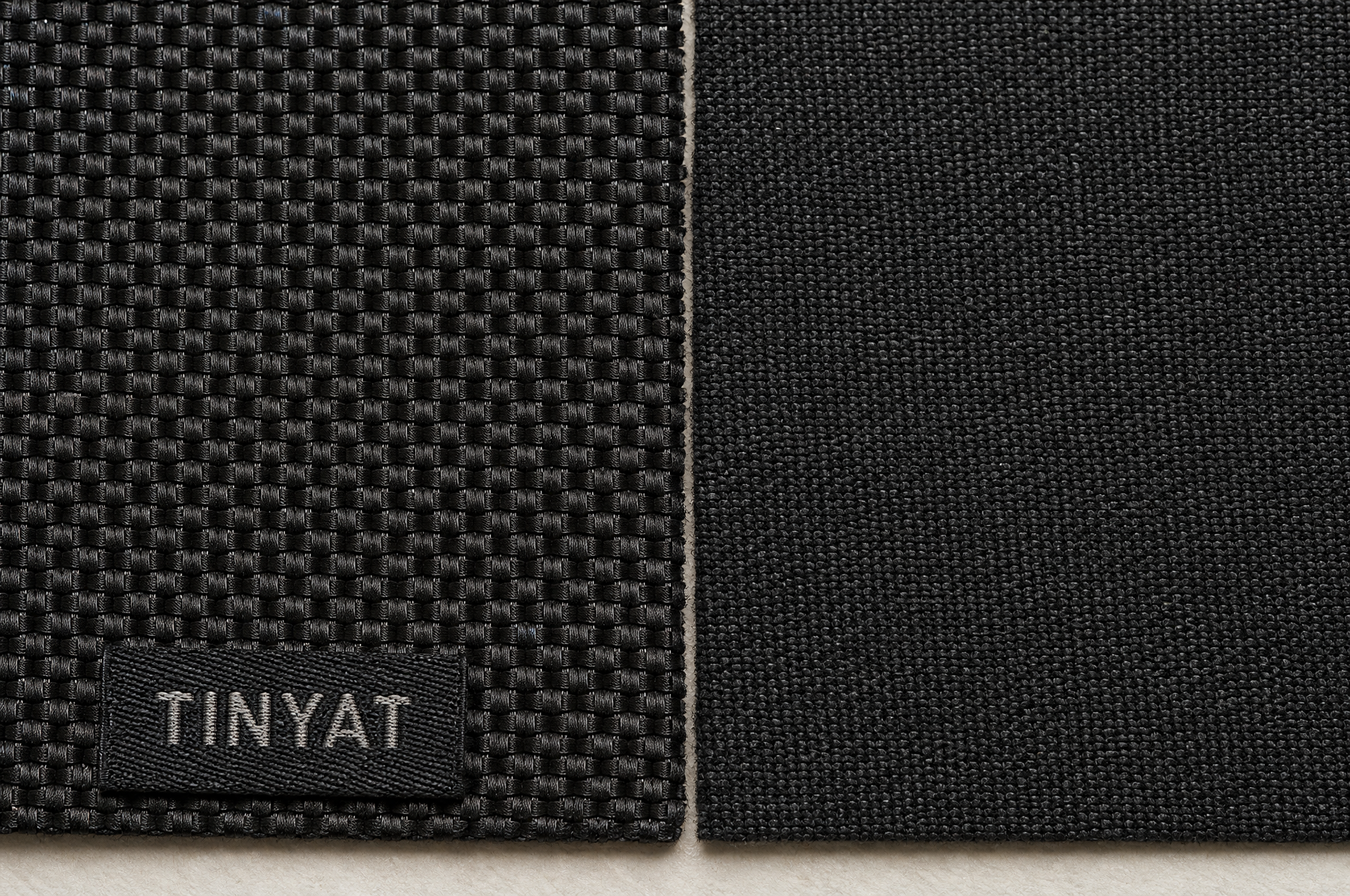
The test set on a durable program is four lines, plus a visual reference. It runs on production material rather than on a mill sample.
Abrasion, shell: Martindale, 10,000 cycles, no visible change, reported with the abrasive grade
Abrasion, base and corners: Taber, 500 cycles, no rupture, on a sample taken from a finished bag
Tear strength: a trouser tear test on shell and base, gate 25 N for a mid-market shell
Tensile: warp and weft breaking strength, used to spot a substitution rather than to predict failure
Coating adhesion: cross-hatch tape test, under 5 percent lift
Colourfastness: 4 dry crocking, 3 to 4 wet, since a worn dark panel is a visual defect before it is a physical one
The sample source line is what makes the set meaningful. Abrasion on fabric from the roll tells you about the roll. Abrasion on fabric cut from a finished bag tells you about the seam allowance, the fusing, and the coating after pressing, which is what the customer touches.
Conditioning matters and is usually left out. We rest specimens for 24 hours at 23 C and 50 percent relative humidity before abrasion, because a coated fabric taken straight from a humid warehouse abrades differently from one that has settled. A report with no conditioning line was produced quickly rather than carefully.
That distinction came out of a claim we handled for a US retailer on a 4,200 unit order. The base panels abraded through at the corners in nine months. The mill certificate showed 12,000 Martindale cycles on the fabric. When we tested the corner sample from a returned bag, the coating had already been damaged by the heat of the corner fusing operation, and the yarn underneath reached rupture at 3,400 cycles. Same fabric, different bag.
A Materials Test Sheet
Put these lines in the purchase order so the inspection has something to measure.
Shell: 1680D ballistic nylon, 1.05 mm, Martindale 10,000 cycles, no visible change
Alternative shell: 900D polyester, 0.80 mm, Martindale 8,000 cycles
Value shell: 600D polyester, 0.62 mm, Martindale 5,000 cycles, base panel reinforced
Base: double layer or 1680D over 600D, Taber 500 cycles, no rupture
Tear strength: 25 N minimum on shell, 35 N on the base
Coating adhesion: under 5 percent lift on cross-hatch
Colourfastness: 4 dry, 3 to 4 wet
Specimen source: cut from a finished bag, one per 500 units
Fusing parameters: recorded per run, since heat damage is not visible on a certificate
Report format: machine, abrasive grade, cycles, failure criterion, photograph
The fusing parameter line is unusual and important. Corner and base fusing runs at a temperature that improves the bond and degrades the coating if it is held too long, and the difference appears in the field six months later.
Where abrasion numbers stop predicting the field
Two limits need stating. The first is that a machine rubs a flat sample, and a bag abrades at corners, folds, and edges, which is where the load concentrates and where no flat test reaches.
The second is dirt. Grit between a bag base and a train floor is effectively a second abrasive, and the standard test uses a clean abrasive cloth. Roughly a third of the abrasion claims we see show visible grit damage, and those bags were set down, not abused.
There is a cost line here too. Moving a shell from 600D to 1680D adds about 0.55 USD per bag at 1,000 units and roughly 120 g, and it does not fix a seam or a coating problem. Buyers who buy the heavier fabric to solve a durability complaint sometimes find the complaint moves rather than disappears.
What the buyer sees when a test report arrives
From your side, two reports can both say 10,000 cycles. One names the machine, the abrasive grade, the failure criterion, the specimen source, and includes a photograph of the tested area. The other is a one-page certificate with a logo. The difference is only visible when you compare them side by side, and by then the order is usually placed.
Send The Failure You Are Trying To Prevent
Send us the complaint you are trying to design out, with a photograph if you have one, plus your shell and base price allowance. We will tell you which test addresses it, which material change actually moves the number, and what that change costs per unit at your quantity, rather than quoting the heaviest fabric in the sample room.
Contact [email protected] or visit www.tianqinbag.com to request samples, get a factory quote, or start an OEM/ODM project with Quanzhou Tianqin Bags Co., Ltd. Sampling lead time is 7-15 working days, and test reports are issued with the sample set. Seventeen years of bag manufacturing in Quanzhou, exports to more than 50 countries, SGS test reports covering REACH, CPSIA and Prop 65 on request.


 Hot News