
 EN



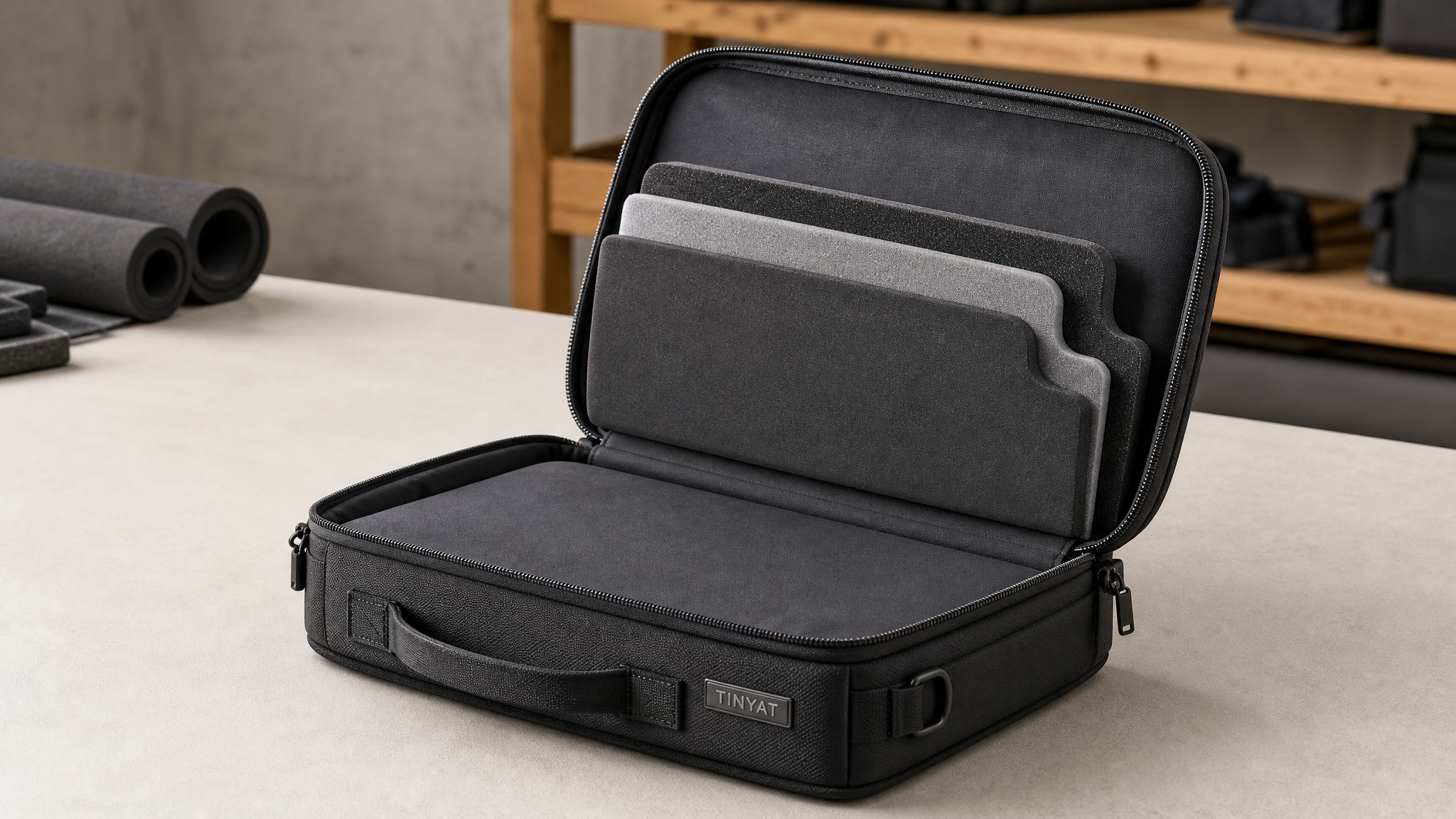
Two samples arrive with the same 8 mm padding on the specification sheet. One protects a device from a desk-height drop and the other does not, and the difference is not thickness. It is density, measured in kilograms per cubic metre, and it is the number most buyers never ask for. Working with a custom padded laptop bag manufacturer on protection means specifying density and compression behaviour, then testing the assembled bag rather than trusting a foam grade name.
Density Is The Number That Decides Protection
Foam protects by decelerating a device over a distance and by spreading the force over an area. Thickness controls the distance. Density controls how the material behaves while it is being compressed, and how much of its thickness it recovers afterwards.
Three grades cover most of what we use in laptop bags.
45 kg/m3 polyurethane: soft, cheap, comfortable against a body, and it bottoms out under a concentrated load
60 kg/m3 polyurethane: the middle grade, adequate for 6 mm layers behind a shell, poor at edges
120 kg/m3 cross-linked polyethylene or EVA: firm, does not bottom out at 4 mm, recovers fully, and costs roughly twice the 45 kg/m3 grade
A bag built with 8 mm of 45 kg/m3 foam feels protective and behaves badly. Press a device corner into it and the foam compresses to 2 mm locally, which means the corner sees almost no deceleration distance. The same 8 mm in a 120 kg/m3 cross-linked sheet compresses to 5 mm and holds.
Grade names mislead as well. EVA, polyethylene, and memory foam are sold under loose trade names, and two suppliers quoting EVA at 120 kg/m3 can deliver materials with different compression curves. We keep an approved sample of every foam we use in a sealed bag with its measured density written on it, and incoming lots are compared against that bag rather than against a data sheet.
Why Thickness Alone Fails
Two mechanisms explain the failures we see in warranty returns on padded laptop bags.
The first is bottoming out. Every foam has a compression curve, and past a certain load it stops deforming gradually and becomes effectively solid. On a 45 kg/m3 sheet, that point arrives at a low force, and a 2 kg device dropped from 800 mm reaches it easily. The bag's padding is then a thin hard layer, and the chassis takes the impact.
The second is compression set. Foam that is compressed repeatedly while the bag is full takes a permanent reduction in thickness. We measure this by compressing a sample to 50 percent for 22 hours and reading the recovery after 30 minutes. Our gate is under 8 percent permanent set. A cheap polyurethane foam can show 15 to 20 percent, which means the 8 mm pad is 6.5 mm after a season, and the protection the buyer paid for has quietly left the bag.
Cold changes the picture further. A polyurethane foam stiffens below about 5 C, so a bag left in a car overnight protects differently in January than in June. Cross-linked polyethylene is far less sensitive to temperature, which is why we default to it on programs sold in northern markets.
What A Custom Padded Laptop Bag Manufacturer Measures
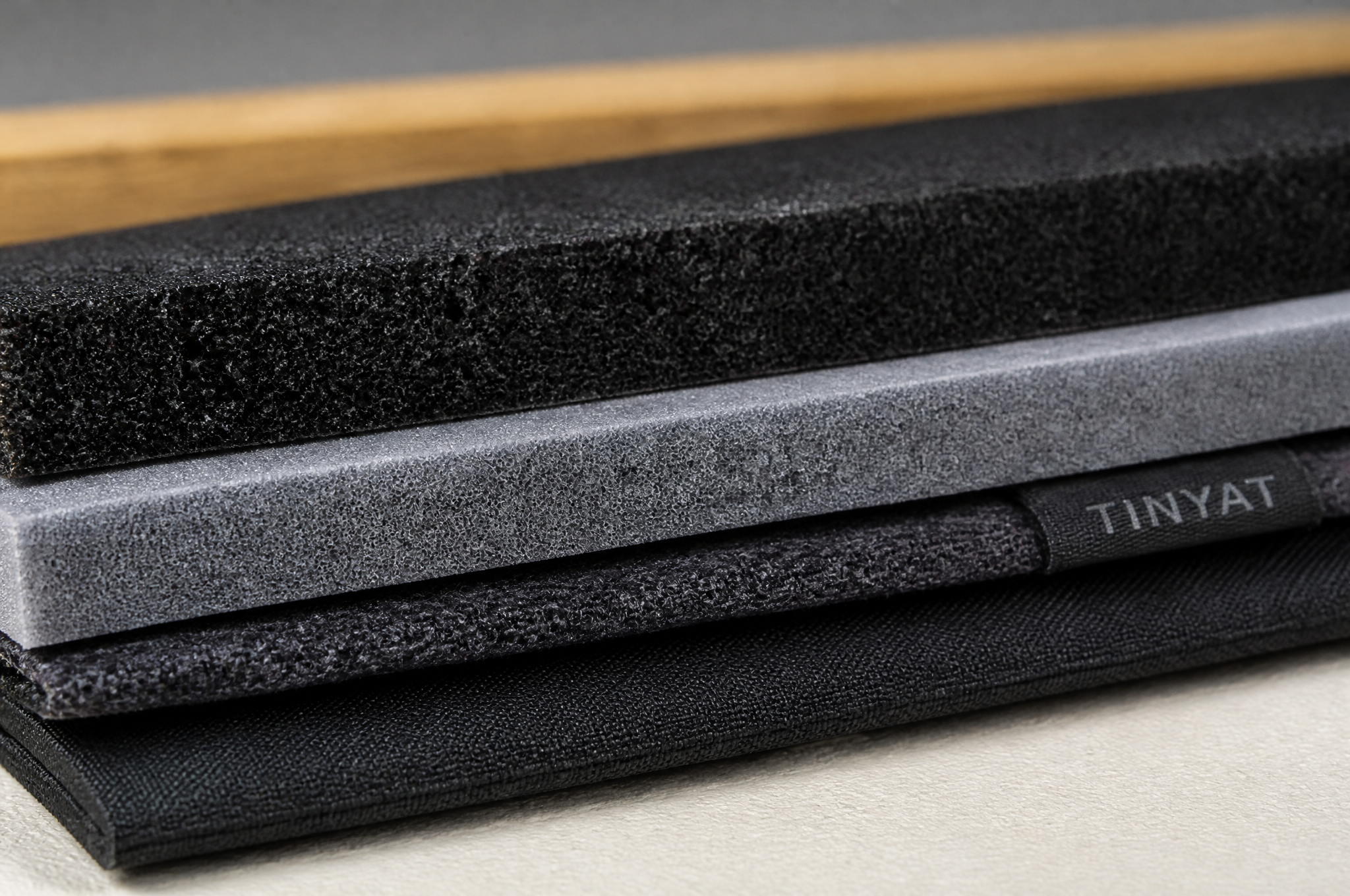
Four measurements go on our foam sheet for every padded program, and all four are taken on production material rather than on a sample the mill sent.
Density by weight: a 100 by 100 mm square weighed and converted, because a supplier's stated density is a nominal grade rather than a measurement
Thickness under load: initial thickness, then thickness at 2 kg per square decimetre
Compression set: 50 percent compression for 22 hours, recovery measured after 30 minutes
Hardness: a shore or compression deflection reading at 25 percent strain
The weight check is the most useful and the cheapest. Foam is sold by density and shipped by volume, and a sheet that measures 40 kg/m3 against a 60 kg/m3 order is a substitution that no visual inspection catches. We weigh a 100 mm square from each lot, record the value on the run card, and reject a lot that varies more than 8 percent from the approved sample.
That practice exists because of a specific order. A buyer had approved an 8 mm pad on a sample and received a bulk run that felt identical in the hand and failed a 1,000 mm drop test in our own bench. We weighed both: 47 kg/m3 against the approved 120 kg/m3. The supplier had sent the right thickness in the wrong grade, and only the scale found it.
The assembled bag is what gets dropped
Foam specifications describe material. Drop performance describes a bag, and the two do not follow automatically, because the shell, the zip flap, and the seam allowance all change how force reaches the foam.
Our padded program drop test runs 1,000 mm onto a concrete base, six faces, with a 2.5 kg steel dummy in the sleeve. We drop corners first, because a corner concentrates the load on about 20 by 20 mm of padding. A bag that passes the face drops and fails the corner drop has a correct foam spec and a missing edge layer, and only the test shows that.
A Foam Specification Sheet
Send these lines with a padded brief so the quotation and the sample agree.
Foam grade: cross-linked polyethylene, 120 kg/m3, or EVA at the same density
Face thickness: 8 mm on the device-side panel, 5 mm on the outer panel
Edge layer: 4 mm at the four sleeve edges, which is where corner drops land
Compression set gate: under 8 percent after 50 percent compression for 22 hours
Density verification: 100 by 100 mm sample weighed per lot, plus or minus 8 percent
Thickness under load: 5 mm minimum at 2 kg per square decimetre
Base: 12 mm raised false bottom, foam on a 1.5 mm board
Drop standard: 1,000 mm, six faces, 2.5 kg dummy, corner drop included
Zip protection: 2 mm foam flap behind the zip line
Cold check: drop test repeated after 4 hours at minus 5 C for northern markets
Weight impact: about 60 g more than 45 kg/m3 at the same thickness
That last line is the trade-off in one number. Higher density costs about 0.18 USD per bag at 1,000 units and adds around 60 g. Buyers who are chasing an empty weight target often remove density rather than thickness, because the bag still looks padded in a photograph, and that is the choice that produces cracked devices and returns.
What the buyer sees when a padded sample is squeezed
From your side, a padded bag feels protective in the hand and there is no way to feel density. Press a thumb hard into the sleeve over a table edge: if it reaches the table with light pressure, the foam is bottoming out and the drop performance is nominal. Then look at the edges, which are the thinnest part of any padded bag and the first place a dropped device finds.
Send The Drop Height And The Device Weight
Tell us the drop height your market expects, the device weight, and the empty weight target you are working to. We will return a foam schedule with the grade, thickness by panel, compression set gate, and the cost and mass impact of each choice, so the protection and the weight target are decided with numbers rather than adjectives.
Contact [email protected] or visit www.tianqinbag.com to request samples, get a factory quote, or start an OEM/ODM project with Quanzhou Tianqin Bags Co., Ltd. Sampling lead time is 7-15 working days, and padded samples are drop tested before they ship. Seventeen years of bag manufacturing in Quanzhou, exports to more than 50 countries, SGS test reports covering REACH, CPSIA and Prop 65 on request.
 Hot News


