
 EN



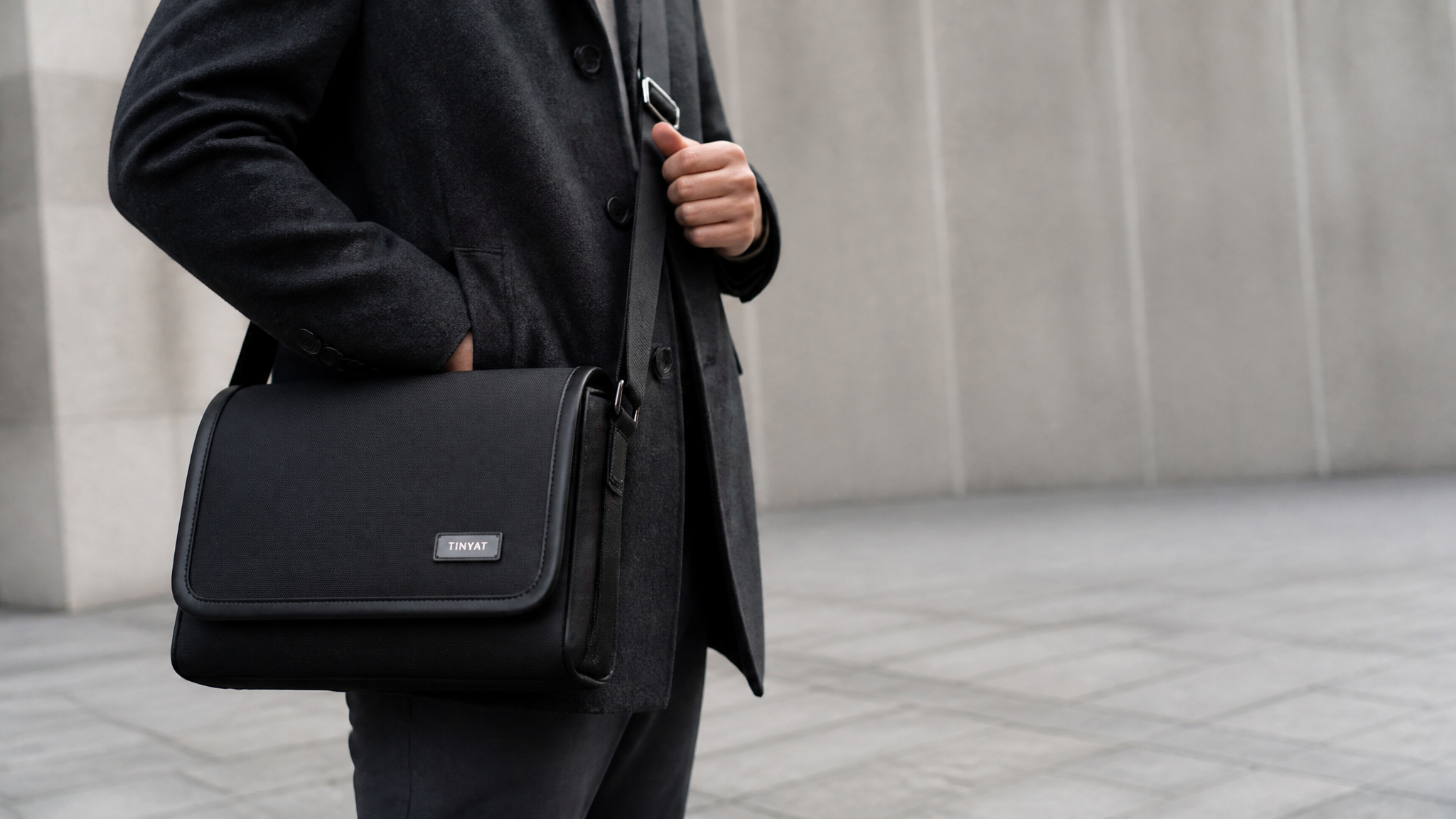
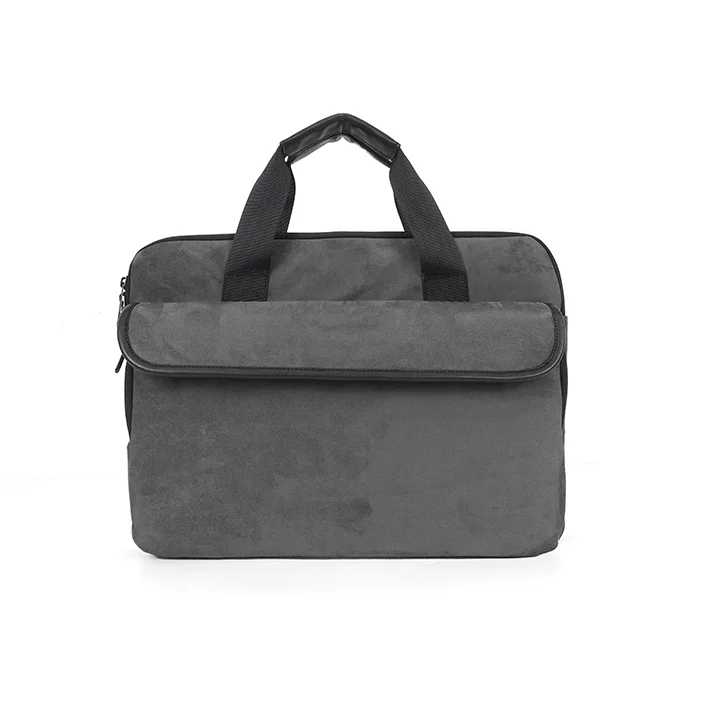
The flap on a messenger bag does three jobs at once: it covers the opening, it holds the bag shut, and it is the surface the customer lifts a thousand times a year. Any custom laptop messenger bag manufacturer builds that flap around geometry rather than around finish. A flap 10 mm too short lets rain into the gusset, and a flap that curls stands away from the bag and looks worn within a season.
The Flap Is A Hinge, A Seal, And A Lock
Most messenger failures we see trace to the flap, and they split into three types.
Hinge failure happens where the flap meets the back panel. That fold takes a 90 degree bend on every opening, so it needs a bar-tack at each end of the fold line and a seam that is not run to a sharp corner. Without that, the shell cracks at the fold within a season, and the crack runs from the corner inward.
Seal failure happens at the flap edge. A flap must overhang the gusset by at least 15 mm on the two long sides and 20 mm on the front edge, otherwise water runs under the edge and into the opening. A flap that sits exactly flush looks neat in a photograph and leaks in rain. We specify a 20 mm overhang on the front edge for markets with real rainfall and 15 mm elsewhere.
Lock failure happens at the closure, and it is a force problem rather than a strength problem. A closure that needs two hands gets left undone, and an undone flap on a moving bag flaps and creases.
Closure Types And What They Cost
Four closures are practical on a messenger, and each changes how the flap is built.
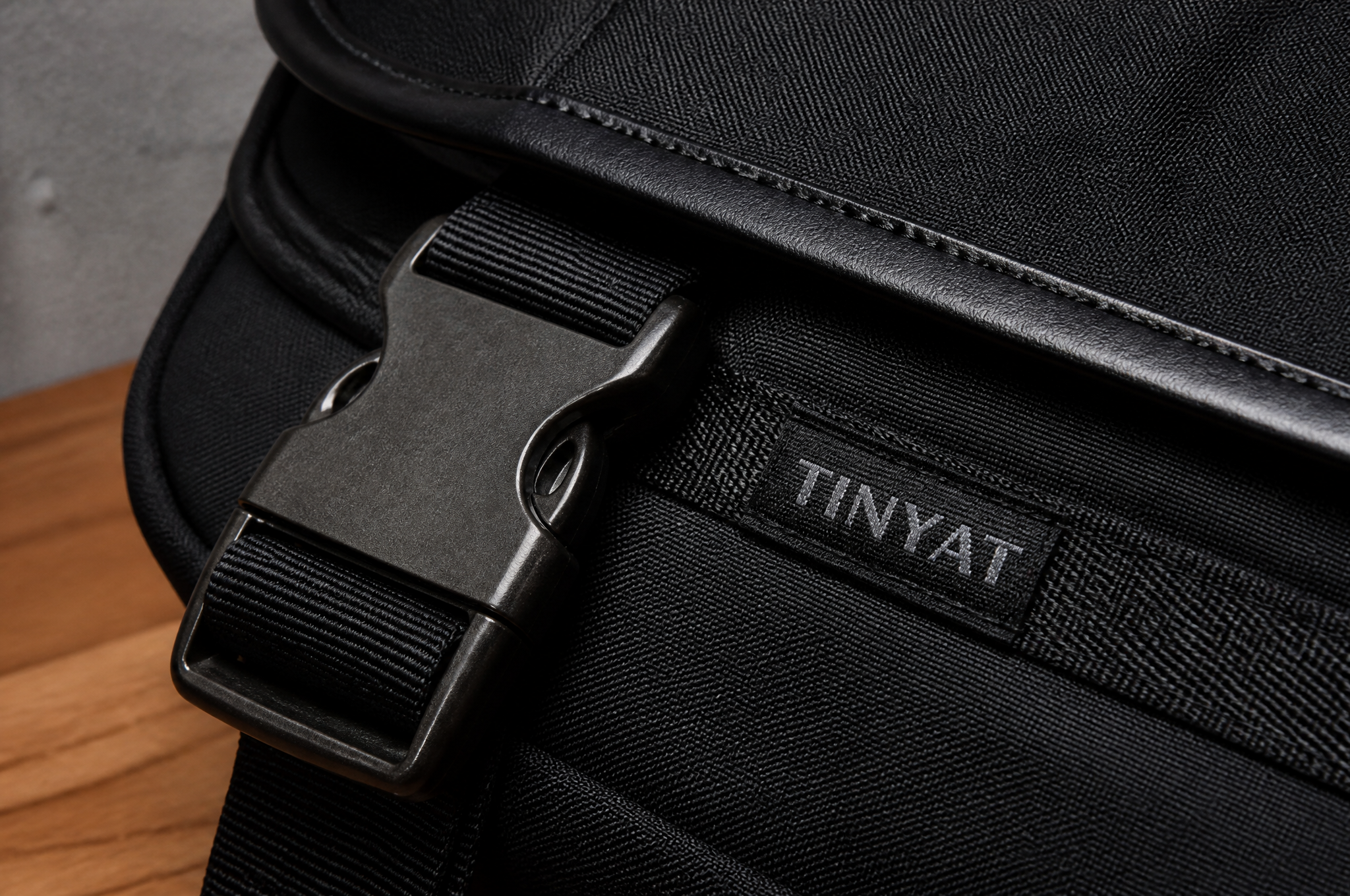
Two buckles with magnetic snaps: 0.34 to 0.62 USD, opens with one hand in about 2 seconds, and the classic look that buyers in the EU ask for
Single centre buckle: 0.18 to 0.30 USD, cheaper, and the flap corners lift in wind
Concealed magnetic closure under the flap: 0.10 to 0.16 USD, fastest to open, no visible hardware, and easiest to open by someone else
Velcro strip: 0.04 to 0.08 USD, and it wears out in about 3,000 cycles while collecting lint for its whole life
Our default on a laptop messenger is the buckle plus magnetic snap combination. The magnet holds the flap down when the buckle is undone, which is what stops the flap curling, and the buckle gives the bag its visual weight. The cost is roughly 0.22 USD above a Velcro version, and it removes two complaint categories at once.
The magnet strength matters. A 25 N hold force keeps a flap closed while walking and still opens with one hand. A 45 N magnet feels secure in the shop and tears the flap lining at the magnet pocket after a year, because the pocket takes a peel load every time the flap is lifted from one corner.
The flap lining detail
A flap is two layers of shell with a stiffener between them, and the stiffener is what prevents curl. A 0.8 mm PE sheet cut 8 mm inside the flap edge holds the shape and keeps the edge soft enough to sew.
Without a stiffener, a 600D flap curls upward at the corners within weeks in a humid market. We had a program in Singapore where a buyer reported 40 percent of units showing flap curl at the corners after one monsoon season. The flap had no stiffener and the shell was a lightweight 600D. Adding a 0.8 mm PE insert and moving to a 900D shell added 0.16 USD per bag and removed the complaint entirely on the next run.
Strap Fit Across The Body
A messenger is carried diagonally, so the strap has to be long enough for the wearer and short enough that the bag sits at the hip rather than at the knee.
The measurement that matters is the strap length from end to end, measured flat, including hardware. Our range for a cross-body laptop messenger runs 1,250 to 1,550 mm of total webbing, with an adjuster that gives 300 mm of travel. A bag that tops out at 1,300 mm will not fit a wearer above about 1.85 m in a winter coat, and the complaint will read as "strap too short" rather than as a sizing issue.
Three other geometry decisions belong in the same conversation.
Pad position: a 200 mm sliding pad rather than a fixed one, because the shoulder point moves with the wearer's clothing
Attachment angle: the strap should meet the bag at 20 to 30 degrees from vertical, so the bag hangs flat against the hip rather than swinging on a corner
Stabiliser: a 25 mm webbing loop at the back that a second strap or a waist link can pass through, which stops the bag rotating on a bike
We also move the D-rings 40 mm off the side seam on a messenger, which changes the hang angle and stops the bag rolling forward when it is full.
What A Custom Laptop Messenger Bag Manufacturer Checks On A Flap
Flap and strap checks run before the bag goes to the general inspection, because they are geometric rather than cosmetic.
Flap overhang: 20 mm front edge, 15 mm sides, measured on a loaded bag
Flap squareness: corners within 3 mm of each other, since a twisted flap never sits flat
Hinge reinforcement: bar-tack at both ends of the fold line, 20 mm minimum
Closure cycles: 3,000 open and close cycles on the flap with the bag loaded
Magnet hold: 25 N plus or minus 5 N, measured with a pull gauge
Strap length: 1,250 to 1,550 mm flat, with 300 mm of adjustment
Buckle pull: 600 N static on the strap hardware
Curl check: flap stored loaded for 72 hours at 35 C and 80 percent humidity, under 4 mm curl
The humidity check is the one that predicts the complaint. A flap that curls in a conditioning chamber curls in a car, and no factory check on a dry winter morning finds it.
What the buyer sees when the flap is lifted
From your side, the first test is one hand. Can you open the bag and reach a device while it is hanging at your hip? If the answer needs two hands, the closure is wrong regardless of how it looks. Then look at the flap edge against the gusset: if the edge sits flush, water will find the opening, and the customer will report a wet device rather than a design flaw.
A Flap And Strap Sheet
Send these lines with a messenger brief.
Flap: stiffened with 0.8 mm PE, 8 mm inside the edge, two shell layers
Overhang: 20 mm front, 15 mm sides, checked loaded
Hinge: bar-tack 20 mm at both ends of the fold line
Closure: two buckles plus magnetic snaps, 25 N hold
Closure gate: 3,000 cycles on a loaded bag
Strap: 40 mm webbing, 1,250 to 1,550 mm flat, 300 mm adjustment
Pad: 200 mm sliding, 10 mm foam
Attachment angle: 20 to 30 degrees from vertical
Hardware gate: 600 N static on strap ends
Weight target: 900 to 1,050 g at 15.6 inch
Verification: loaded flap photograph, plus curl check after 72 hours at 35 C
That verification pair is the whole acceptance test, and both items can be done before the container is booked.
Send The Wearer Heights And The Weather
Tell us the wearer height range in your market, whether the bag will be used on a bike, and the rainfall your customers actually see. We will size the strap range, specify the flap overhang and stiffener, and quote the closure options with the cost of each, so the flap and the fit are decided before sampling rather than after the first complaint.
Contact [email protected] or visit www.tianqinbag.com to request samples, get a factory quote, or start an OEM/ODM project with Quanzhou Tianqin Bags Co., Ltd. Sampling lead time is 7-15 working days, and samples can be built with your chosen closure set. Seventeen years of bag manufacturing in Quanzhou, exports to more than 50 countries, SGS test reports covering REACH, CPSIA and Prop 65 on request.

 Hot News


