
 EN



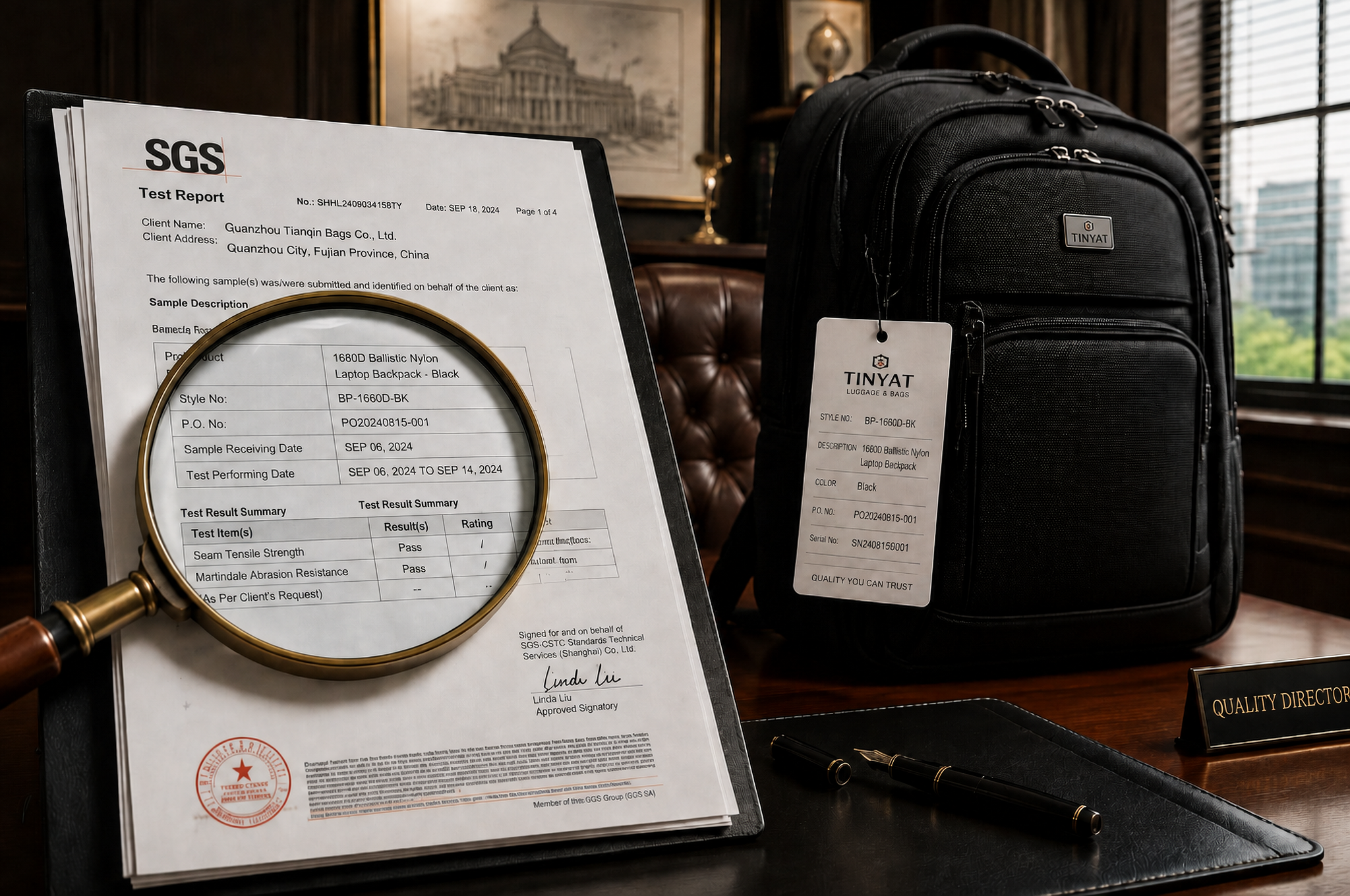
A buyer once forwarded us a nine-page SGS report and asked us to match it. We read the sample description line first. It named a 600D polyester shell in black. The bag the buyer wanted was a 1680D ballistic nylon shell in charcoal. The report was genuine, the lab was reputable and the document was worth nothing for that order. Nine pages looked like proof and covered a different product. Most report problems are found or missed in the first ninety seconds of reading.
What a test report proves, and what it does not
A test report proves that a specific laboratory tested a specific sample, described in the report, against a specific standard, on a specific date, with a stated result.
It does not prove that your supplier's production matches that sample. It does not prove that the mill did not change. It does not prove that the tested color and the production color are the same dyes. It does not prove that the whole backpack is compliant, only the components listed on the report.
This is the gap where importers lose money. The document is accurate. The inference the buyer draws from it is not.
The first question most buyers ask us is whether we are SGS certified. Factories are not SGS certified for substance testing. We are tested by SGS. The distinction matters, because a factory with an SGS mark on a letterhead is not the same thing as a product with a valid component-level test report behind it.
Reading the header block before anything else
The first page answers the questions that decide whether the rest of the document is usable.
Report number and issue date, so you can confirm it is the latest version and not a superseded one
Test standard and year version, for example EN 71-3 or the applicable CPSIA method, with the revision stated
Sample name and description, in the supplier's own words, not a generic category label
Sample receipt date and test completion date, so you know how long the result has been in circulation
Client name, which should be your supplier or the mill, and the applicant name if different
Photograph of the submitted sample, where the lab includes one
If the sample description is vague, stop there and ask for a re-issue with a precise description. A line that reads "backpack fabric, black" will not survive a retailer audit and will not protect you in a customs dispute.
Matching the report to your bill of materials
Compare the report's component list against your own bill of materials, line by line. Do this in writing, not by eye.
Four checks catch most mismatches.
Construction and denier. A report on 600D Oxford polyester does not clear 1680D ballistic nylon. Different yarn, different coating, different finishing route.
Color. Dye chemistry follows color. A black shell report does not clear the same construction in navy or charcoal, because the dye recipe and sometimes the dye class change with the shade.
Component identity. Zipper tape, binding tape, webbing, thread, foam and print ink each need their own line if the regulation applies to them. A shell-only report leaves the trims uncovered.
Supplier identity. If the report names a mill that is not the mill on your purchase order, the file does not describe your supply chain.
At Tianqin, every SGS file we hold is logged against the material code, the color code and the component name in our own system, so a buyer can request a report by material code and receive the exact document rather than a plausible one. We keep 11 reports on file for the standard 1680D ballistic nylon laptop backpack platform, covering shell, lining, webbing, foam, zipper tape, metal hardware and print ink.
The three gaps that cause rejections
Expired against a changed limit. Substance restrictions are revised. A report issued three or four years ago may reference a limit value that has since been tightened or a listed substance that has since been added. The product has not changed, and the report is still out of date.
Partial coverage sold as full compliance. A single-line azo test on the shell gets presented as a compliance pack. It answers one question about one material.
Mismatched to production. The sample was made from a development mill run in a different color, or the trim supplier changed after the sample was approved. The tested item and the shipped item diverged without anyone making a decision about it.
None of these shows up as a fraud. They show up as a report that looks complete until an auditor asks a specific question about the lining, or about the ink, or about the color change in the second production run.
The report review checklist we use before sending files to a buyer
Run this list against every report before it goes into a document pack. It takes about 10 minutes per report.
Confirm the report is still within your retailer's validity window, which is often 12 months and sometimes 24
Confirm the standard and revision stated on the report are the ones your market currently requires
Confirm the sample description names the material, the construction and the color in specific terms
Confirm the tested components cover every item your bill of materials flags as restricted
Confirm the applicant and the mill named match your actual supply chain
Confirm the test item list matches the regulation you are claiming coverage for
Confirm the result column states a numeric result and not only a pass word, where the standard gives a limit
Confirm the report language and format are accepted by your retailer or marketplace compliance desk
If a row fails, request a new test rather than an explanation. A written explanation from a supplier does not travel through customs or through a retailer audit.
What this costs, and where we take the risk
A correct component-level pack for a two-color laptop backpack program typically runs 9 to 11 test lines, which we quote alongside the sample so the number is visible before the order is placed. Standard turnaround at SGS for textile substance testing is 5 to 7 working days, and we schedule it in parallel with sample approval rather than after it.
Honest limitation: parallel scheduling occasionally wastes a test. If a buyer changes the shell material after the sample is approved, the report lines for the original material are spent. We would rather absorb that occasional waste than put the lab behind the sample approval and push every compliant order into a delayed booking. Buyers who change materials late should expect to pay for the replacement test pack.
Ask for the right documents, not more documents
Do not collect a thicker pack. Collect a smaller pack that matches the product you are actually shipping, with one report per restricted component, one color per report line, and a date inside your retailer's validity window.
Send your bill of materials and destination channel to [email protected]. We will list which SGS reports already exist for each material code and which components need new testing, before you place the order. Sampling runs 7 to 15 business days, and factory and product information is at www.tianqinbag.com.


 Hot News


