
 EN



A buyer sends us a target FOB price of USD 10.00 and a target retail price of USD 39.99, and expects both to hold. Then freight, duty, and wholesale terms land in the spreadsheet, and the margin that looked comfortable at the sample table has disappeared by the time the first purchase order is written. Price positioning is a waterfall problem. Get the sequence wrong and no amount of factory negotiation recovers it.
Work Backward From the Retail Price
Setting a price from the FOB upward almost always overshoots the market. The retail shelf tells you what the customer will pay, and the waterfall tells you what you can afford to build.
Retail positioning also sets material expectations. A backpack sitting at USD 39.99 in a US big-box store is judged against 600D polyester shells, basic foam padding, and generic zippers. A backpack at USD 129.00 is judged against 1680D ballistic nylon, YKK zippers, an airflow back panel, and a structured base. If a brand samples the higher build and prices at the lower band, the unit cost will not close, and the discount needed to move stock will erase the launch margin.
One more input belongs at this stage: the competitive set. Pull the five products your target customer compares against, note their retail prices, and write down why a shopper would pick yours. If the answer is a better laptop pocket and a stronger warranty, the band can hold above the median. If the answer is simply a lower price, the waterfall will not support the same build, and the brand is buying market share with margin it does not have.
Capacity works the same way. A 30L silhouette can carry a higher price than a 22L silhouette in the same channel, but only if the extra volume is visible in the product photography. Retail buyers who cannot see the difference will not pay for it.
The FOB-to-Retail Waterfall, Line by Line
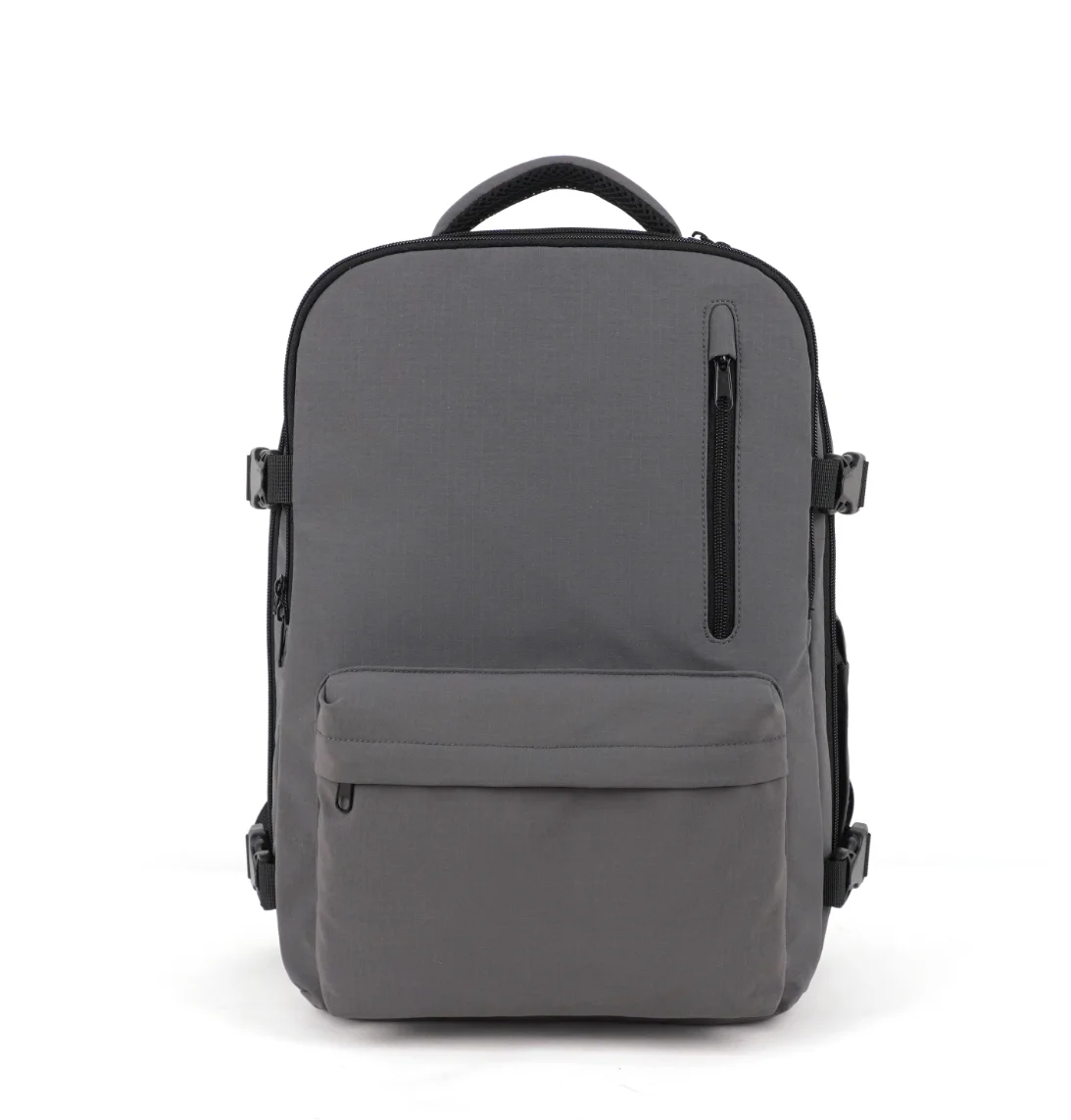
Take a 25L laptop backpack with a 15.6-inch sleeve, a 600D Oxford shell, YKK zippers, and a padded 8 mm EVA base panel.
FOB Quanzhou: USD 10.60 per unit.
Ocean freight and inland drayage to a US 3PL: USD 0.85 to USD 1.40 per unit at 60 percent container fill.
Duty at 17.6 percent on the FOB value: about USD 1.87 per unit.
Customs brokerage, ISF, and port fees: USD 0.15 to USD 0.30 per unit.
Landed cost at the 3PL: roughly USD 13.50 per unit.
Wholesale price to a retailer at 50 percent off a USD 39.99 MSRP: USD 20.00.
Gross margin at wholesale: about USD 6.50 per unit, or 32 percent.
That 32 percent has to absorb marketing, returns, sample costs, and unsold inventory. A brand that treats it as profit will run out of cash in the second season, which is exactly when the reorder is largest and least affordable.
Where Brands Misjudge the Numbers
Freight is the most common error because it is quoted per container, not per unit. A 40HQ holds roughly 1,400 to 1,900 laptop backpacks depending on carton size. Our standard export carton for a 25L backpack measures 60 x 45 x 40 cm with 10 units per carton, which is a solid packing ratio but not the best possible. Going to 8 units per carton with a slightly deeper box can add about 100 units per container and shave USD 0.20 off the per-unit freight, at the cost of a heavier box that is slower for a warehouse picker to handle.
Duty classification is the second trap. Backpacks are not treated as textiles for duty purposes in the US. The classification sits under 4202.92 and carries a 17.6 percent rate. Duty is assessed on the FOB value, so some buyers ask us to lower the declared value to reduce it. We decline, because the customs risk outweighs the saving and a held shipment costs more than the duty on the whole order.
Currency movement is the third trap and the least discussed. A 2 percent swing on EUR/USD against a USD 10.60 FOB is USD 0.21 per unit, which is more than the saving from repacking the carton. Brands that quote in one currency and pay in another are exposed on every order, not just the first one.
Landed cost also moves with payment terms. When a supplier quotes FOB and the buyer books freight separately, the per-unit freight cost is fixed at booking. When freight is billed after arrival with a peak-season surcharge, landed cost can shift by 15 percent between the quote and the invoice. That is why we quote with an explicit validity window of 30 days and state the freight basis in writing.
Wholesale, Retail, and DTC Margin Compared
Each channel carries a different margin structure and a different cost to serve.
Specialty retail, wholesale at 50 percent off MSRP: the retailer keeps 50 points and the brand keeps roughly 32 points after landed cost.
Distributor channel at 40 to 45 percent off MSRP: lower margin per unit, larger order sizes, and less marketing cost for the brand.
Amazon: 15 percent referral fee plus 15 to 20 percent of revenue for fulfillment, advertising, and returns at launch.
DTC webstore: 55 to 65 percent gross margin before paid media, which at launch can consume 25 to 30 percent of revenue.
Corporate gifting: 35 to 45 percent off MSRP, with logo setup fees that improve the effective margin.
The first question most buyers ask us is which channel gives the best margin. The honest answer is that DTC shows the highest gross margin on paper and the lowest net margin in the first two quarters, because customer acquisition is front-loaded. Wholesale shows a lower percentage and far more cash predictability, which matters more when the brand is small.
Channel choice also affects working capital. A wholesale account on 60-day terms pays roughly two months after delivery, while a DTC order pays the same day. Over a year of 3,000 units, that timing gap is often worth more than the margin percentage difference between the two channels.
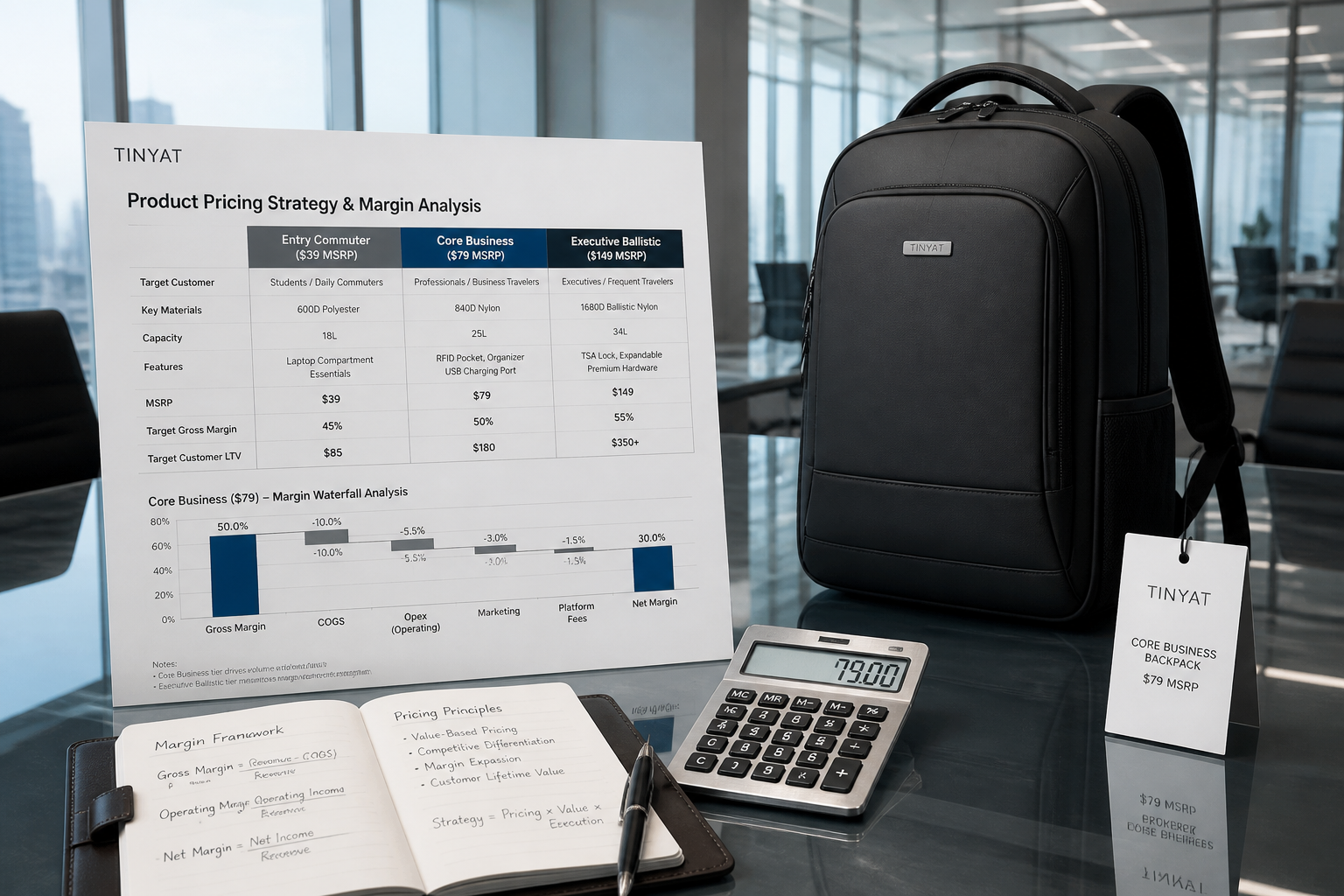
Margin Waterfall Worksheet
Run this against your own numbers before committing to a retail price.
Confirm the target retail price and the discount structure of your primary channel.
Subtract the channel discount to get your wholesale or net selling price.
Set a landed cost ceiling of no more than 65 percent of wholesale for a wholesale business.
Subtract freight, duty, brokerage, and 3PL inbound from that ceiling to get your maximum FOB.
Check the maximum FOB against real quotes for the build you want, not the build you hope for.
Add 3 to 5 percent for currency movement and freight volatility.
Add sample, testing, and certification costs spread across the first order.
Model a 10 percent unsold or return rate in the first season.
Recalculate after a 4 percent FOB increase to test whether the price band still holds.
Never set a retail price that needs more than 42 percent gross margin at wholesale to survive.
Set the Price Band Before the Sample
Bring your retail price and channel to the sampling discussion, not after it. The build follows the band, and the band follows the channel. A brand that knows it must land under USD 12.00 FOB will accept a stock liner and standard hardware. A brand with no ceiling will sample a build it cannot sell at the price it wants, and the correction happens after the tooling money is spent.
For a price and margin review on a specific laptop backpack program, contact [email protected] or visit www.tianqinbag.com. Send your target retail price and channel, and we will return an FOB band with the material specification that fits it. Sampling runs 7-15 business days once the specification is agreed.
 Hot News


