 ×
×
As corporate sustainability commitments have proliferated, the demand for Global Recycled Standard (GRS) certified products has grown rapidly. For procurement teams with supplier diversity or sustainability KPIs, GRS certification on a laptop backpack provides documentation for internal reporting and external communication.
Buyers who understand what GRS actually certifies — and what it does not — can make better decisions about where the certification adds value and where additional verification is needed.
GRS is a product standard managed by Textile Exchange. It certifies that a defined percentage of a product's content is made from recycled materials and that the supply chain handling those materials has been audited for chain-of-custody compliance.
Specifically, GRS certification at the product level requires: verified recycled content percentage (by weight), chain-of-custody documentation from the recycled material source through to the finished product, and compliance with social and environmental requirements at certified facilities.
A laptop backpack with GRS certification has had its recycled content claim verified by a third-party certification body — the "100% recycled outer shell" or "50% recycled content" claim is not just a marketing statement but a documented and audited figure.
GRS does not certify product performance. A GRS-certified laptop backpack can have poor abrasion resistance, inadequate padding, substandard zippers, and low-quality hardware. The certification addresses sustainability claims only.
GRS does not certify the entire product unless all components are covered. Hardware (zippers, buckles, D-rings) is rarely GRS-certified because metal and plastic hardware recycled-content certification is complex and uncommon. A GRS certification on a laptop backpack typically covers the textile components only.
GRS does not guarantee end-of-life recyclability. A GRS-certified bag made from recycled polyester is not necessarily itself recyclable — the multi-material construction (fabric, foam, hardware, thread) makes end-of-life recycling difficult without disassembly.
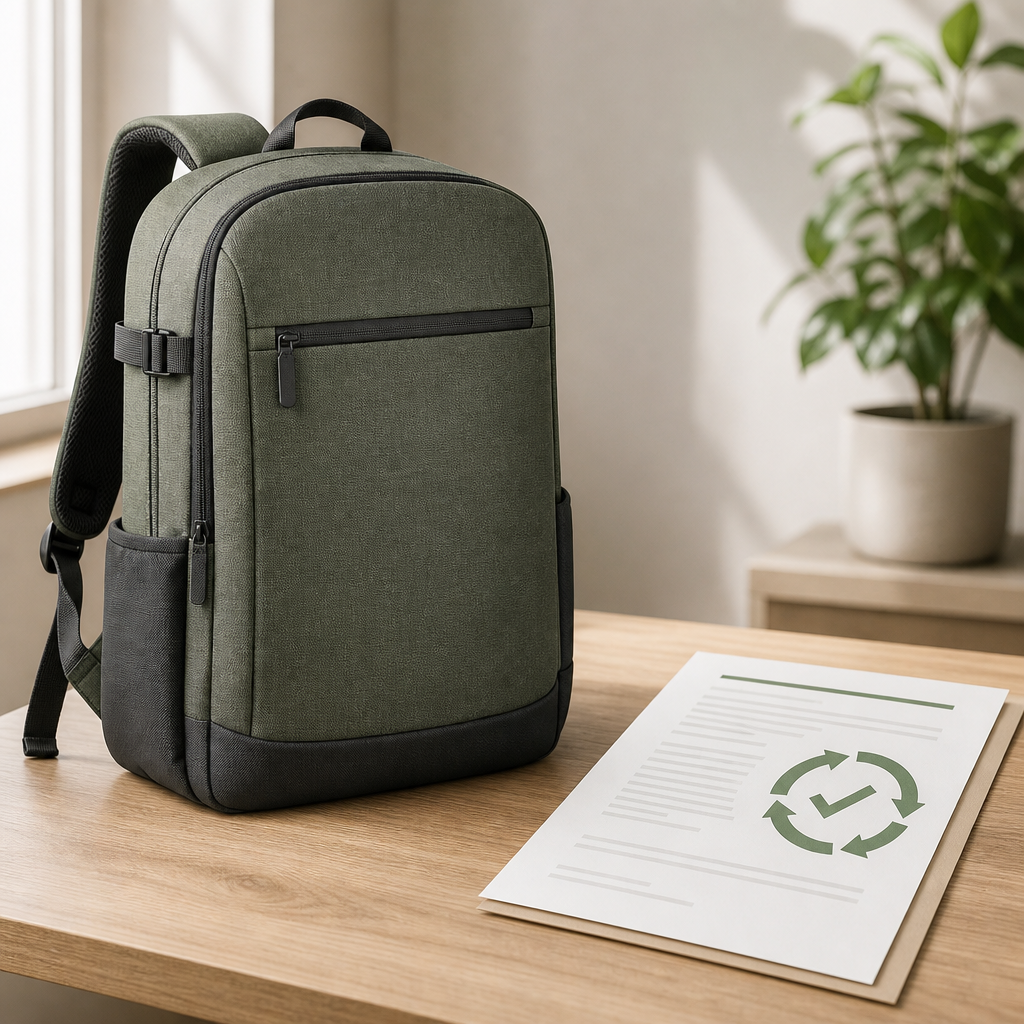
A GRS certificate specifies: the certified entity (company name and facility address), the certified product scope (which products/materials are covered), the certificate validity period, and the certification body that issued it.
Verify the certificate on the Textile Exchange website (te.performance.sustainability-hub.com) using the certificate number. This confirms the certificate is current, issued by an accredited body, and covers the specific products being sourced.
A certificate that is expired, issued to a different facility address than the production factory, or not verifiable on the Textile Exchange registry is not valid documentation for your compliance reporting.
GRS certification is appropriate when: your procurement policy requires verified recycled content documentation, your customers or end-users require certified sustainability claims, or you are making marketing claims about recycled content that need third-party verification.
GRS certification is unnecessary when: recycled content is a personal preference without reporting requirements, when the order volume does not justify the supplier's certification cost (which is typically passed to buyers through price premiums), or when the product will be sold without recycled-content claims.
Buyers should be clear about why they need GRS certification before requiring it — the certification adds real cost to the supply chain and should be required only when it serves a genuine compliance or marketing purpose.
 Hot News


 EN
EN