
 EN



Most private label laptop backpack programs do not fail in month twelve. They fail in month four, when a wide brief has turned into a third sampling revision and the first production order lands after the back-to-school window has closed. We watch this sequence repeat with US and EU buyers, and it is almost always a scheduling problem rather than a product problem. A fixed 12-month roadmap removes the guesswork before the money is committed.
Months 1-2: Positioning Before You Ask for a Sample
Private label starts with a sentence a buyer can act on, not a mood board. Decide the capacity, the retail price band, and the single feature the product will be known for. A 22L to 25L laptop backpack with a 15.6-inch suspended sleeve and a padded top handle covers the largest slice of business and campus demand in the US and EU. That is a narrower brief than most first-time brand owners write, and narrow is what makes the timeline work.
The first question most buyers ask us is whether they should copy a best-selling design from a marketplace listing. We advise against a direct copy for two reasons. Tooling and pattern changes carry cost, and a copied silhouette is easy for a competitor to undercut on price within one season. Positioning against a specific use case, such as commuting, field sales, or aviation crew, gives the brand something to defend.
At this stage you also need a target FOB band. For a 25L private label laptop backpack in 600D Oxford with YKK zippers and zinc alloy hardware, most programs we quote land between USD 8.50 and USD 14.50 FOB Quanzhou depending on fabric weight, padding density, and hardware count. Write that number down. Every later decision, from foam density to hangtag finish, spends against it.
Months 2-4: The First Sampling Round
Sampling is where private label programs lose time. Ask for a technical pack, not a photo. The pack should list shell fabric with denier, lining, foam density in kg/m3, zipper brand, webbing width in mm, and logo placement with print size in mm. Our sampling lead time is 7-15 business days, and a complete tech pack is the main reason a first sample comes back right.
At Tianqin we run 3D sampling before cutting physical samples on new private label silhouettes. A rendered model costs a fraction of a sewn sample and lets a buyer move a pocket line or a logo position in days rather than weeks. We standardized that step after a 2021 program burned four physical rounds on nothing more than a misplaced side-entry pocket.
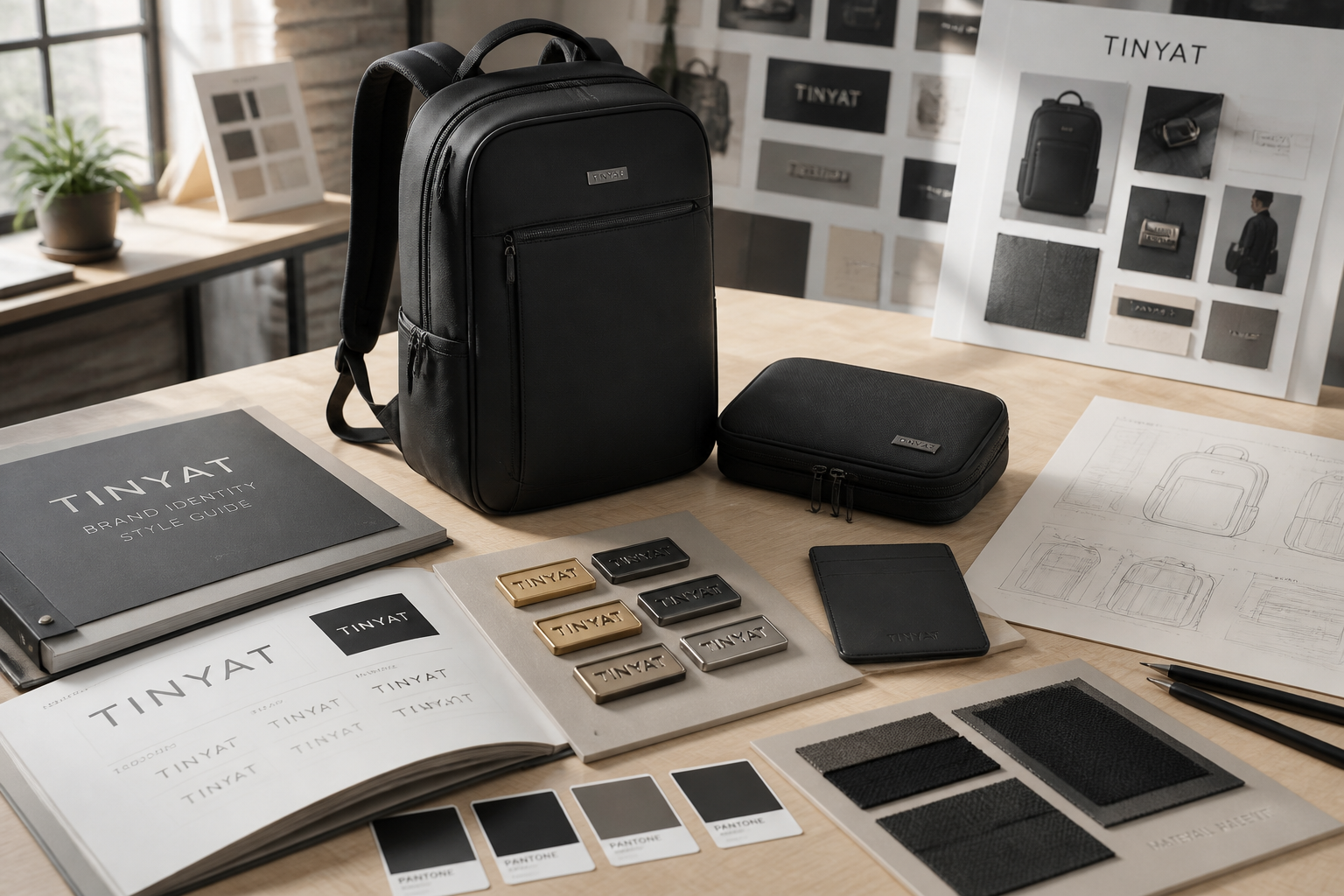
Physical sampling still needs its own budget and its own calendar slot. Plan for two rounds. The first confirms construction and fit. The second confirms branding, which means woven label, heat transfer logo, puller engraving, and liner color. Buildup cases, neck tags, and the packaging proof should ship with the second round so nothing is reopened later.
Approval rounds are the hidden cost of private label. Each physical round takes 7 to 15 business days for sample production plus 3 to 5 days in courier transit, so three rounds is easily two months before the first bulk order is confirmed. Buyers who consolidate every comment into one document and mark up the sample in a single sitting typically finish in two rounds instead of four.
Months 5-7: Launch Quantity and MOQ Reality
Launch quantity is a cash decision, not an ego decision. A brand testing one SKU in one colorway does not need 3,000 units. It needs enough to cover the launch channel, measure sell-through, and fund the reorder.
300 to 500 units: single SKU, single color, stock hardware, no custom liner. The cheapest route to a real product in hand.
500 to 1,000 units: adds custom woven labels, custom pullers, and a branded polybag. This is the tier where most first private label orders sit.
1,000 to 3,000 units: custom lining fabric, custom zipper pullers, printed hangtags, and often a custom carton mark.
3,000 units and above: dedicated tooling for buckles or a molded logo plate, plus better fabric pricing because mills quote by the roll.
A limitation worth stating plainly: below roughly 300 units per colorway, custom-dyed lining fabric is not economic. Dye lots carry minimums, and a small brand pays a premium per meter that can add USD 0.60 to USD 1.10 to the unit cost. Stock black or grey lining at launch is the usual answer, and it looks correct in most retail presentations.
MOQ also interacts with capacity. Our monthly capacity is large, but it is shared across running programs. A 500-unit run slots into a gap in the schedule. A 5,000-unit run needs to be booked weeks ahead, especially for a pre-holiday delivery.
Months 8-12: Reorder Triggers and Repeat Orders
Launch is the midpoint, not the finish. Set reorder thresholds before the first shipment lands, using numbers you can read from your own sales data.
Sell-through above 60 percent of launch quantity within 8 weeks: place the reorder immediately at 1.5x to 2x the launch volume.
Sell-through between 35 and 60 percent: reorder at launch volume, but fix the weakest colorway before producing it again.
Sell-through below 35 percent: do not reorder the same build. Change one variable, usually color or capacity, and retest at 300 units.
Return rate above 3 percent: stop and audit before reordering. Most laptop backpack returns trace to zipper function or laptop pocket fit, not appearance.
Any colorway selling under 15 percent of its order within 12 weeks: cut it from the line and absorb the remaining stock into a promotion.
The second order is where private label economics improve. Pattern and tooling are already amortized, sampling is usually reduced to a colorway confirmation, and packing materials are already approved. Buyers who plan the reorder in month eight routinely get their second shipment into stores two weeks earlier than buyers who wait for the full sell-through report.
Watch the calendar as carefully as the numbers. A second order placed in month nine with a 30-day production run and 35 days of ocean freight lands in month eleven, which is late for a holiday season and right for a spring reset. Planning a reorder around a retail window rather than around current stock levels is the difference between selling at full price and clearing the tail at a markdown.
Private Label Roadmap Checklist
Use this before you send a brief to any factory, ours included.
Positioning: one capacity, one retail price band, one signature feature, one launch channel.
Target FOB band written down alongside the retail multiple you need.
Tech pack with fabric denier, lining, foam density in kg/m3, zipper brand, webbing width in mm.
Logo file in vector format with print dimensions in mm and Pantone references.
Confirmed sampling window and two physical rounds budgeted.
Launch quantity chosen against channel capacity, not against a discount tier.
Reorder trigger thresholds agreed internally before the first shipment.
Packaging spec signed off in the same approval round as the product.
Payment and inspection schedule documented with real dates.
Freight booking lead time checked against the retail window, not the production date.
Build Your First Private Label Run
The fastest path to a repeat order is a narrow brief, a documented sample, and a reorder threshold you set before launch. Bring us your target price band and one clear use case, and we will tell you what is achievable inside it. We will also tell you what to drop when the budget does not stretch, because a brand that launches on time at 500 units beats a brand that launches late at 1,500.
To request a private label sample, get a factory quote, or start an OEM/ODM project, contact [email protected] or visit www.tianqinbag.com. Sampling takes 7-15 business days from an approved tech pack, and our team will confirm your target FOB band before any sample is cut.



 Hot News


