 ×
×
"600D Oxford polyester" appears on almost every mid-market laptop backpack spec sheet. It sounds precise — a denier count, a weave name, a material type. In practice, it is one of the most loosely applied specifications in the bag industry.
The problem is not the specification itself. 600D Oxford polyester is a legitimate, functional material for laptop backpacks. The problem is that "600D Oxford" covers a performance range wide enough to include both durable, quality fabric and fabric that will visibly degrade within six months of regular use — and suppliers know buyers rarely verify which they received.
Denier (D) measures fiber weight. 600 denier means the individual fibers used in the yarn weigh 600 grams per 9,000 meters. This is a reasonable denier for outer shell fabric — heavy enough for durability, light enough to keep the bag at a manageable weight.
Oxford weave is a basket weave pattern where two yarns are woven over and under each other. This creates a characteristic crosshatch texture and generally produces a fabric that is slightly more abrasion-resistant than plain weaves at equivalent denier, because the weave structure distributes stress across multiple yarn strands.
That is the spec as defined. What the spec does not define: the quality of the base polyester fiber, the tightness of the weave, the coating weight, the colorfastness, the tensile strength, or the actual weight per square meter. Two factories can both accurately claim "600D Oxford polyester" while delivering fabric that differs meaningfully in real-world durability.
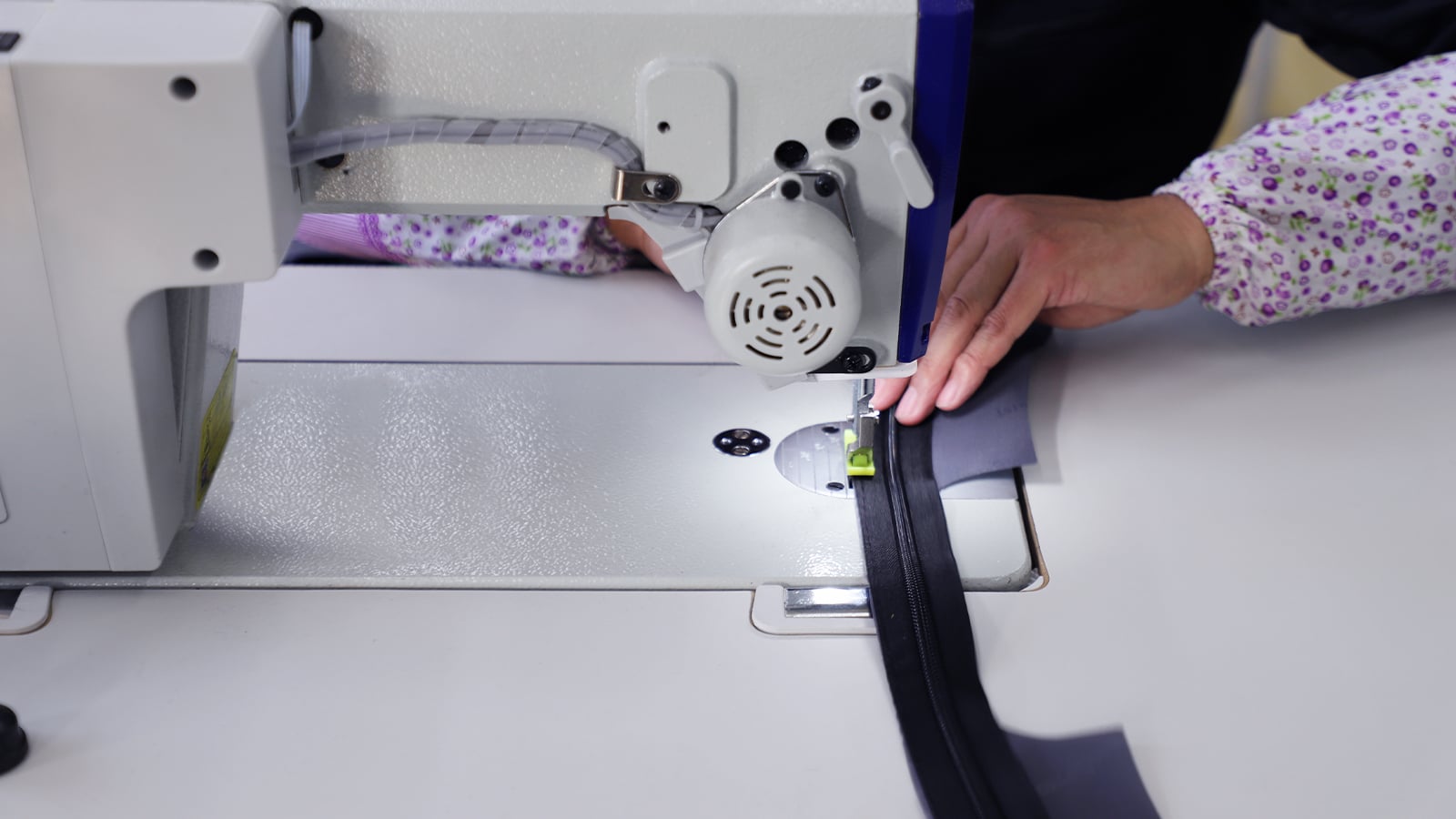
Weight per square meter (gsm) is the most useful supplementary specification for fabric quality assessment. 600D Oxford polyester typically runs 230–280 gsm in quality production. Below 200 gsm, the fabric is being produced with a looser weave or lighter coating than the denier count suggests.
Tensile strength testing (ASTM D5034 or ISO 13934-1) gives you breaking strength in Newtons. For a 600D outer shell fabric, a warp tensile strength below 800N is a concern. Quality 600D fabrics typically test at 1,000–1,400N.
Coating weight verification: request the coating weight in g/m² from the fabric mill. A meaningful PU coating runs 80–120 g/m². Below 50 g/m², the coating provides minimal functional water resistance.
The specification becomes a cover story when a factory uses 600D fiber but skimps on weave density, coating weight, or base fabric quality to hit a target cost — and then accurately describes the result as "600D Oxford polyester" because the denier count is technically correct.
This happens most frequently on high-volume orders where the factory faces margin pressure, and on repeat orders where the buyer is less likely to request new samples. The first order gets quality fabric; the third or fourth order gets production-optimized fabric.
The tell: weigh the production fabric against the approved sample fabric cut to the same dimensions. If the production fabric is noticeably lighter, the weave density or coating weight has been reduced.
Add these specifications alongside "600D Oxford polyester" in your purchase order: minimum fabric weight (gsm), minimum tensile strength (N, warp direction), coating type and minimum coating weight (g/m²), and hydrostatic head rating (mm).
Request a fabric mill test certificate covering these properties for the production batch. Mill certificates are harder to fabricate than factory-generated quality documents and carry more evidentiary weight in disputes.
With these supplements in place, "600D Oxford polyester" goes from a marketing description to an enforceable specification.
 Hot News


 EN
EN