 ×
×
Ordering custom travel bags from China? Check these 5 critical things before you place your order to avoid quality issues, delays, and unexpected costs.
────────────────────────────────────────────────────────────
Custom travel bags — duffels, weekenders, carry-ons — are one of the most profitable categories for online sellers and retail brands. They are also one of the easiest to get wrong.
A travel bag has to survive being tossed into overhead bins, dragged through airports, stuffed into car trunks, and overloaded with more than it was designed to carry. If your manufacturer cuts corners, your customers will find out fast.
Here are five things to verify before you place a single order.
────────────────────────────────────────────────────────────
"900D polyester" sounds impressive. But denier (D) is only part of the story. A 900D fabric from one mill can be significantly weaker than 600D from another, depending on the yarn quality and weave density.
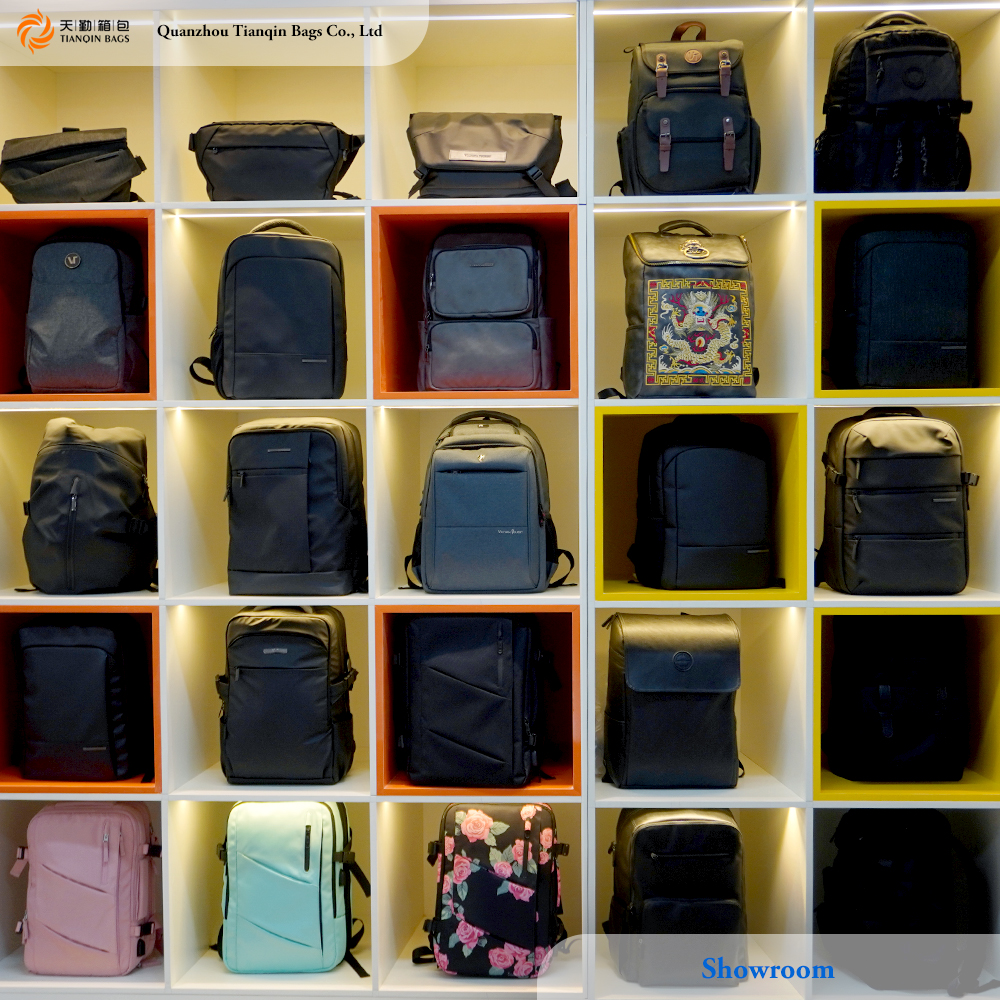
Ask your manufacturer for the fabric's tensile strength and tear strength test results — not just the denier number. Quanzhou Tianqin Bag Co., Ltd. provides standardized fabric test data from its in-house material lab, so buyers can compare specifications objectively rather than relying on marketing claims.
The most common failure point on travel bags is where the handles or shoulder straps attach to the body. A bag loaded with 15 kg of travel gear puts enormous stress on these connection points.
Check how the manufacturer reinforces these areas. Look for bar-tack stitching (a dense zigzag stitch pattern), double-layered fabric panels at attachment points, and webbing that runs under the bag for carry handles. If the sample just has straight stitching where the straps meet the body, it will fail under heavy loads.
Travel bags need larger, stronger zippers than everyday backpacks. A #8 or #10 zipper is appropriate for main compartments on duffel bags and weekenders. #5 zippers belong on interior pockets, not main closures.
Also check that the zipper has a storm flap or cover if the bag is marketed as weather-resistant. Water enters through zipper gaps faster than through fabric.
Travel bags spend their lives on dirty floors — airport security belts, train station platforms, hotel room carpets, parking lots. A reinforced, waterproof, and easy-to-clean bottom panel is not a luxury. It is what keeps the bag functional after a year of travel.
Look for a rubberized or TPU-coated base, or at minimum a double layer of dense fabric with water-resistant coating. A single layer of standard polyester on the bottom means the bag will wear through within months.
A travel bag that weighs 3 kg empty before you pack anything is a problem. Airlines have weight limits, and travelers are weight-conscious. The best travel bags maximize capacity while minimizing empty weight.
Ask for the bag's empty weight in the spec sheet. Compare it to similar bags on the market. If your bag is 30% heavier than competitors for the same capacity, the materials are probably over-spec or the design is inefficient.
────────────────────────────────────────────────────────────
Travel bags take more abuse than almost any other bag category. The five checks above separate bags that last years from bags that fail on the third trip. Do them before you order, and your customers will never need to write a review about broken straps or soaked clothes.
*Ordering custom travel bags? TINYAT provides detailed material specs, reinforcement documentation, and weight data with every sample. 18 years of manufacturing travel bags for global brands. Request a quote today.*
 Hot News


 EN
EN