
 EN



Expansion is the easiest feature to add to a quote and the hardest one to keep in a warranty program. The sample opens and closes beautifully. Six months later the buyer sends photos of a gusset seam that has separated along 60mm, or a zipper that will not close with the bag empty.
Four failure modes account for almost every expansion claim we have investigated at Quanzhou Tianqin Bags Co., Ltd, and all four are decided in the pattern room.
Two ways to build an expansion gusset
The construction choice comes first, and most buyers never see it.
The first method is a zip-in gusset: a strip of fabric with a zipper on each long edge, sewn between two panels. When the zips are closed the strip folds inside itself and the bag sits at its base depth. When both zips are open the strip unfurls and adds depth. This is the cheaper method and the one used on most bags below a 35 USD retail price. It adds about 0.45 USD and 45g in a 25 litre bag.
The second method is a fold-and-bellows gusset: a single wide panel with a pleat that folds flat against the body, held closed by one zipper. It is cleaner when expanded and it cannot separate because there is no second zipper line. It costs about 0.9 USD more and requires a die-cut pleat set, so it only makes sense at 2,000 pieces upward.
The zip-in method fails on the joint. The bellows method fails on the pleat memory. Both need the same three reinforcements at the seam, which we will come to.
Zipper load at the seam
Here is the number that matters. A 25 litre bag expanded to 35 litres takes about 4 litres of extra volume in the main body, and the zipper at the seam carries the outward pressure of whatever is packed against it. A full bag with a laptop, a packing cube and a jacket can push 30kg of force against the gusset when the bag is compressed into an overhead locker.
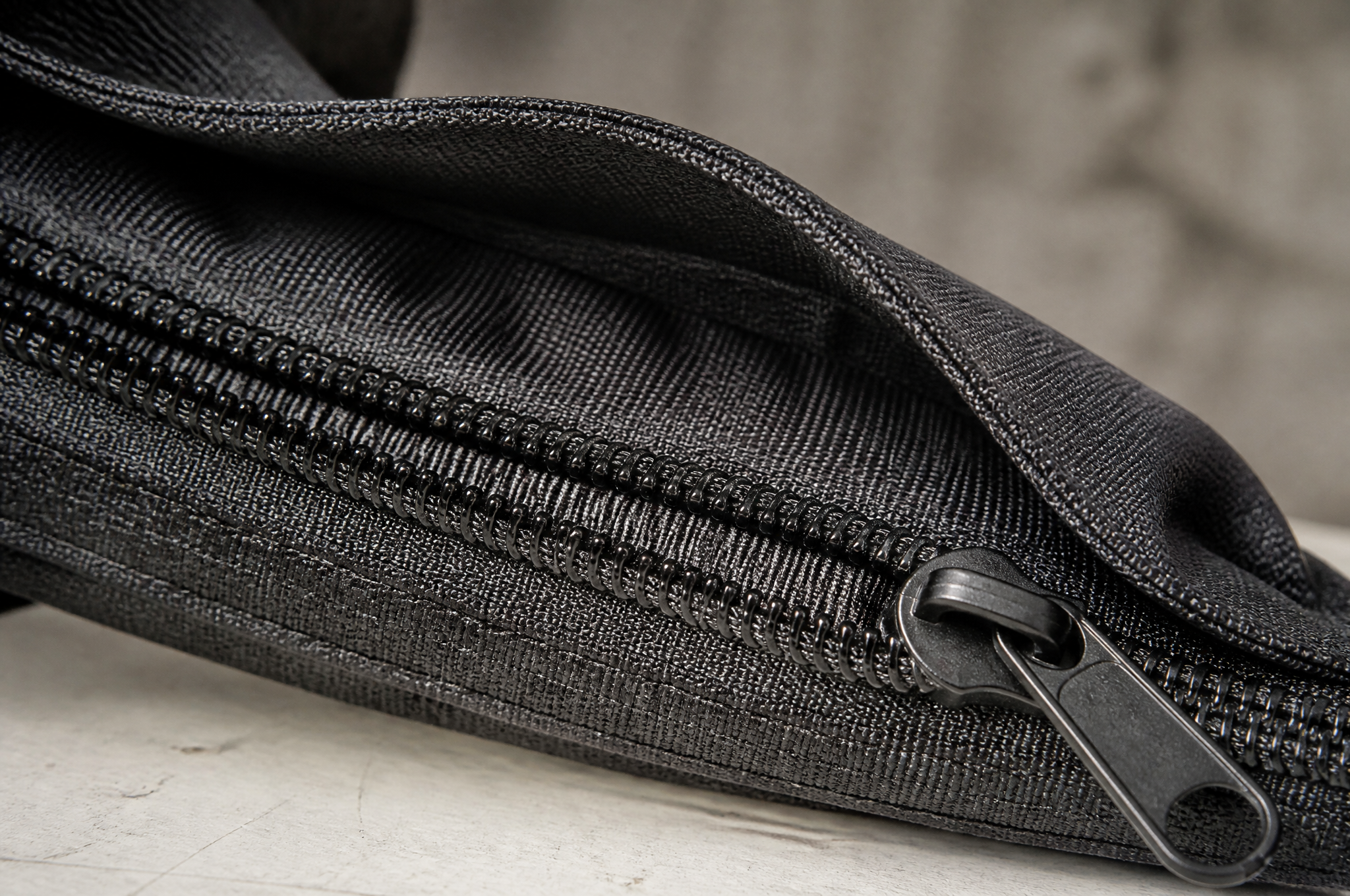
A number 5 coil zipper is rated for roughly 350 newtons of static pull but only about 60 newtons of bursting force across the tape. That gap is why expansion seams split rather than zip tracks break. We specify a number 8 coil or a number 5 with a reinforced tape backing for any gusset over 60mm of expansion. The cost difference is 0.18 USD per bag.
The second load is at the end of the zipper run. When the traveller yanks the slider to close an overpacked bag, the last 30mm of the zipper tape takes the entire closing force. Every expansion gusset we build gets a bar-tack across the tape end and a rivet through the two panel layers if the client allows visible hardware.
The four failure modes we see
These are not theoretical. They come from claim photos and from our own in-line inspection records.
Tape separation at the fold line. The zipper tape is stitched through a 2mm foam edge and the needle cuts the tape edge. Fix: keep the stitch 3mm off the tape edge and use a smaller needle.
Slider creep. The expansion zipper opens 20 to 30mm under load because the sliders are not locked. Fix: use locking sliders, or add a small hook-and-loop tab at each end.
Pleat memory. On a 600D gusset the fold line creases permanently after 15 to 20 cycles, so the bag never closes to base depth again. Fix: use a 420D at the pleat or add a 0.5mm PE strip to hold the fold.
Gusset sag. When expanded and carried, the extra fabric bellies out and pulls the base board down, so the bag will not stand. Fix: stitch a short webbing stay from the gusset centre to the base seam.
The honest limitation of the whole category is that expansion and structure fight each other. Any bag with a 10cm expansion cannot hold a rigid base board across the full depth, so the bag will always be floppier when expanded than when closed. If your channel judges bags by how they stand on a shelf, sell the bag closed and treat expansion as a travel feature, not a structural one.
Water ingress belongs on this list too. Every expansion opening is a second zip line, and a coil zipper is not water resistant. On a bag with a 60mm gusset you have roughly 500mm of additional zipper tape exposed to rain, and water follows the tape directly into the main compartment. Reverse-coil construction and a zip garage at the base of the run reduce it, but they do not solve it. If your market includes a rainy climate, plan a storm flap over the gusset and add 0.12 USD.
How to test an expansion before you approve a PO
An expansion gusset takes about 20 minutes to test properly with a packed bag and a stopwatch.
Pack to the rated closed capacity plus 20 percent, close the expansion, and check that the main zipper still closes without force.
Open the expansion, load it to the advertised expanded capacity, and lift by one shoulder strap. Watch the gusset seam, not the bag.
Cycle the expansion zipper 50 times by hand. Peel back the tape at the seam and look for the stitch line cutting the tape edge.
Compress the expanded bag to 80 percent of its depth and hold for 10 seconds. Release and check whether the slider crept open.
Leave the bag expanded and loaded for 24 hours, then close it. If it will not return to base depth, the pleat has taken a set.
At Tianqin we run this as a 200-cycle version in our sample lab and report the result with the sample. Two of our current European programs came to us after failing an expansion seam at the retail stage; in both cases the cause was a number 5 zipper on a 90mm gusset, and both were solved by moving to a number 8 with a reinforced tape.
What to write into the spec
Expansion amount in mm, stated as base depth plus expanded depth
Gusset construction method, zip-in or bellows
Zipper size, brand, and slider type on both the expansion and the main opening
Seam reinforcement: bar-tack length, rivet placement, webbing stay
Fabric at the pleat or fold line, if different from the shell
Rated closed and expanded capacity in litres, plus the load you expect in each state
Cycle count for the expansion test and the pass criterion
The first question most buyers ask us is whether expansion adds meaningful volume or just marketing volume. Measured properly, a 60mm gusset on a 25 litre bag gives about 6 litres of usable space, not the 10 litres some spec sheets claim. That is enough for a jacket and a pair of shoes, and it is worth stating accurately, because a buyer who promises 40 litres and delivers 31 will see returns.
Build the gusset once and test it properly
Send the base depth, the expansion you need and the load you expect to [email protected], and we will propose a gusset construction with the test data attached. Sampling runs 7-15 working days at our Quanzhou facility, and we can build both the zip-in and bellows versions in the first round so your team can compare the seam in person. See www.tianqinbag.com for OEM and ODM capability, or contact Quanzhou Tianqin Bags Co., Ltd directly to start a program.


 Hot News


