EN



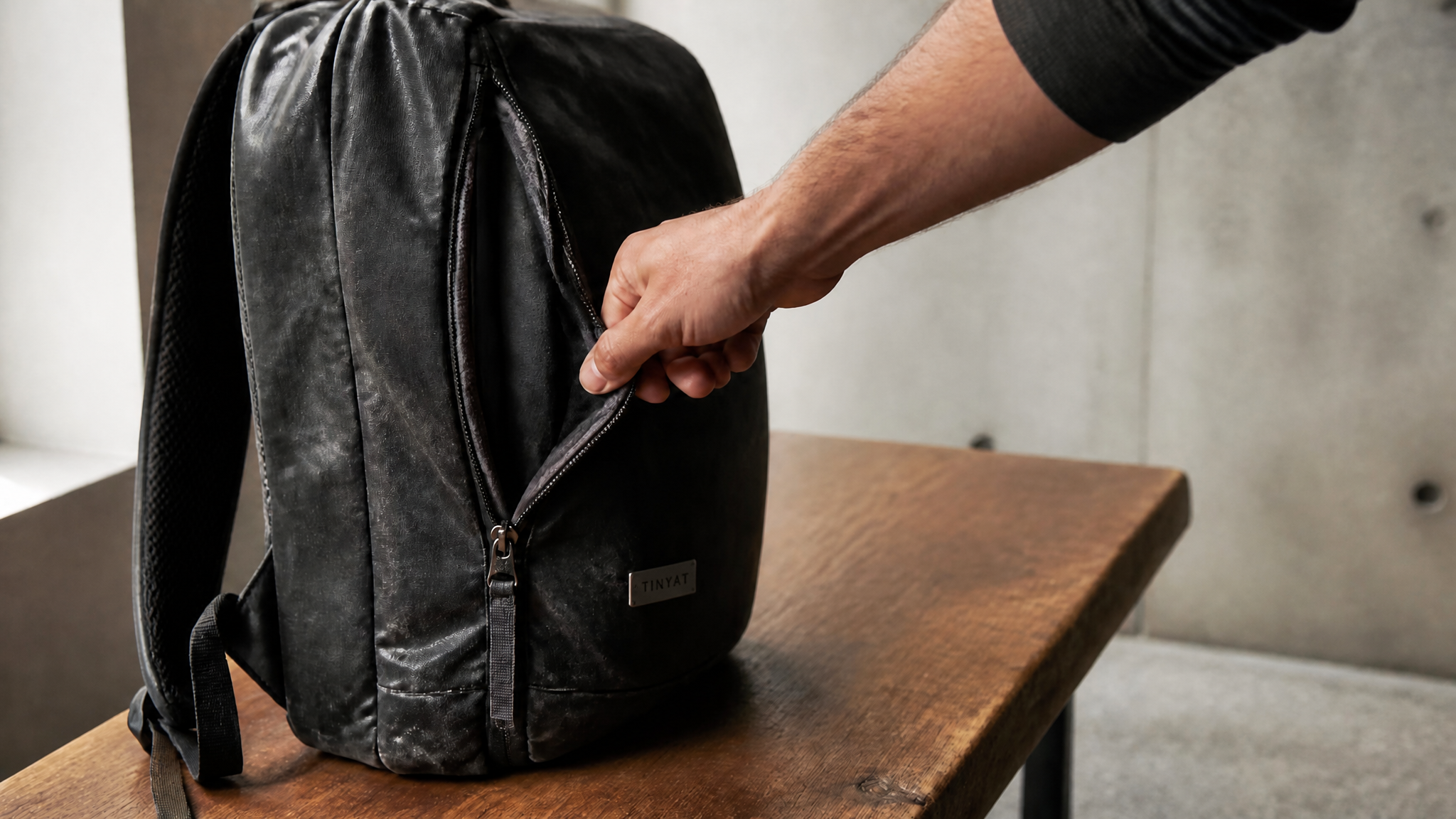
The pitch for side access is simple: the traveller swings the bag off one shoulder and pulls the laptop out in three seconds. What the pitch leaves out is that a 40cm opening on the side of a backpack is a 40cm opening that anyone standing behind the wearer can also use.
For a buyer, this is not an aesthetic decision. It changes the cost of the pattern, the stiffness of the shell and the warranty exposure, and it suits some channels much better than others.
The access speed argument
Commuter channels ask for side access because a laptop that has to come out of a top-loading compartment forces the wearer to take the bag off both shoulders. In a subway car that is a real problem.
Measured honestly, side access saves about four to six seconds per access compared with a top-load opening on a 25 litre bag. The design that delivers the saving needs three things: the zip must run vertically along the side panel for at least 300mm, the laptop sleeve must be anchored to the side-adjacent wall rather than floating, and the sleeve must have a lip or a strap so the machine does not slide out when the zip is open and the bag is worn.
That last point is where cheap implementations fail. We have pulled apart retail bags where the sleeve is a plain 210D pocket with no retention at all. The bag works when it is empty and standing still. Worn on a moving train with the zip open, the laptop walks out.
Our standard is a hook-and-loop tab across the sleeve mouth rated for 3kg of hold, plus a 20mm webbing stop at the sleeve base. It adds about 0.09 USD.
Theft risk moves with the opening
A side-access zip is a direct route to the most valuable item in the bag. Theft patterns on commuter routes target exactly this. Two things shift the risk.
First, zip position. A vertical zip on the panel that faces away from the body is much harder to reach than one on the body-facing panel. Most side-access designs put the opening on the wearer's right or left side, not the back panel, which means a person walking behind the wearer has clean access. If the design allows, put the access on the side that faces the body when the bag hangs from one shoulder.
Second, slider hardware. A number 5 coil with a plain slider opens with one pull from either direction. A locking slider, or a slider with a small carabiner-compatible pull, needs a deliberate action. We use reverse-coil zippers with two sliders on side-access openings so the traveller can park both sliders at the base of the opening, which puts the closure 300mm from the panel edge and out of casual reach.
Consider also the pull design. Long pulls with a 40mm cord loop are convenient and easy to grab from behind. Short pulls with a 15mm leather tab are slower to use and much harder to open without the wearer noticing.
There is a real trade-off here and buyers should decide it consciously: the same feature that makes the opening fast for the owner makes it fast for everyone else. Anti-theft side access exists, but it always costs access speed, usually 2 to 3 seconds per use.
Consider the marketing consequence as well. A bag that looks like a quick-access commuter pack signals "laptop inside" to anyone who knows the product category. A bag with the opening on the body-facing side and no visible external zip signals much less. Some of our clients in the EU business channel have moved the access zip behind a narrow fabric flap for exactly this reason, and the access time went from five seconds to seven. They considered that a good trade against the theft claim on the hangtag.
What side access costs in structure
This is the part of the decision most spec sheets ignore.
A backpack side panel is a structural surface. When you cut a 320mm opening into it, you remove the panel that was resisting the bag's tendency to twist under load. The result is a bag that leans. On a 22 litre pack with a 5mm PE base board, we can measure a 12 to 15mm lateral deflection at the top of the bag at 6kg load with a full side opening, against 5mm without one.
Three fixes, in ascending cost:
Add a 2mm PE stiffener behind the side panel, above and below the opening, at about 0.12 USD and 55g.
Move the base board from 5mm PE to a 2mm HDPE sheet, at about 0.35 USD and 110g.
Reduce the opening to 260mm, which still clears a 15-inch laptop diagonally and recovers most of the lost stiffness for free.
We usually recommend the third option first. The spec says "side access" and the retail buyer rarely measures the opening length.
The weight penalty is worth stating: side access adds 60g to 160g to a finished bag depending on the stiffening you choose, and it removes 0.8 to 1.2 litres of usable side volume that would otherwise hold a water bottle pocket. That is the honest arithmetic.
When side access is the wrong choice
Some programs should not have it.
Bags sold into school and campus channels, where the laptop is often carried in a separate sleeve anyway and the opening becomes a water-entry point.
Bags with a retail price under about 30 USD, where the stiffening budget is not there and the bag will lean.
Bags marketed on anti-theft positioning, unless you are willing to fund both the locking hardware and the reduced access speed.
Bags with an expansion gusset on the same side panel, which is a structural conflict we have declined to tool more than once.
At Tianqin we keep a short list of construction pairs we will not build because the failure rate is known. Side access plus same-side expansion is on it. A buyer who insists can have it, with the warranty terms adjusted, but we say so before the tooling order rather than after.
A decision list for buyers
Work through this before you approve a side-access sample:
Which side faces the body when the bag is worn on one shoulder, and is the opening on that side or the exposed side?
Opening length in mm, and does it clear the target laptop when the bag is half full?
Sleeve retention method and hold rating
Zipper type, slider count and locking behaviour
Stiffener position and thickness, and the resulting lateral deflection at rated load
Weight added against the same bag without side access
Water resistance at the opening, including whether the zip is reverse coil or taped
The first question most buyers ask us is whether side access sells. In our experience it sells in the commuter and business-travel segment and it does not move the needle in campus or outdoor. What it does reliably is generate review mentions, both positive and negative, so the construction has to be right on the first production run.
Put the opening on the drawing before the sample
Send the laptop size, the channel you sell into and the target retail price to [email protected]. We will return a side-access proposal with the opening length, stiffening plan and weight penalty stated on one page, so your team can price the feature properly. Sample turnaround is 7-15 working days, and we build the non-side-access version alongside it so you can compare stiffness in the hand. Quanzhou Tianqin Bags Co., Ltd runs OEM and ODM programs for buyers in more than 50 countries; capability and material details are at www.tianqinbag.com.


 Hot News