 ×
×
Anti-theft features in laptop backpacks range from meaningfully protective to purely cosmetic. The challenge for buyers is that all anti-theft features are described in marketing language that makes them sound equally effective. Understanding which features address real theft scenarios — and which are responses to perceived rather than actual risk — helps buyers specify products that match their end users' genuine security needs.
A rear panel pocket with a zipper concealed against the wearer's back — accessible only by the wearer removing the bag — is one of the most effective anti-theft features because it prevents unauthorized access while the bag is being worn. Pickpockets cannot open a zipper they cannot reach.
A hidden front panel pocket (located beneath an external panel instead of on the surface) produces a similar effect for items stored there — it is not visible as a pocket from the outside, so it does not draw attention or targeting.
Both features are inexpensive to manufacture (a rear panel pocket adds $0.50–1.50 to the bag’s cost) and genuinely lower the risk of opportunistic theft in crowded settings — which is the most common theft scenario for business travelers.
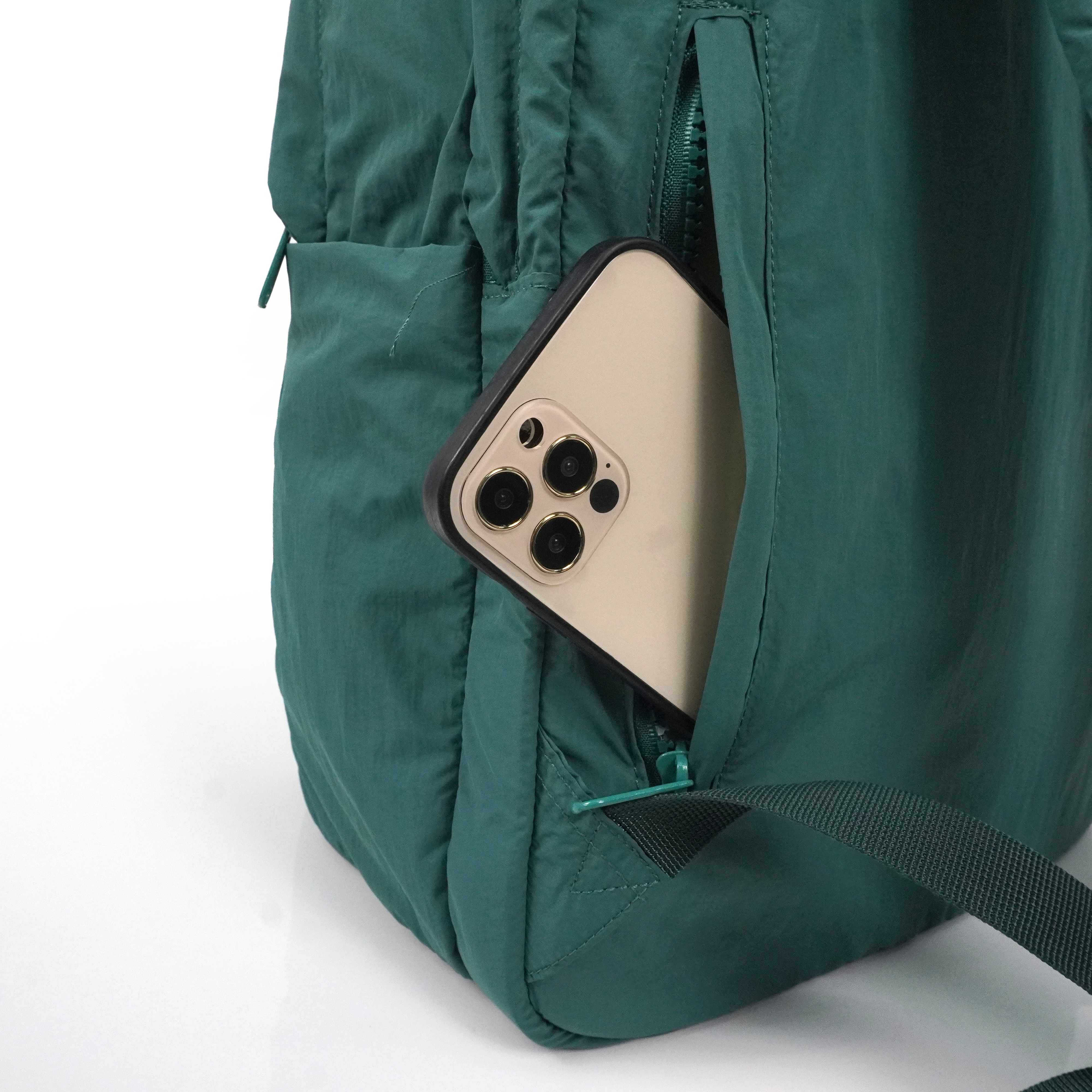
Lockable zippers — zippers with loops sized to accept a small padlock or TSA-approved lock — prevent unauthorized opening of the zipper when the bag is stored or checked. They offer no meaningful protection while the bag is being worn.
The relevant use case is storage security: a bag left in a hotel room, checked into a luggage hold, or stored in an unsupervised location. For this use case, lockable zippers on the main compartment and laptop compartment are a valuable specification.
Pro usu portabilis, cerneres zippares claudibiles sunt obstaculum parvum. Fur constans potest textum sacculi secare potius quam clavem vincere — et fur opportunistes non adpetet sacculum quod ab viatore vigilanti actu portatur.
Cingula et tabellae resistentes ad secandum (utentes fibras Dyneema aut textum renfortatum filo metallico immersum in textu) prohibent impetus de genere 'secare-et-rapere', ubi fur cingulum secare conatur ut sacculum rapiat. Hoc periculum reale est in certis locis — turbae densae in urbibus ubi crimen frequens est — et protectio vera est pro his locis.
Pro majoritate casuum usus corporativorum et viatorum negotiorum (aeropuertos, districtus officiorum, hospitia negotiorum), impetus abrupti et rapidi rari sunt. Materialia resistentia ad incisionem addunt pretium ($3–8 per sacculum pro renforte cinguli) et pondus sine solutione principalis periculi furtae pro pluribus utentibus. Praescribantur ea pro productis designatis ad ambientes periculosos altos, non ut facultas communis pro usu negotiorum generali.
Tascula obstruentia RFID pro passibus et cartis prohibent lectionem electronicam documentorum itineris contactless et cartarum pecuniariae. Periculum reale est — lectores RFID possunt interrogare cartas contactless per texturam sacculi — et protectio vera est si tasculum recte est linatum materia sufficienter obstruente.
Test specification: a properly RFID-shielded pocket must block reads from a standard 13.56 MHz RFID reader at a 5 cm distance. Request certification from the factory that the pocket’s shielding complies with this standard—not merely a marketing statement claiming the pocket is "RFID-blocking."
Combination locks on zipper pulls: effective against children, not against thieves. Any zipper pull can be cut with a small tool.
Anti-theft labels: purely cosmetic.
"Slash-resistant" fabric without reinforcement: marketing language applied to standard fabrics to suggest protection that does not exist. Request the specific test standard supporting the slash-resistance claim—if none exists, the claim is unsubstantiated.
 Nuntiae Calidae


 EN
EN