 ×
×
Anti-theft features in laptop backpacks range from meaningfully protective to purely cosmetic. The challenge for buyers is that all anti-theft features are described in marketing language that makes them sound equally effective. Understanding which features address real theft scenarios — and which are responses to perceived rather than actual risk — helps buyers specify products that match their end users' genuine security needs.
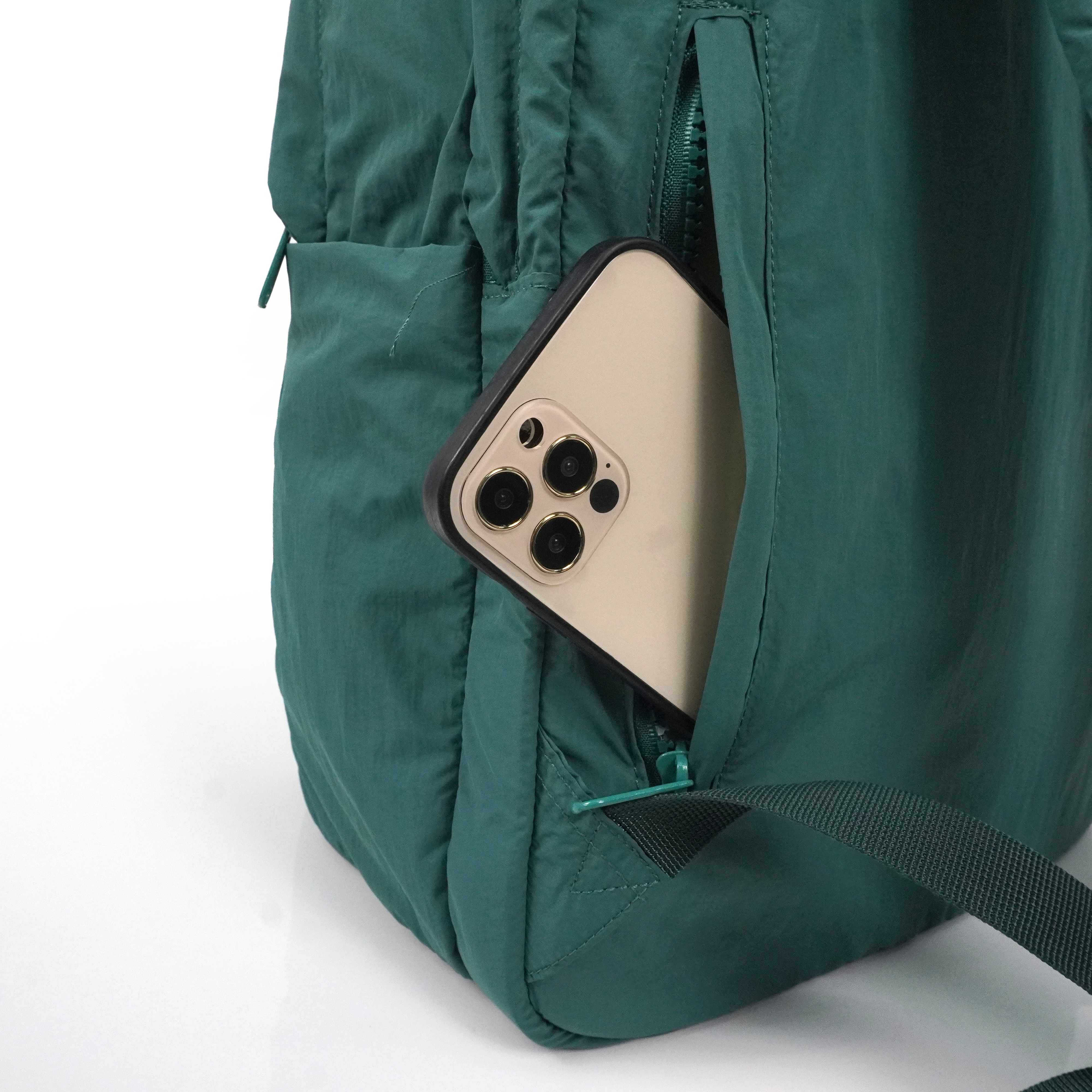
A rear panel pocket with a zipper concealed against the wearer's back — accessible only by the wearer removing the bag — is one of the most effective anti-theft features because it prevents unauthorized access while the bag is being worn. Pickpockets cannot open a zipper they cannot reach.
A concealed front panel pocket (positioned under an external panel rather than on the surface) achieves a similar effect for items stored there — it is not visible as a pocket from the outside, so it does not attract targeting.
Both features are low-cost to produce (a rear panel pocket adds $0.50–1.50 to bag cost) and genuinely reduce the risk of opportunistic theft in crowded environments — which is the dominant theft scenario for business travelers.
Lockable zippers — zippers with loops sized to accept a small padlock or TSA-approved lock — prevent unauthorized zipper opening when the bag is stored or checked. They are not meaningful protection while the bag is being worn.
The relevant use case is storage security: a bag left in a hotel room, checked in a luggage hold, or stored in an unsupervised location. For this use case, lockable zippers on the main compartment and laptop compartment are a useful specification.
For carried use, lockable zippers are a minor obstacle. A determined thief can cut the bag fabric rather than defeat the lock — and an opportunistic pickpocket will not target a bag that is being actively carried by a vigilant traveler.
Cut-resistant straps and panels (using Dyneema fibers or wire-reinforced webbing embedded in the fabric) prevent slash-and-grab attacks where a thief cuts the strap to steal the bag. This threat scenario is real in specific environments — dense crowds in high-crime urban areas — and the protection is genuine for those environments.
For the majority of corporate and business traveler use cases (airports, office districts, business hotels), slash-and-grab attacks are rare. Cut-resistant materials add cost ($3–8 per bag for strap reinforcement) and weight without addressing the primary theft risk for most users. Specify them for products designed for high-risk environments, not as a standard feature for general business use.
RFID-blocking passport and card pockets prevent electronic skimming of contactless travel documents and payment cards. The threat is real — RFID readers can interrogate contactless cards through bag fabric — and the protection is genuine if the pocket is properly lined with sufficient shielding material.
Test specification: a properly RFID-shielded pocket should block reads from a standard 13.56 MHz RFID reader at 5cm distance. Request certification from the factory that the pocket's shielding meets this standard, not just a marketing claim that the pocket is "RFID-blocking."
Combination locks on zipper pulls: effective against children, not against thieves. Any zipper pull can be cut with a small tool.
Anti-theft labels: purely cosmetic.
"Slash-resistant" fabric that is not reinforced: marketing language applied to standard fabrics to imply protection that is not present. Request the specific test standard that supports a slash-resistance claim — if none exists, the claim is unsupported.
 Hot News


 EN
EN