
 EN



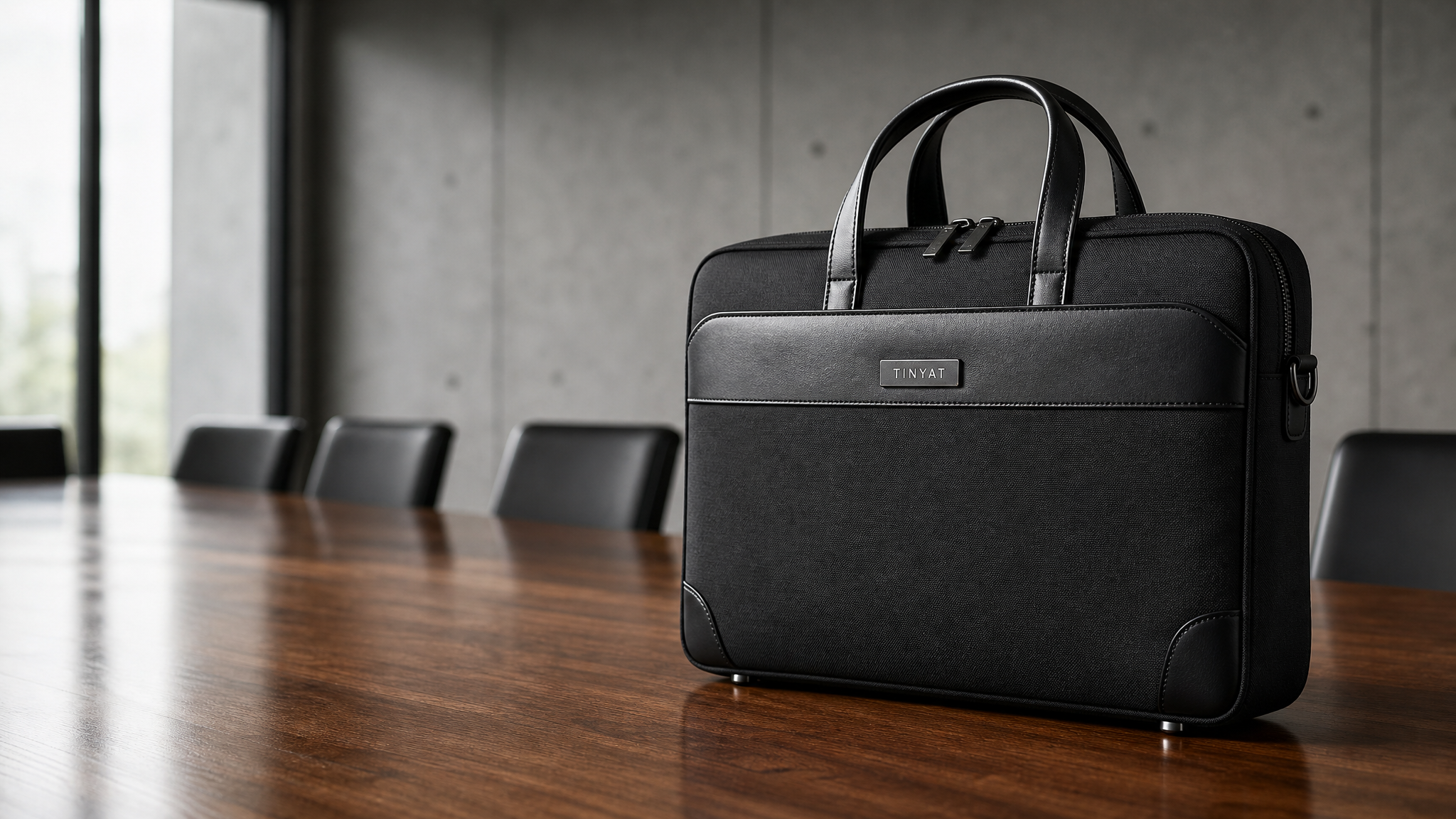 Line 14 of an RFQ asks for a load rating, line 22 for a warranty term, and line 31 for test reports by component. Corporate buyers score those lines technically, and suppliers lose points on them not because the bag is wrong but because the answer is vague. As a custom business laptop bag manufacturer we answer specifications line by line, and five lines decide whether a bid reaches the shortlist at all.
Corporate Specs Test Compliance, Not Taste
A consumer brief says the bag should look sharp. A corporate specification says the internal sleeve must accept a device of stated dimensions, the bag must carry a stated load, the warranty must run for a stated period, and the supplier must hold stated test reports.
That is a different document, and it has a different failure mode. Taste is argued in a meeting. Compliance is scored on a sheet by someone who has never seen the bag, and a line marked partial compliance usually loses the bid regardless of the price.
Two consequences follow. Read the specification before designing anything, and answer in the same order and numbering the buyer used rather than in your own structure. A response that is easier to score gets scored higher, which is an unglamorous but real advantage.
The Five Lines That Cause Disqualification
These are the five where we see bids fail, in the order they usually appear.
The first is the device envelope. A line asking for a 15.6 inch compartment is not a dimension, so the answer needs an internal measurement with the tolerance stated, for example 400 by 272 mm plus or minus 3 mm. A bid that answers with the screen class is scored as unverified.
The second is the rated load. Corporate bags are carried with a device, a folder, and a charger, which lands around 6 to 9 kg. A stated rating of 9 kg obliges the bag to have a structure that supports it, and the base board and handle run that make it possible cost about 0.80 USD.
The third is the warranty term. A 24 month term is common in the EU and 12 months in the US, and the answer has to state what is covered and excluded rather than only a duration.
The fourth is test reports. The line usually reads as compliance with REACH, CPSIA, and Prop 65, and it is scored per component. A single fabric report does not cover the lining, the webbing, or the metal hardware.
The fifth is the delivery commitment. A corporate specification often asks for a delivery date rather than a lead time, and a supplier who answers with 30 days has not answered the question.
What partial compliance looks like
A corporate buyer reading a response looks for three words: comply, deviate, or not applicable. A line answered with a paragraph of explanation and no verdict is treated as a deviate, because the scorer cannot mark it any other way.
We respond with a verdict on every line, and where we deviate we say what we can do instead in the same cell. That is sometimes uncomfortable, and it is the reason our responses get shortlisted: the buyer can compare two suppliers on identical terms.
What To Do When The Spec Is Silent
Corporate specifications are written by committees and they leave gaps. Three gaps appear in almost every one.
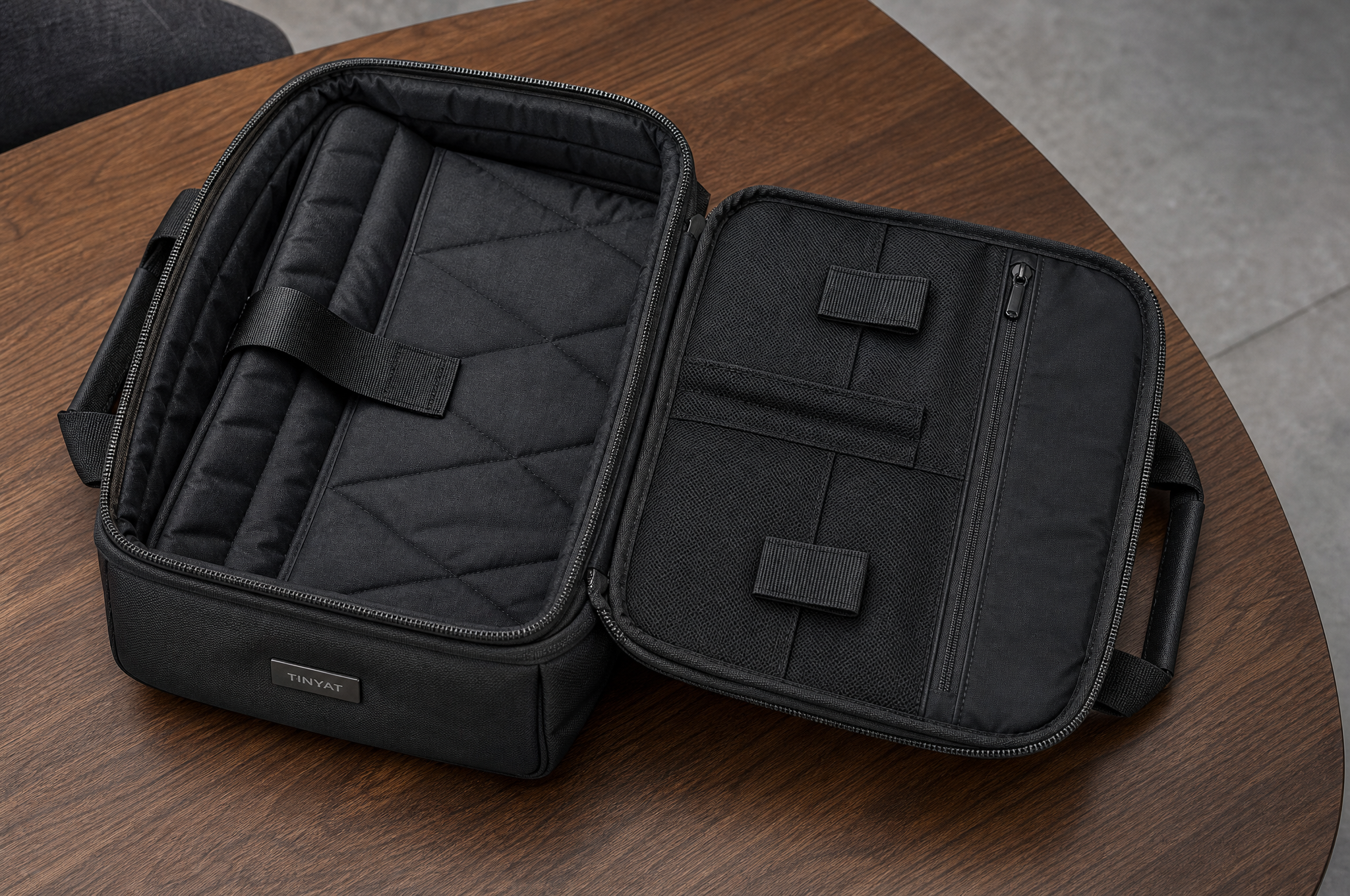
The first is internal layout. A spec that says a device sleeve and a document pocket does not say how they are arranged, which decides how the bag is used. We propose a layout and mark it as a proposal rather than a compliance item.
The second is the logo. A specification often states a logo width without saying where it goes or which method is used. On a business bag, the answer is usually a metal plate at 60 mm or a tonal emboss, and the choice affects cost by 0.30 to 0.55 USD.
The third is packaging. Corporate programs often need individual polybags or plain cartons with the client's labels, and the spec is silent on whether boxes are printed. Packaging adds 0.35 to 0.90 USD per unit, and a bid that omits it loses money when the buyer assumes it.
Our practice is to add two pages to every response: a proposal page covering the gaps, and a deviation page listing every line where we cannot fully comply with the reason. The deviation page is not a weakness, it is what makes the rest of the response credible.
How A Custom Business Laptop Bag Manufacturer Answers An RFQ
The answer format matters as much as the content, and four rules help.
Mirror the numbering exactly, line for line, with no lines omitted
Give one verdict per line, then the supporting number
Attach documents as a numbered annex set, referenced from the relevant line
State the price assumption behind each compliance claim, since a comply answer at the wrong price is a problem later
That last rule is the one buyers appreciate and suppliers avoid. If a line requires a 1680D shell, the response should say comply and name the unit impact against the baseline. Otherwise the buyer compares two all-comply responses on price and chooses the cheaper one, which in practice means a bag that complies on paper.
We also attach the sealed sample schedule to the response. A corporate buyer scoring a bid has a committee date, and knowing that a sample can be in their hands in 7-15 working days, or in 3D form in three days, often decides whether the bid is evaluated this cycle or the next.
Where business specs conflict with price
A business bag specification is usually written around a use case and priced later, and the two sometimes disagree. A tender requiring a 1680D shell, a frame sheet, a base board, YKK zippers, a 9 kg rating, and a 24 month warranty sits at roughly 8.20 to 9.20 USD FOB at 1,000 units. A tender budget of 6.80 USD cannot buy all six.
The honest response in that situation is a compliance answer plus a priced alternative: here is what the specification costs, and here is the one deviation that brings it inside the budget. Suppliers who simply mark everything comply and then build to the price hand the buyer a bag that fails inspection, and the buyer discovers the substitution at delivery rather than at the bid stage.
What the buyer sees when two responses arrive
From your side, both responses say comply on 40 lines. One has numbers behind each verdict and a deviation page; the other has a brochure attached. The second is faster to read and tells you nothing, and the first is what your technical evaluator needs to defend a decision to a committee that will ask why this supplier rather than the cheaper one.
An RFQ Response Sheet
Build the response around these lines and the scoring becomes easy.
Device envelope: internal 400 by 272 mm, plus or minus 3 mm, device 15.6 inch
Rated load: 9 kg, with base board and handle run specified
Warranty: 24 months, covered parts listed, exclusions listed
Test reports: REACH, CPSIA, Prop 65 by component, dated within 24 months
Delivery: named production week, with material lead time stated
Layout: proposal page for internal arrangement
Logo: metal plate 60 mm, or tonal emboss, with cost of each
Packaging: polybag, plain carton, or printed box, priced separately
Price assumption: the BOM behind every comply verdict
Deviations: one page, one line per deviation, with the alternative
Sample route: 3D in 3 days, physical in 7-15 working days
That sample route line is often the difference between being evaluated in this cycle and the next one.
Send The RFQ And The Scoring Sheet
Send us the specification as issued, and the scoring sheet if you have it, and we will return a line-by-line response with verdicts, numbers, a deviation page, and prices for the gaps the spec leaves open. If the budget and the specification cannot both be met, you will see which line to trade.
Contact [email protected] or visit www.tianqinbag.com to request samples, get a factory quote, or start an OEM/ODM project with Quanzhou Tianqin Bags Co., Ltd. Sampling lead time is 7-15 working days, and 3D sampling in 3 days for committee dates. Seventeen years of bag manufacturing in Quanzhou, exports to more than 50 countries, SGS test reports covering REACH, CPSIA and Prop 65 on request.
 Hot News


