
 EN



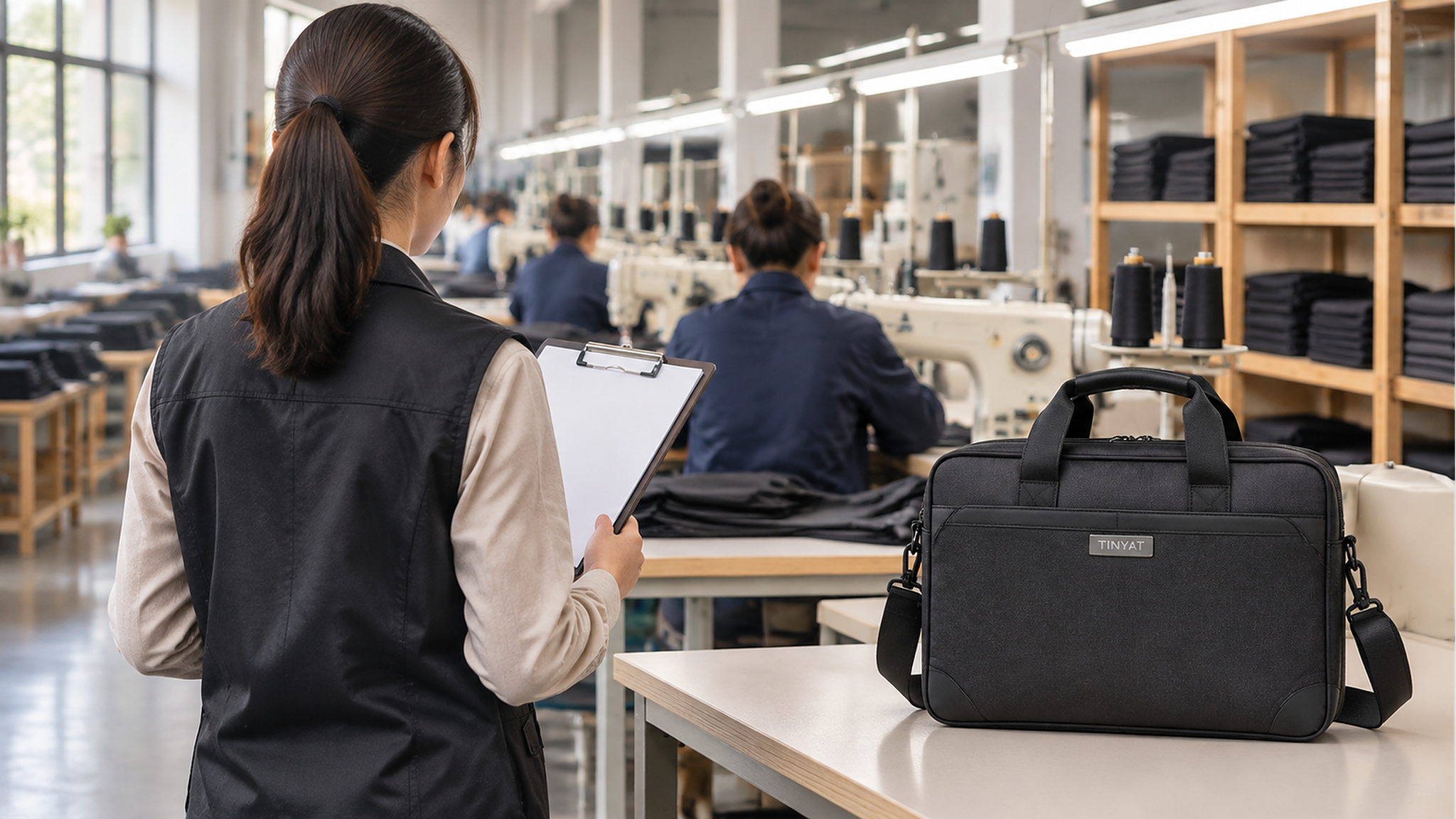
A test report arrives with a factory name on it, and the invoice carries a different company name. That single mismatch is worth more to a buyer than a week of site inspection, because it tells you which entity will be responsible if the shipment fails. Working with a factory for custom laptop bags starts with documentary proof, and the order in which you demand it matters as much as the documents themselves.
Proof Runs In Order Of Cost
Verification has a natural sequence, from cheap and remote to expensive and on site. Buyers who start at the most expensive end spend three weeks and learn less than they would from a morning of document checks.
The order that works: identity, then authorisation, then capability, then evidence, then a visit. Identity costs one email. Authorisation costs a day. Capability costs a conversation. Evidence costs a week while documents are located. The visit is the last step, not the first, because it only confirms what the documents already told you.
If a supplier cannot or will not clear the first two steps, the remaining three are wasted effort, and this is the most common way buyers waste a sourcing cycle.
Identity And Authorisation: The Two Documents That Matter
Two documents establish who you are actually dealing with.
The business licence shows the legal entity, the registration number, the registered address, and the scope of business. Match the address on the licence against the address on the quotation. A factory whose licence sits at an industrial park address and whose contact is a downtown office with no production site is a trading company, which may be perfectly fine, but you should know before you negotiate a price as though it were a factory.
The export rights registration shows whether the entity can export in its own name. A factory without it invoices through a third party, which means your purchase order, your payment, and your claim route run through a company you have not verified.
Neither document proves capability. Both prove that a legal entity exists which can be made responsible, and that is the foundation the rest sits on. We send both with the first quotation without being asked, because a buyer who has to ask is already wondering.
Capability Evidence: Reports, Records, And Registers
This is the layer where most claims are made and least is verified.
Test reports: SGS reports covering REACH, CPSIA and Prop 65, read at component level rather than the cover page, with dates within 24 months
Inspection records: AQL 2.5 at General Inspection Level II reports from the last six months, at least two, for programs similar to yours
Equipment list: cutting tables, sewing lines, and the handling system, with the model rather than a category
Capacity records: a monthly output figure that reconciles with the number of lines and the daily rate
Tooling register: the moulds and dies the factory holds, with numbers and the customer each belongs to
Subcontractor disclosure: which operations leave the site, and who tests them
The tooling register is a document few factories keep and every serious one should. Ours numbers each customer mould and stores it on a rack under that number, so a buyer can be told in one line where their tool is and who else could touch it.
The subcontractor line is the one buyers most often skip. Most bag factories outsource some operations, commonly metal plating and sometimes embroidery. That is normal and not hidden, but it matters because the plating quality on your hardware is decided by a company you have never audited.
Reading a test report properly
Three checks separate a real report from a decorative one. First, the component list: a report covering the shell fabric tells you nothing about the lining, the webbing, or the hardware. Second, the date and the sample identification: a report from 2019 does not describe the material in a 2026 shipment. Third, whether the report names the applicant as your supplier or as someone else entirely.
If a report's applicant is a different company, ask why, and accept a clear answer such as a mill's own report for a fabric the factory buys. A vague answer means the document travelled from somewhere else.
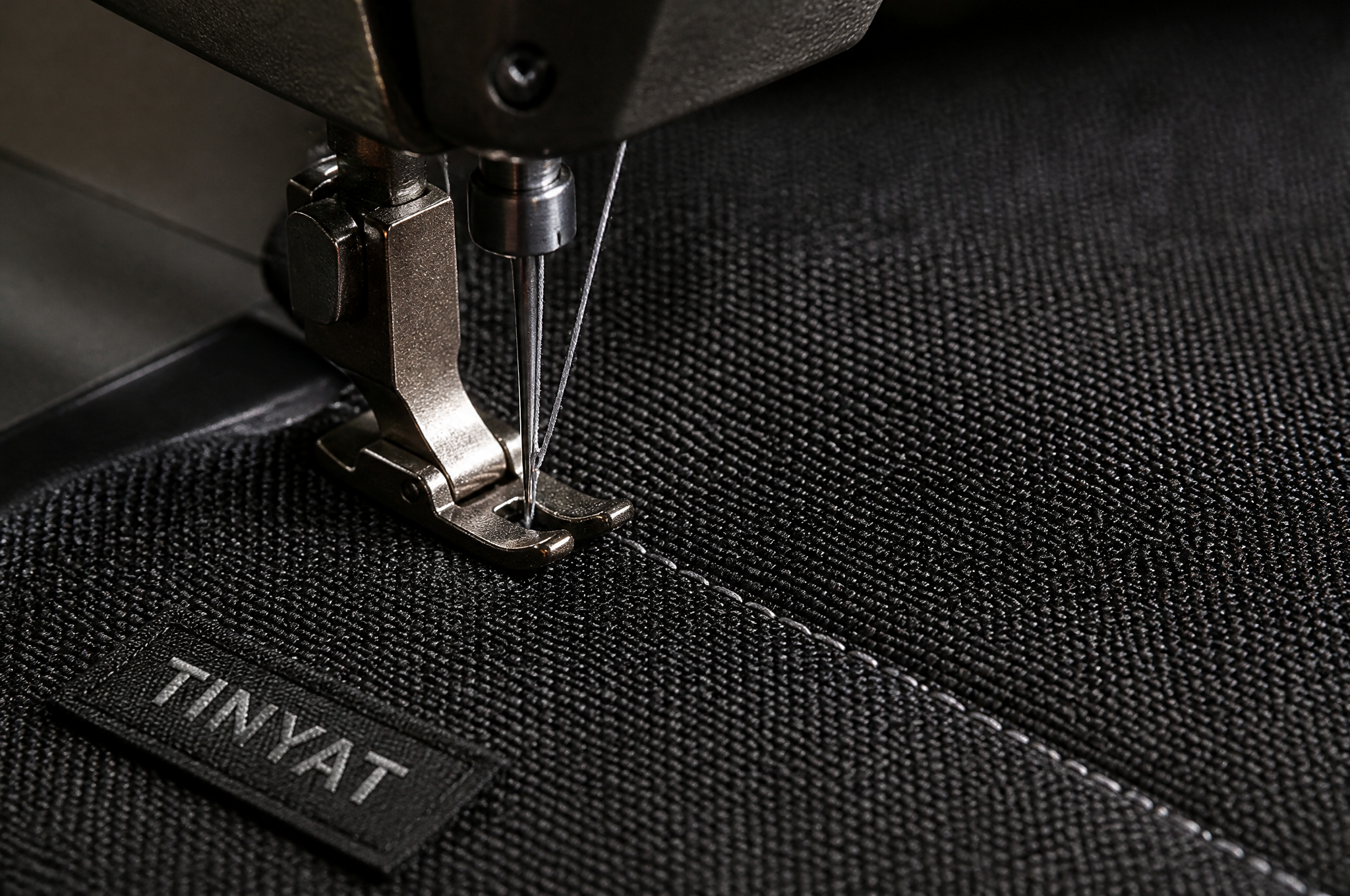
What A Factory For Custom Laptop Bags Must Show On Site
When the documents clear, the visit confirms four things that no paper can.
The equipment in the list is present, running, and matches the capacity claim
The lines produce the construction you are buying, not only simpler products
Records exist on the floor: run cards, measurement logs, and inspection sheets at the stations
The reject bin exists and someone can explain what is in it
That last item is the fastest audit in the industry. Every factory produces rejects. A factory that shows an empty bin on a working day is either having an unusually good week or has moved the bin before you arrived, and the difference is usually visible in the attitude of the person answering.
We keep the reject bin on the route deliberately, with the day's rejects and a short note on the cause. Buyers find it more informative than the showroom, because it shows what the process gets wrong rather than what it gets right.
The limitation of any verification
Documents and audits describe a factory on a day. They do not describe the line that will run your order in eight weeks, or the supervisor who will be on shift.
That is not a reason to skip verification, it is a reason to add a second control: the inspection report on your own shipment. Verification reduces the chance of choosing badly. Inspection catches what verification cannot, which is a specific run on a specific day. Both belong in a program, and neither replaces the other.
What the buyer sees when the numbers do not reconcile
From your side, a capacity claim of 60,000 units a month against a factory with four sewing lines and a single shift is the moment the conversation changes. The arithmetic does not have to be exact, but it has to be possible. A supplier who cannot explain the reconciliation is either counting a category it does not produce or counting a peak month as an average.
A Verification Sheet
Put these lines in a first enquiry and see what comes back.
Business licence: entity name, registration number, registered address
Export rights: held in the entity's own name, yes or no
Test reports: REACH, CPSIA, Prop 65, component level, dated within 24 months
Inspection reports: two from the last six months, AQL 2.5 at Level II
Equipment list: cutting tables and sewing lines, with models
Capacity reconciliation: lines multiplied by daily rate multiplied by working days
Tooling register: mould numbers and customer ownership
Subcontracting: operations that leave site, plus the sub-contractor's test reports
Social compliance: audit report and date, if your market requires one
Named QC contact: the person who signs the inspection report
Reject handling: where rejects go and who records the cause
The social compliance line is market-specific rather than universal, and we say so rather than claiming an audit we do not hold.
Ask For The Two Documents First
Before a catalogue or a price, ask for the business licence and the export rights registration, and check the address against the quotation. Then ask for two inspection reports from the last six months. Those four documents answer most of the question, and the site visit becomes a confirmation rather than an investigation.
Contact [email protected] or visit www.tianqinbag.com to request samples, get a factory quote, or start an OEM/ODM project with Quanzhou Tianqin Bags Co., Ltd. Sampling lead time is 7-15 working days, and licence, export rights, and SGS reports covering REACH, CPSIA and Prop 65 are sent with the quotation on request. Seventeen years of bag manufacturing in Quanzhou, exports to more than 50 countries.


 Hot News


