
 EN



A buyer sends a change request at the end of a costing round: keep everything, but replace the 600D Oxford shell with 1680D ballistic nylon. Their assumption, written in the email, is that this adds 40 to 60 cents per bag. The revised quote comes back 1.85 USD higher. The buyer replies with a question mark. The answer is arithmetic, and it is worth walking through because most buyers only run the first third of it.
Denier Is Not Weight, GSM Is
Denier measures yarn linear density, in grams per 9,000 metres. It tells you how thick the individual yarn is. It does not tell you how heavy the finished fabric is, and weight per square metre is what the mill actually bills for.
600D Oxford polyester with PU coating: 230 to 260 gsm in the weights we buy
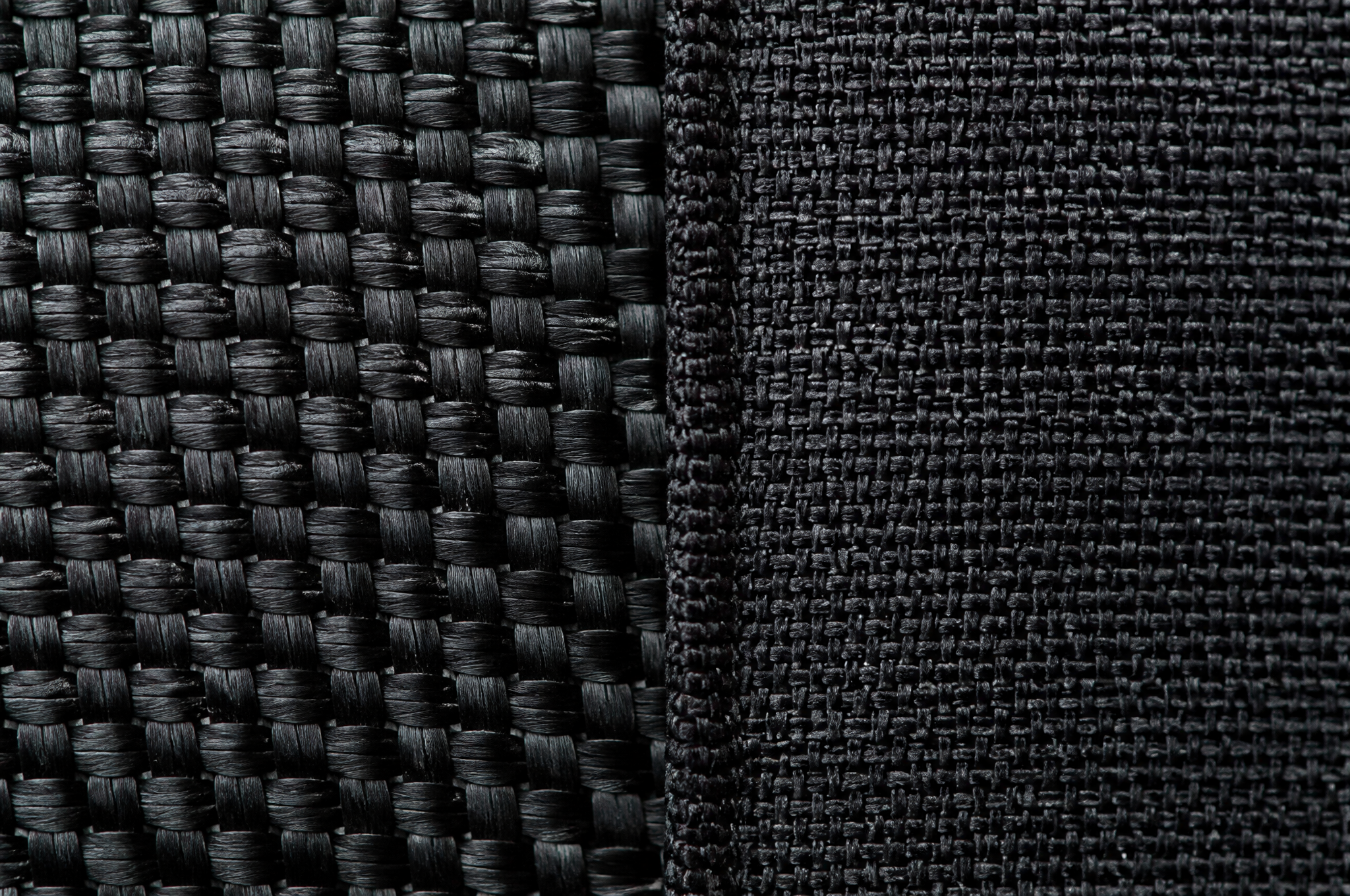
1680D ballistic nylon with PU coating: 470 to 540 gsm
Two-by-two basket weave on the ballistic adds bulk without adding yarn thickness, so the gsm climbs faster than the denier label suggests
A fabric is sold to us per metre of a given roll width, but the mill prices it internally per kilogram. That single fact explains most fabric cost surprises. Multiply gsm by roll width and you get kilograms per linear metre. At a 1.47 metre roll width, 245 gsm is 0.360 kg per metre. At 520 gsm it is 0.764 kg per metre, more than double for the same length of fabric on the same roll.
The Yield Math on One Bag
Run the comparison on a 25 litre laptop backpack body that needs 0.82 metres of shell fabric when nested well.
600D at 245 gsm, 1.30 USD per metre: 0.82 metres costs 1.07
1680D at 520 gsm, 2.75 USD per metre: 0.82 metres costs 2.26
Difference on the shell alone: 1.19 USD
Now look at the same two fabrics per kilogram, which is how the mill and the mill's customer argue about it. The 600D works out at about 3.60 USD per kilo. The 1680D at about 3.60 USD per kilo. On a per-kilo basis there is no premium at all. The price moved because the bag got heavier, not because the mill raised its rate. Buyers who benchmark fabric per metre across different weights are comparing two different things.
That accounts for 1.19 of the 1.85. The rest arrives from three places.
Thread and binding: heavier fabric needs 20/3 instead of 40/3 thread on the main seams, about 0.08 more
Labor minutes: denser weave resists the needle, machine speed drops 8 to 12 percent, and the same bag takes four extra minutes, roughly 0.26
Cutting waste: stiffer fabric nests less tightly, adding two to three points of wastage, about 0.09
Our margin on the added cost, about 0.23
Add those and you are at 1.85. Nothing was marked up arbitrarily. The fabric swap simply multiplied through more of the bag than the buyer expected.
Wastage Is Where the Second Surprise Sits
Marker efficiency on a laptop backpack body panel runs 86 to 91 percent on simple rectangular pieces and 78 to 84 percent on curved or tapered panels. Those percentages are measured, not estimated, and they change with the fabric.
Ballistic nylon is stiffer and has less drape. It does not follow a curve on the cutting table as obediently, so a panel that nested at 88 percent in 600D may nest at 85 percent in 1680D. On a 0.82 metre requirement that is another three to five centimetres per bag, and at 1,000 units it is 30 to 50 extra metres of fabric booked against your order.
Mill defect allowance is separate. We plan 1.5 to 3 percent for weaving defects, coating pinholes and bowing, depending on the mill and the dye lot. A tight, high-gsm fabric is not automatically the cleaner one. We have rejected 1680D lots for coating streaks that a 600D run would have passed, because the thicker coating hides less.
Effects Buyers Do Not Price In
Weight is the one that reaches the end consumer. A 25 litre laptop backpack moves from roughly 780 grams to about 1,050. That changes how the bag feels on a commute, and it changes your carton: 8 pieces per carton goes from 6.2 kg net to 8.4 kg, and 1,000 units adds 270 kg to the shipment. Freight and warehouse handling both notice.
Color is the second. Custom dyed fabric usually carries a dye lot minimum of 500 metres per colour. A fabric swap means new lab dips, a new approval cycle of 12 to 15 days, and, if the swap happens after bulk fabric is already on our floor, an obsolete lot. That cost rarely appears on a revised quote because it lands on the factory, and factories that absorb it twice stop quoting quickly.
Abrasion is the third, and it is the one you are buying. 1680D ballistic at 520 gsm typically carries a Martindale result well above a 600D Oxford, which is why field technicians and frequent flyers get the heavier shell. If your channel does not need that, you are paying for durability your customer will never test.
A fourth effect is shrinkage and hand feel, and it catches buyers who swap after the pattern is graded. A tight, high-gsm weave shrinks less in the finishing bath. That is good for dimensional stability and awkward for a pattern developed on a softer cloth. We re-measure three body panels per size after the first bulk cut, at roughly 43 by 30 cm, 45 by 32 cm and 48 by 34 cm, with a tolerance of minus 3 mm on the width. Skip that step and the swap produces a bag where the sleeve still fits but the main zipper no longer meets its tape.
Here is the limitation on our side. We cannot stock every fabric in every colour, so a swap late in the process means we buy from what the mill has on the floor, and what is on the floor is usually the standard black, navy and grey. A mid-season swap to a seasonal colour will cost more than the fabric itself.
Run This Check Before You Approve a Fabric Swap
Six questions, all answerable in writing before a PO is signed.
What is the gsm of the proposed fabric, not just the denier, and at what roll width
What is the consumption per bag in metres at the new gsm
What marker efficiency did the factory achieve on the sample cut
Does the new fabric change the needle size, thread spec or stitch density
What is the new unit weight, and what does that do to the carton count
Does the colourway reach the mill's dye lot minimum, and what is the lab dip lead time
The question we hear most is whether the heavier fabric is worth it. Our honest answer: for a commuting bag sold at retail under 60 USD, 600D with a good backing is the better commercial decision. For a bag sold on durability claims, travel use or a warranty longer than two years, 1680D earns its 1.85.
Send Us Both Fabrics
Send us the two fabric specs and we will quote them as two columns on one sheet, with consumption and wastage shown for each. That is the fastest way to see whether the swap is a price problem or a positioning decision.
Quanzhou Tianqin Bags Co., Ltd has 17 years of bag manufacturing behind it, runs OEM and ODM programs for buyers in more than 50 countries, and stocks 1680D ballistic nylon, 600D Oxford polyester, YKK zippers and zinc alloy hardware as standard inputs. Sampling takes 7-15 working days, so a fabric comparison can be in your hands inside three weeks.
Email [email protected] or go to www.tianqinbag.com with both specs and your target quantity. We will send the two-column quote and tell you which fabric we would put our own name on.



 Hot News


