EN



Back-to-school orders are booked in February and March, produced in April through June, and delivered in July. By October the buyer knows whether the assortment was right, and by then there is no realistic chance of a second run in the color that sold out. The student assortment is a calendar problem before it is a design problem, and the price ladder has to be set before the calendar closes.
Build the price ladder in three tiers, not five
Student laptop backpacks in the US and EU retail channels settle into three price bands, and each band has a construction logic that buyers can hold a factory to.
Entry band, roughly 5.90 to 7.50 USD FOB and 24.99 to 29.99 USD retail. 22 to 24L, 600D Oxford polyester shell, 210D lining, nylon coil zippers, one main compartment plus a padded 15.6-inch sleeve. This is the volume tier and it lives or dies on carton economics and on returns caused by zipper failure.
Core band, roughly 8.50 to 10.50 USD FOB and 34.99 to 44.99 USD retail. 25 to 27L, 900D polyester or a 600D with a heavier coating, YKK zippers, a padded back panel, two side pockets, a reinforced base. Most units in a school program land here, and this is where durability claims actually hold.
Premium band, roughly 12.00 to 15.00 USD FOB and 54.99 to 69.99 USD retail. 28L and up, 1680D ballistic or a ripstop shell, padded 16-inch laptop compartment, trolley sleeve, water-resistant zippers, sometimes a padded tablet pocket. Parents buy this tier when the bag has to last two school years.
Five tiers is a common mistake. Retail floors can merchandise three convincingly and shoppers compare four at most. The extra two tiers split the buy and dilute the depth that makes a color sell out instead of sitting.
Durability against the fashion cycle
The school year runs about nine months. The fashion cycle in this category runs two to three seasons, and the gap between them is the buyer's real risk.
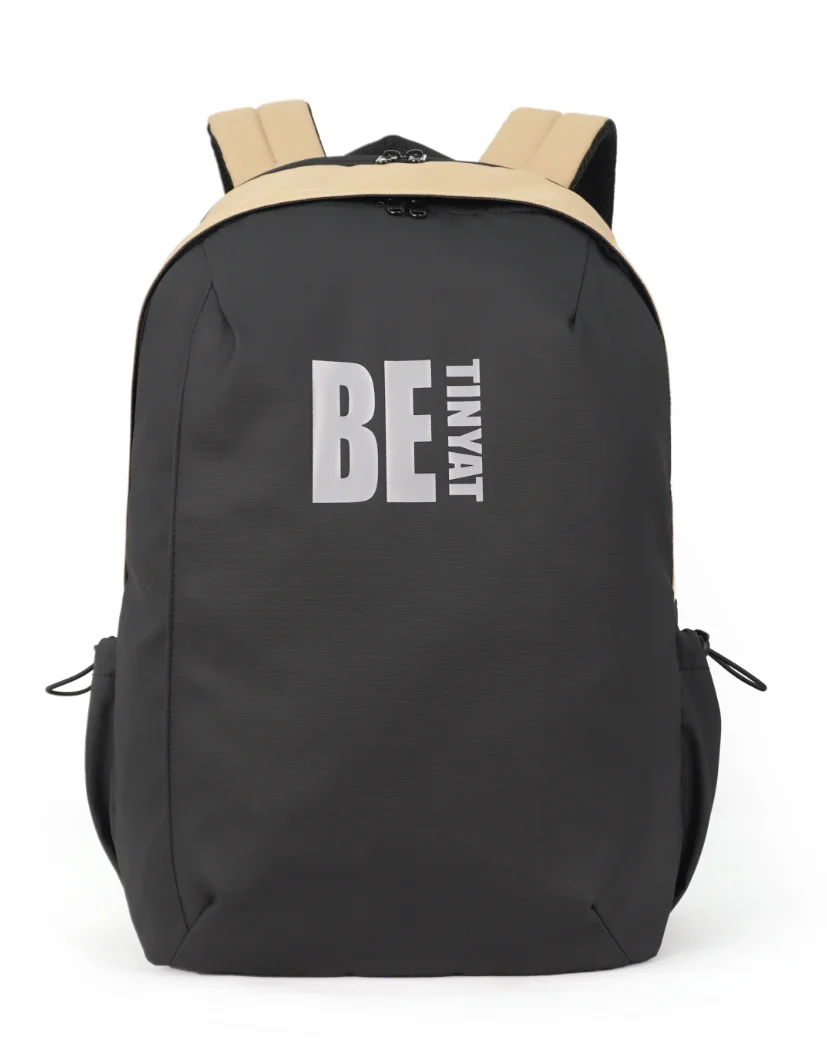
A student bag that is designed as a fashion item usually carries one visible decorative element: a printed panel, a silicone patch, a contrast trim. Those age faster than the shell does. A printed PU panel can crack at the fold within a school year, and a light contrast trim shows scuffing by month three. The bag is not worn out, but it looks worn out, and the replacement purchase happens in the same season the style is being closed out.
Our recommendation to buyers is to put the fashion element where it can be removed or replaced, and to keep the structural parts of the bag on a plain, durable spec. A 900D shell with a matte coating outlasts a printed 600D every time, and it costs less.
Fabric is where the tier is decided, and it is worth knowing where the money sits. On a 25L student backpack, fabric and coating account for roughly 30 to 40 percent of material cost, so moving from 600D to 900D changes the FOB by around 0.60 to 0.90 USD depending on coating. That is the cheapest durability upgrade available, and it is far cheaper than adding another compartment or another logo application.
Back-to-school timing and production windows
The calendar is unforgiving. A buyer who books in May for a July delivery is already buying air freight instead of sea freight, and that difference on a 25L backpack can be 0.40 to 0.70 USD per unit at typical carton densities.
The working sequence we hold in our own schedule:
December to January: range review, target costs, material selection.
February to March: sample approval and purchase order placement for the bulk buy.
April to June: production, 45 to 60 days for a 20,000 to 50,000 unit program across several styles.
Late June to July: sea freight to US or EU distribution centers.
August: floor set and replenishment window.
Sampling has to happen before all of this. Our sampling window is 7-15 business days from confirmed materials and approved artwork, so a range review in December still leaves room for a second round of fit or artwork changes in January without touching the production booking.
One honest constraint: the July delivery window is the industry's peak, and no factory can protect a late order in it. A buyer who confirms colors in April gets a production slot. A buyer who confirms in June gets a promise and then a phone call about air freight. We would rather say that in February than in June.
Assortment depth and how many colors per style
Depth is where the margin hides. A student program with eight colors at 300 units each looks diverse on paper and produces eight colors that each sell out of the two most popular sizes while the rest sits.
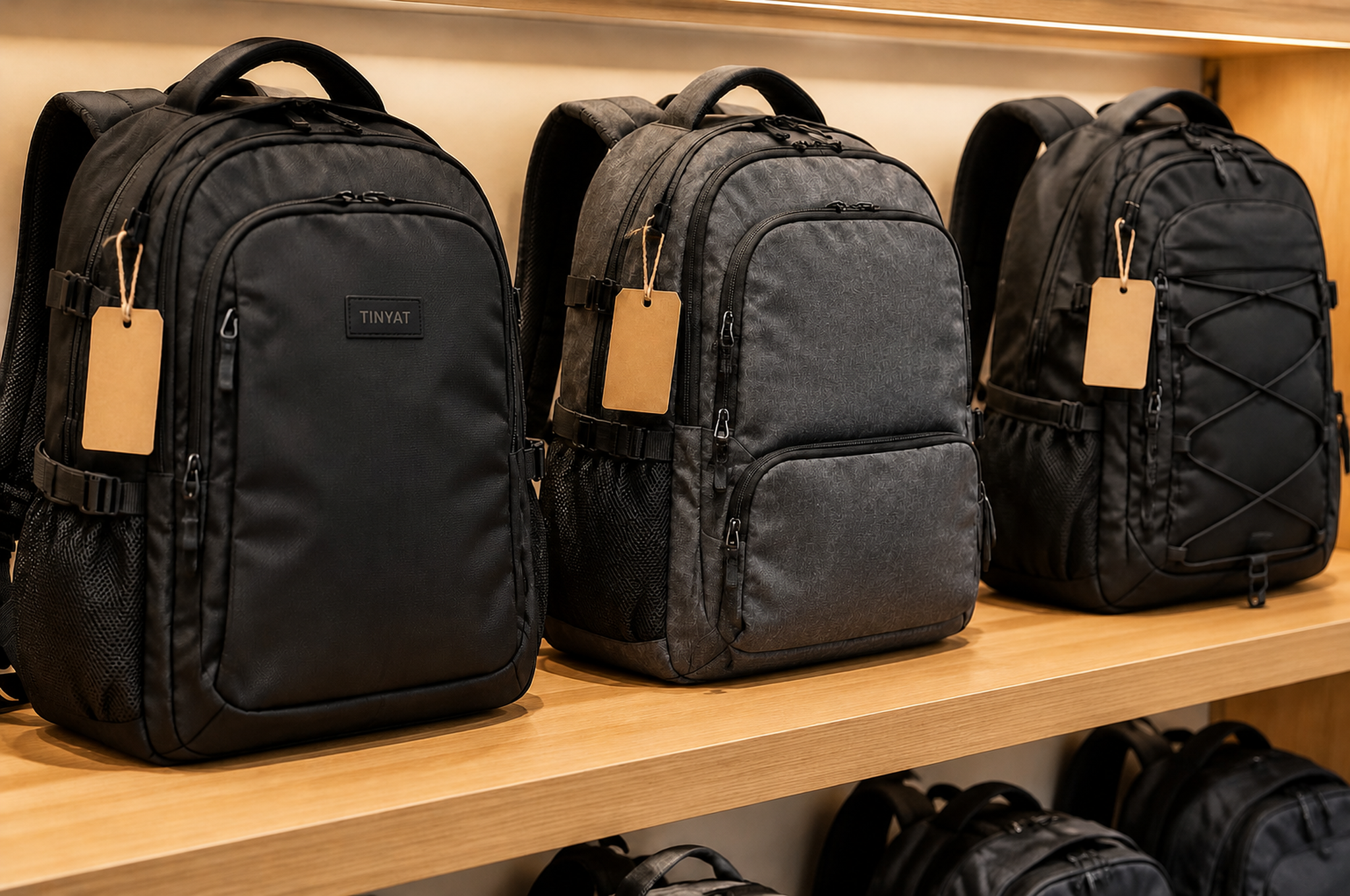
What holds up in practice is a core and seasonal split. Around 60 percent of the buy in two to three colors that carry over from year to year, black, navy, and a grey, plus 25 to 30 percent in two seasonal accents, and 10 percent in a test color. Carryover colors let a retailer replenish mid-season without a new dye lot, and they let the buyer negotiate a lower per-color minimum at booking.
Margin structure deserves the same discipline. A three-tier ladder should step the gross margin rather than flatten it. If the entry tier carries the lowest unit margin and the highest return rate, it exists to win the opening price comparison on a shelf or a listing, not to make money. We see buyers push 45 to 50 points of margin on the core tier and accept 38 to 42 on entry, which is the right shape as long as the entry bag does not come back. Our own claim data on entry-tier builds shows zipper slider separation as the leading failure, so the cheapest fix in the whole program is a better slider on the main compartment, at roughly 0.15 USD per bag.
Per-color minimums are the constraint that shapes this. On a coated 600D shell our per-color minimum is typically 300 units, and it is the dye lot rather than the cutting that sets it. Below that number the color becomes a sampling exercise with a price attached. Buyers who want a true eight-color story should plan it across two product families rather than one.
A student assortment planning sheet
Three price tiers with FOB and target retail for each, stated in the purchase plan
One shell fabric and coating per tier, written into the specification
Per-color minimums confirmed in writing before the range is finalized
Core carryover percentage agreed with the retailer, not left to the vendor
Production booking deadline stated, with the air freight cost of a late change
Sample approval deadline that leaves room for one revision round
Returns data from last season mapped to tier, not to style
Warranty text aligned to the tier, so the entry band does not promise premium coverage
Carton configuration checked, since a 25L bag at 20 per carton drives freight more than unit weight does
Book your back-to-school program with us
The first question most buyers ask us when they plan a student program is how early they need to lock colors. The answer is February for a July delivery, and the second question is always what happens if they miss it.
Quanzhou Tianqin Bags Co., Ltd has manufactured business, casual, travel, sport, and tool bags for 17 years at our factory in Quanzhou, Fujian, and student and campus laptop backpacks run through the same automated cutting, hanging conveyor, and semi-automated assembly lines as our other families. We work OEM and ODM with buyers in more than 50 countries, hold large monthly capacity, and provide SGS test reports on request for US and EU retail compliance.
Send your tier plan, target retail prices, and colorway count to [email protected] and we will cost the three tiers against your specification rather than against a generic quote. Sampling runs 7-15 business days from confirmed materials and artwork. Factory overview, product families, and current capacity are at www.tianqinbag.com.

 Hot News