
 EN



Ask three suppliers what custom means and you get three answers: a different lining colour in one case, a fully new pattern in another. The distance between those answers is a development budget and six weeks of calendar. A laptop bag custom manufacturer should tell you which of five levels your request sits at before quoting, because the level decides the tooling, the MOQ, and the work. Here is how the scope actually divides.
Custom Is A Ladder, Not A Switch
Buyers tend to treat custom as yes or no. In production it is five distinct levels, and each one changes what the factory has to make new.
The ladder runs from choosing a colour on a bag that already exists, up to a construction that does not exist yet. Each rung up adds tooling, adds development time, and raises the minimum order. A request that sounds simple can sit two rungs higher than the buyer expected, which is why the scope conversation belongs before the quotation rather than after the sample.
The practical rule we use: if the change touches a pattern piece, it is a development item. If it changes only what is applied to an existing piece, it is a modification. If it changes nothing structural, it is a selection.
The Five Levels Of Customisation
Level one is selection from an existing block. Colourway, lining colour, logo application, hardware finish, packaging. No tooling, MOQ from 300 pcs per colourway, and a sample can usually be built in 7-15 working days.
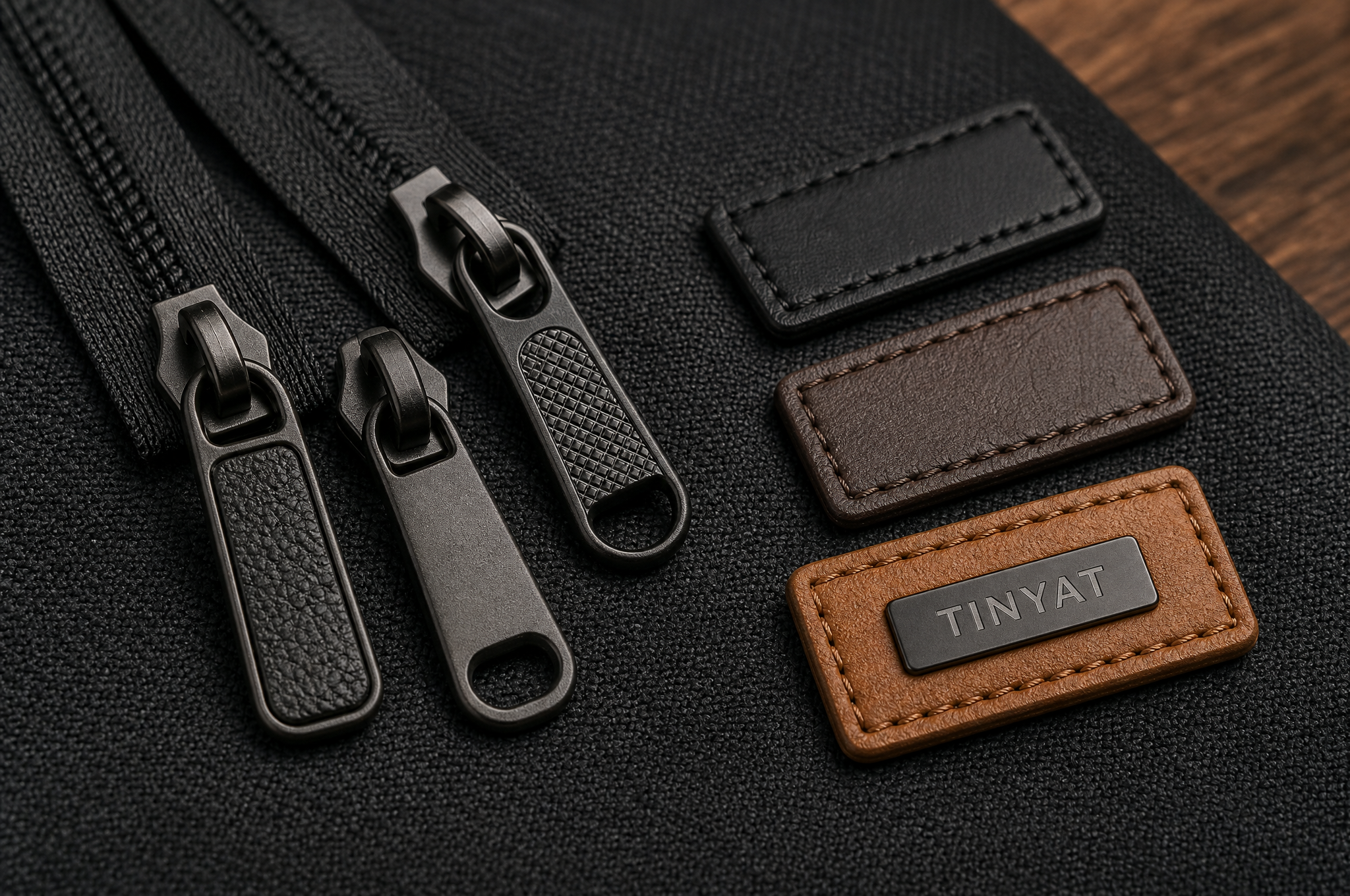
Level two is trim modification. A different zip brand, a metal pull instead of a moulded one, an added internal pocket inside the existing panel footprint, a shoulder pad change. Tooling is nil to 150 USD, and MOQ stays at the entry band.
Level three is panel modification on an existing block. A deeper gusset, a different pocket shape, a trolley sleeve added to the back panel. This needs a pattern revision, 150 to 300 USD of development, and the MOQ moves to 500 pcs per colourway because the cutting layout changes.
Level four is a new pattern from your drawing. Silhouette, proportions, and construction are yours. Pattern development and a first sample are a project, 10 to 20 working days on top of the sampling window, and the sensible floor is 500 to 800 pcs.
Level five is a new construction or a new mechanism, such as a moulded shell, a magnetic quick-release system, or a fold-out checkpoint design. This brings tooling of 380 to 2,800 USD depending on the element, and a volume that supports it, typically 500 pcs minimum per shape.
Most buyers who say they want something unique are asking for level three. Most who say they want a small change are asking for level four. Getting that framing right in the first email saves a week of both sides describing the same bag differently.
Customer-Supplied Material And What It Changes
Some brands want to supply their own shell fabric, lining, webbing, or labels. This is a legitimate level-two arrangement and it changes four things.
The first is inspection. We intake the material, measure the roll width, weigh a sample, and check the shade against the approved swatch. If a brand ships 800 metres of a 1.5 m wide fabric with a visible shade shift across two rolls, that has to be found at intake rather than at cutting.
The second is liability. If a customer-supplied shell fails abrasion or a colourfastness test, the discussion about who pays for the returns is different from a factory-sourced material. We put that in writing: the material is inspected for dimension and appearance, not for performance unless a test is commissioned.
The third is lead time. Customer material usually arrives later than a factory's own stock, and it arrives in one shipment, so a shortage has no fallback. We build a 10 percent cutting allowance into the quotation and say so.
The fourth is price. Expect a conversion price rather than a bag price, typically 15 to 25 percent below the full price depending on how much of the bill of materials you are supplying, because labour and overhead do not change.
What custom does not cover
Three things sit outside the word custom, and buyers assume them constantly. Certification is not included: we supply SGS reports covering REACH, CPSIA and Prop 65 for the materials and components we use, but a market-specific approval for a brand's own claim is a separate service. Retail packaging design is not included: we build to a dieline you supply. And exclusivity is not included: it is a commercial term with a volume attached, not a feature of the bag.
What A Laptop Bag Custom Manufacturer Puts In Writing
Our scope sheet divides every order into three columns, and each line goes in one of them.
Inside standard: no cost, no tooling, no MOQ change
Modification: an engineering hour cost and sometimes a small die
Development: pattern, tooling, sampling rounds, and a volume floor
That structure exists because of a specific project. A buyer requested a laptop messenger with a wider gusset and a new internal divider, described in one email as a small change. It was a level-three modification on the gusset and a level-four new pattern on the divider, and the difference was 180 USD of development and an MOQ move from 300 to 500. When the split was shown in a table, the buyer dropped the divider and kept the gusset, and the order ran two weeks earlier.
What the buyer sees when the scope is unclear
From your side, an unclear scope produces a quotation that is low and a sample that is not what you asked for, or a quotation that is high with no explanation. Both feel like a supplier problem and both are usually a scope problem. The tell is a quotation with one unit price and no development lines, because a bag with genuinely new parts cannot be built without someone paying for the new parts once.
A Scope Definition Sheet
Send these lines with a request and the quotation lands closer to the truth first time.
Level: one to five, stated by the supplier rather than assumed
Pattern pieces changed: list them, or state none
Tooling required: none, die 90 to 150 USD, mould 380 to 2,800 USD
Development time: 0 days at level one, 10 to 20 working days at level four
MOQ at this level: 300, 500, or 800 pcs per colourway
Sampling rounds: one at levels one to three, two at levels four and five
Material source: factory or customer, with the inspection scope stated
Customer material allowance: 10 percent for cutting waste and shortage
Packaging: dieline supplied by the buyer or built by the factory
Certification scope: which reports are included, which are quoted separately
Exclusivity: term and volume, or none
Price basis: full bag price or conversion price
That MOQ line is the one that changes decisions. A buyer planning 400 units who discovers a level-four request needs 800 usually reconsiders the level rather than the quantity.
Send The Bag You Want To Change
Send us the bag you currently buy, or a photograph of it, and describe the change in your own words. We will map it to a level, name the pattern pieces involved, and quote the development and the unit price separately, so you can see what the change costs before you commit to a sampling round.
Contact [email protected] or visit www.tianqinbag.com to request samples, get a factory quote, or start an OEM/ODM project with Quanzhou Tianqin Bags Co., Ltd. Sampling lead time is 7-15 working days, and 3D sampling is available at levels four and five before a physical sample is cut. Seventeen years of bag manufacturing in Quanzhou, exports to more than 50 countries, MOQ from 300 to 500 pcs per colourway depending on material.



 Hot News


