 ×
×
Musculoskeletal injuries associated with bag carrying — shoulder impingement, neck strain, lower back pain — are a recognized occupational health issue for workers who carry loaded bags daily. For organizations providing laptop backpacks to employees, the ergonomic quality of those bags has a direct relationship to injury rates and, potentially, workers' compensation claims.
The ergonomic performance of a laptop backpack is not a soft preference — it is a specification dimension with measurable properties that can be objectively evaluated and specified.
How a backpack distributes its load across the wearer's body determines the musculoskeletal impact of carrying it. Poor load distribution concentrates force at specific points — typically the top of the shoulder (trapezius muscle) and the mid-lower back — creating the conditions for cumulative strain injury.
Effective load distribution requires: shoulder straps that are wide enough (minimum 50mm in the contact zone) and contoured to the shoulder rather than running straight from attachment point to wearer, a sternum strap that transfers some load from the shoulder tops to the chest (reducing shoulder elevation force), and a padded hip belt for loads above 5–6 kg that transfers 30–50% of bag weight to the hips (the body's strongest load-bearing structure).
For laptop bags carrying 3–5 kg (typical for a laptop, accessories, and daily essentials), a sternum strap is the most important load distribution feature. Hip belts become relevant above 6 kg.
The back panel transfers the bag's weight to the wearer's back. A flat, unstructured back panel distributes load poorly and allows the bag to pull away from the body, increasing the effective moment arm of the load and magnifying the load's impact on shoulder and back muscles.
A contoured back panel — one with lumbar support curvature that follows the natural lordosis of the lower back — improves load transfer to the lumbar region where it can be more effectively managed by core and back musculature.
Specify: lumbar support curvature in the back panel foam, with the lumbar region foam firmer (35–40 kg/m³) than the upper back region (25–30 kg/m³). The firmer lumbar region maintains contact with the lower back under load, preventing the bag from pulling away at the base.
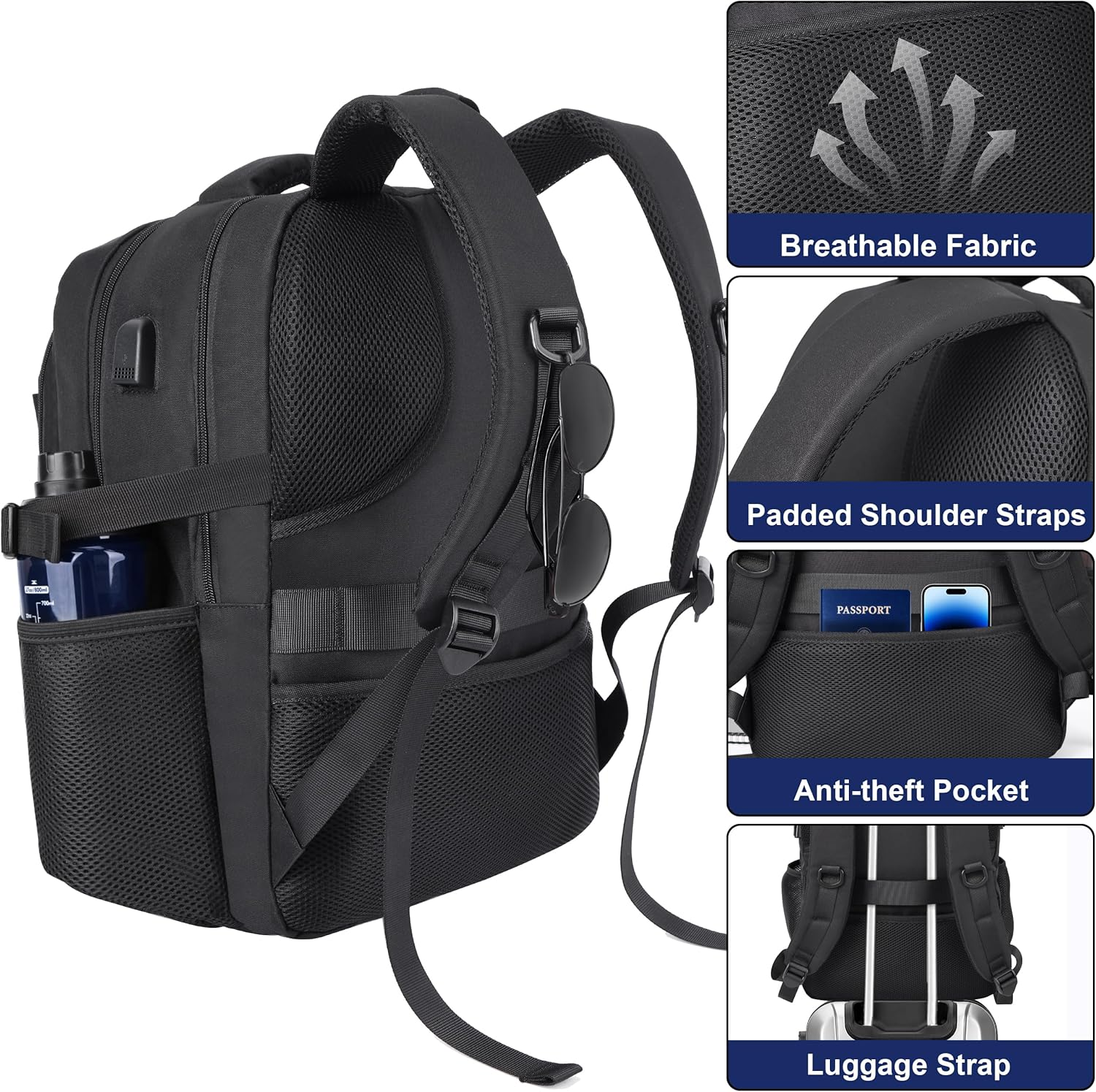
Shoulder strap width at the contact zone: 50mm minimum. Narrower straps concentrate load on a smaller surface area, increasing pressure per unit area on the trapezius muscle.
Shoulder strap curvature: straps should curve inward at the shoulder top (following the curve of the shoulder) rather than running straight. Straps that run straight cut across the shoulder rather than conforming to it, which concentrates pressure at the outer edge of the contact zone.
Strap padding density: 25–30 kg/m³ is the appropriate range for shoulder strap padding. Too soft (below 20 kg/m³) provides comfort without support — the strap sinks into the shoulder and returns without adequate force distribution. Too firm (above 40 kg/m³) distributes load well but feels uncomfortable against the shoulder.
Anti-slip coating on strap underside: prevents strap migration under load, which forces wearers to repeatedly re-adjust and which allows uneven load distribution when the straps are displaced.
Corporate bag programs sourcing for employee populations should consider the range of body types that will use the product. Standard laptop backpack shoulder strap adjustment ranges (40–60cm sternum height adjustment) accommodate most adult body types for basic load-carrying tasks.
For organizations with female employee populations who will be using the bag regularly: standard laptop backpack shoulder strap spacing is designed for male shoulder width (typically 42–48cm). Narrower shoulder strap spacing (38–42cm center-to-center at the top attachment point) improves fit and load distribution for narrower shoulders. Some manufacturers offer gender-specific strap configurations for corporate programs.
 Hot News


 EN
EN