
 EN



The first order sells through in eleven weeks and the buyer reorders the same 25 L model in the same charcoal grey. Eight weeks later, 600 units arrive slightly warmer in tone than the first lot, and the two lots cannot sit on the same shelf. The reorder was placed correctly and planned badly. Reorder planning for a backpack program is a set of small disciplines: fabric remnants, dye lot continuity, a buffer that reflects real transit, and capacity that is booked before the peak, not requested during it.
Fabric Remnants and the Number to Hold
A bulk run never consumes exactly the fabric ordered. Cutting yield on a 25 L laptop backpack leaves 5 to 8 percent remnant from marker waste, roll ends, and panel defects. On 3,000 units at 1.35 meters per bag, that is roughly 200 to 320 meters left over, and the number matters because remnant from the original roll is the only reliable way to match a reorder.
Two practices make remnants useful instead of dead stock. First, record the roll number on every carton label so a future claim or a future reorder can be tied to the same dye lot. Second, decide in advance whether the factory holds remnant fabric and for how long. Our standard is to retain leftover shell fabric for 6 months at no charge on programs above 1,000 units, because the alternative is buying a new dye lot for a 300-unit top-up and paying a minimum charge for it.
The limitation is honest: 200 meters does not cover a 300-unit reorder, which needs around 405 meters. Remnant buys you time and partial coverage, not a full lot.
Color Continuity Across Lots
Shade is the most common reorder complaint in this category, and it is a physics problem before it is a service problem. Fabric is dyed in batches, and a new batch from the same mill, same color code, and same fabric can still land outside the tolerance of the first.
The workable rule is a numeric one: panel-to-panel difference visible at one meter under daylight fails, which is roughly delta E 1.0 in lab terms. Across two lots of the same color, ask the mill for a lab dip against the retained standard and approve it before bulk. A lab dip takes 5 to 7 days and costs little compared with a shelf that carries two slightly different greys.
Ask your supplier for the dye lot record at reorder, not after. If lot 2 is a different lot number from lot 1, plan the transition: sell lot 1 through first, or split the colors into two SKUs on the listing, or accept the margin hit of a markdown. What you should not do is mix lots in one carton, because a mixed carton guarantees the customer sees the difference.
At Tianqin we keep the approved counter sample and the fabric swatch card from the original lot for 6 months, and we run a shade check against that card before a reorder cuts. When the mill cannot match, we say so before cutting and offer the two options: a light-and-dark split or a small surcharge for a minimum dye run.
Lead-Time Buffers That Reflect the Real Route
Most reorder failures come from adding up the wrong lead times. A 45-day production window is only one segment.
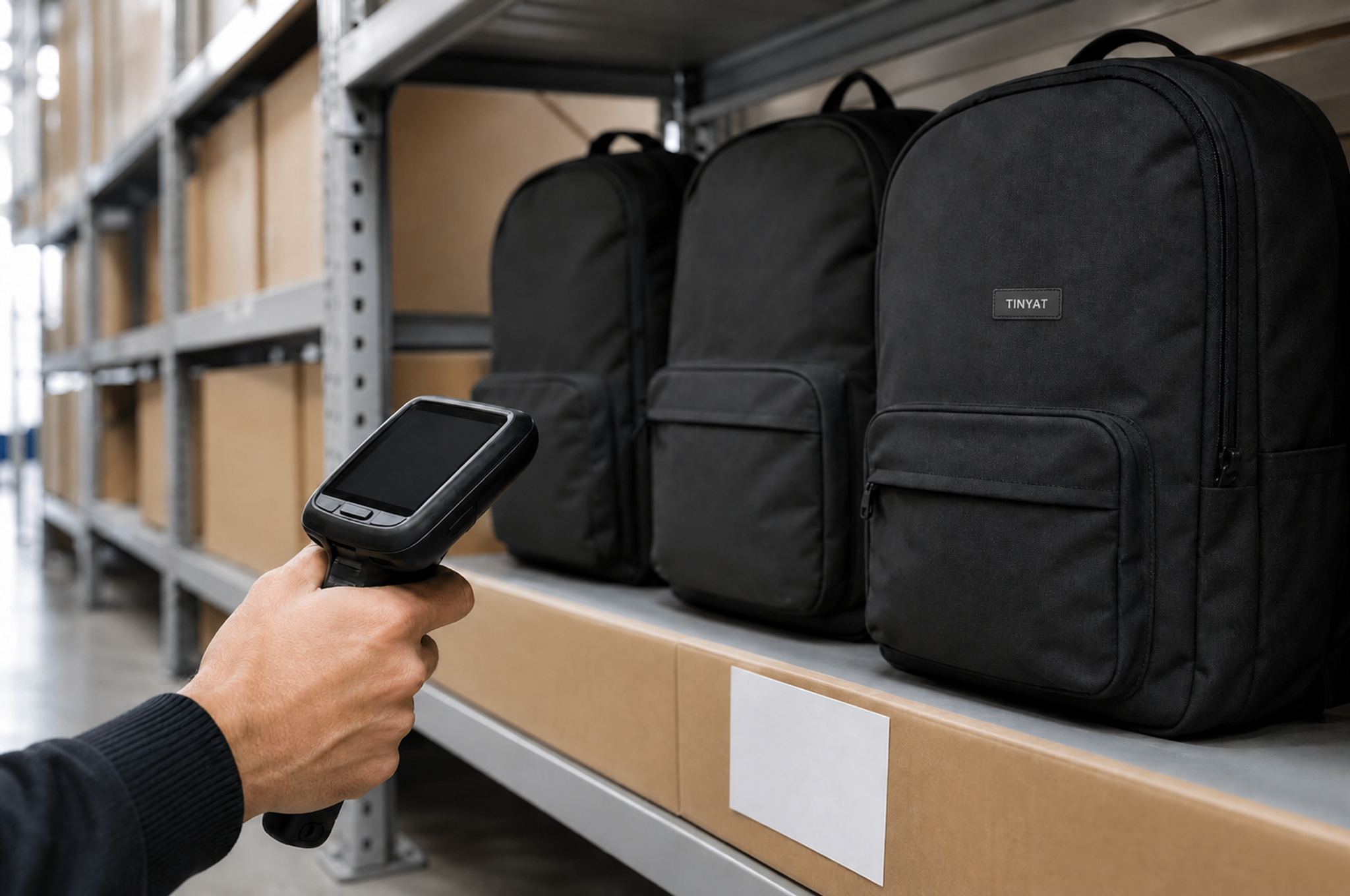
The full sequence on a sea-freight reorder to the US or EU runs like this: material booking 7 to 10 days if the fabric is not held, production 40 to 45 days for 3,000 units, packing and inspection 3 to 5 days, inland and port handling 5 to 7 days, ocean transit 28 to 35 days to a US west coast port or 32 to 40 days to Northern Europe, then customs and inland delivery 5 to 10 days.
That totals 90 to 110 days door to door in a normal month. A buyer planning a reorder against a 45-day assumption will be out of stock for six weeks and will not know it until the production confirmation arrives.
Build the buffer in the calendar, not in the price. Two workable patterns: place the reorder when stock covers 110 days of forecast, or hold a 4 to 6 week safety stock at your own warehouse and reorder at 70 days of cover. The first reduces inventory cost and raises stockout risk; the second does the opposite. Both are defensible, and mixing them without a number is how programs run dry in week nine.
If the reorder is air freight, the math changes: transit drops to 5 to 8 days and the landed cost rises sharply. For a 25 L bag at 0.9 kg, air freight is usually only rational when a stockout would cost more than the freight delta.
Booking Seasonal Capacity Before the Peak
Capacity is not a price, it is a slot. Factories in Quanzhou fill their lines 60 to 90 days ahead of the August to October peak, because that window feeds both back-to-school and holiday programs.
If your reorder falls in that window, book the slot 90 days out with a forecast, not a purchase order, and ask the factory to confirm it in writing. We hold forecast slots for regular programs on a rolling three-month view, and we tell buyers plainly when a requested month is already full rather than accepting the order and running late.
Two numbers help the conversation. First, what share of the line is committed in the target month. Second, what the factory's monthly ceiling is for this product family. Our monthly ceiling on laptop backpacks runs well above 40,000 pieces across lines, but that number is irrelevant if the specific line making your model is already at 85 percent in the month you need.
Ask also whether the model will still be in the pattern library. Patterns are stored, but a model untouched for 12 months may need a new cutting file check before a small reorder runs.
A Reorder Planning Checklist
Record the dye lot number on the carton label, every lot, every time
Hold remnant shell fabric in writing, with a quantity and an expiry date
Request a lab dip against the retained standard before a new lot cuts
Confirm whether lot 2 matches lot 1 before cutting, and decide the split
Recalculate door-to-door lead time, not production lead time
Set a reorder trigger in days of cover, not in units
Decide air versus sea before the stockout, with a freight delta figure
Book peak-season capacity 90 days ahead against a forecast
Confirm the pattern file and cutting ticket are current for the model
Agree the reorder MOQ and unit price at the time of the first order
Keep the counter sample sealed for at least 6 months
Review the reorder point after every lot, using actual sell-through
That last line is the one buyers skip. A reorder point set once at launch, against a forecast that turned out 30 percent wrong, will keep producing the same wrong decision every quarter.
What We Ask Buyers to Decide Early
The question we put to every program buyer at launch is simple: is this a single run or a repeating model? A repeating model needs remnants held, a swatch card retained, and a price held for 12 months. A single run needs none of that and should not pay for it. Quanzhou Tianqin Bags Co., Ltd has built bags in Quanzhou for 17 years, and the programs that survive three seasons are the ones where that question was answered before the first PO.
We would rather agree the reorder terms in the first quotation than negotiate them under a stockout in month four, when neither side has leverage and the buyer has already lost the shelf.
Fix the Reorder Before the Next Peak
Send your last lot number, the model reference, and your sell-through rate to [email protected]. We will tell you what remnant fabric is still held, whether the color can be matched, and which production month is realistically open. New models or refreshed colorways can be sampled in 7 to 15 business days, and we will quote the reorder alongside the sampling so the numbers are visible before you commit. Materials, capacity, and the current product range are on www.tianqinbag.com.


 Hot News


