
 EN



A buyer shortlists three suppliers for a 25 L laptop backpack, asks for a sample from each, and receives three invoices: USD 0, USD 80, USD 120. The free one is the attractive line. Six weeks later that same free sample arrives with 5 mm foam in the laptop sleeve where the tech pack said 8 mm, and the answer to the correction request is that changes take 30 days and a new fee. A sample fee is not a cost to negotiate down. It is a signal about how the supplier prices its own risk, and the refund clause is where that signal becomes readable.
Three Fee Structures You Will Encounter
The simplest structure is a flat fee per round, usually USD 60 to 150 for a laptop backpack with a custom logo and color. It covers material, pattern work, one sampling technician for roughly a day, and inbound courier at the factory end.
The second structure is cost-plus: the factory charges for the fabric consumed, the logo plate, and the technician's hours, then presents an itemized number. This is the most transparent form and the easiest to audit, because a 1680D ballistic nylon sample with a metal plate will legitimately cost more than a 600D polyester sample with a printed logo.
The third is a development fee that bundles 3D sampling, two physical rounds, and pattern ownership. We quote this when a buyer arrives with a sketch and no tech pack, since the first round is genuinely design work rather than production.
What matters is that the fee maps to something. A round number with no breakdown is a toll, not a cost.
What a Refund Clause Is Actually Promising
Refund conditions fall into four patterns, and each says something specific about the supplier's confidence in converting you to bulk.
Full refund on any bulk order, no threshold: this is common among traders, because the sample was sourced from a factory and the trader's exposure is close to zero. It reads generously and it tells you nothing.
Refund against the first order above a stated quantity, typically 300 to 500 units: this is the standard factory position and the one we use. It says the supplier expects your program to reach production scale, and it puts a real number on what it believes that scale is.
Partial refund, usually 50 percent, or refund of the fee minus courier and material: honest. The factory is telling you that material cannot be recovered and it will not pretend otherwise.
No refund, no condition: worth understanding before you walk away. Some suppliers genuinely treat sampling as a paid engineering service, especially on complex bags with new patterns. Others have no process for crediting a fee once it is booked.
Ask one question that resolves most of the ambiguity: if we place a bulk order of 1,000 units, does the sample fee come off the invoice, and on which line? A supplier who cannot answer in one sentence has not thought about it.
The Refusal Case
The first question most buyers ask when they see our fee is why a factory with 17 years of experience needs to charge for a sample at all. Fair question, and the answer has a number in it: a single custom sample consumes 1.3 to 1.5 meters of shell fabric, a logo plate at USD 80 to 250 if a new die is required, and about one technician-day. If a plant gives away 40 samples a month to buyers who never order, that cost lands in the unit price of everybody who does.
A refusal to refund is not the red flag. The red flag is a supplier who refunds everything without a threshold and simultaneously quotes the lowest unit price, because both cannot be true on the same cost base.
The sharper signal is a supplier who refuses to sample at all without a signed purchase order, or who refuses to show a photo set before shipping the sample. That is not a fee policy, that is an unwillingness to be judged before money moves.
What a Fee Policy Reveals About Confidence
A supplier's refund terms are a bet on its own conversion rate. Consider what each pattern implies.
A threshold of 500 units on a bag that a buyer described as a 200-unit test run is a factory that has not listened. The terms should match the program.
A refund conditioned on the buyer accepting the sample as-is, with no revision rounds, is a factory that expects to win on the first try and does not want to pay for its own errors.
A refund that excludes the courier and the material but credits the labor is a factory that has costed its process and is comfortable showing the arithmetic.
At Quanzhou Tianqin Bags Co., Ltd we refund the sample fee against the first bulk order from 300 units, and we deduct the actual courier cost, which runs USD 35 to 60 to the US or EU on a single bag. If a round fails because of our workmanship, the next round is free. If it fails because the buyer changed the design after approval, we charge material only and say so at the time, not on the invoice. Sample room output at Tianqin runs 40 to 60 bags a week across all programs, which is why rounds are scheduled rather than promised on demand.
How to Structure the Fee Conversation
Use this sequence in the first exchange, before any sample is started.
Ask for the fee per round and what the round includes
Ask how many revision rounds are covered before a new fee applies
Ask for the refund threshold in units and the credit line on the invoice
Ask whether tooling, such as a logo plate, is charged once or per round
Ask who pays courier and whether the factory will use your account
Ask for a photo set at 3 angles before the sample ships
Confirm the sample turnaround in working days, in writing
Ask for the approved sample to be sealed and retained for bulk reference
Ask which round becomes the golden sample and who signs it off
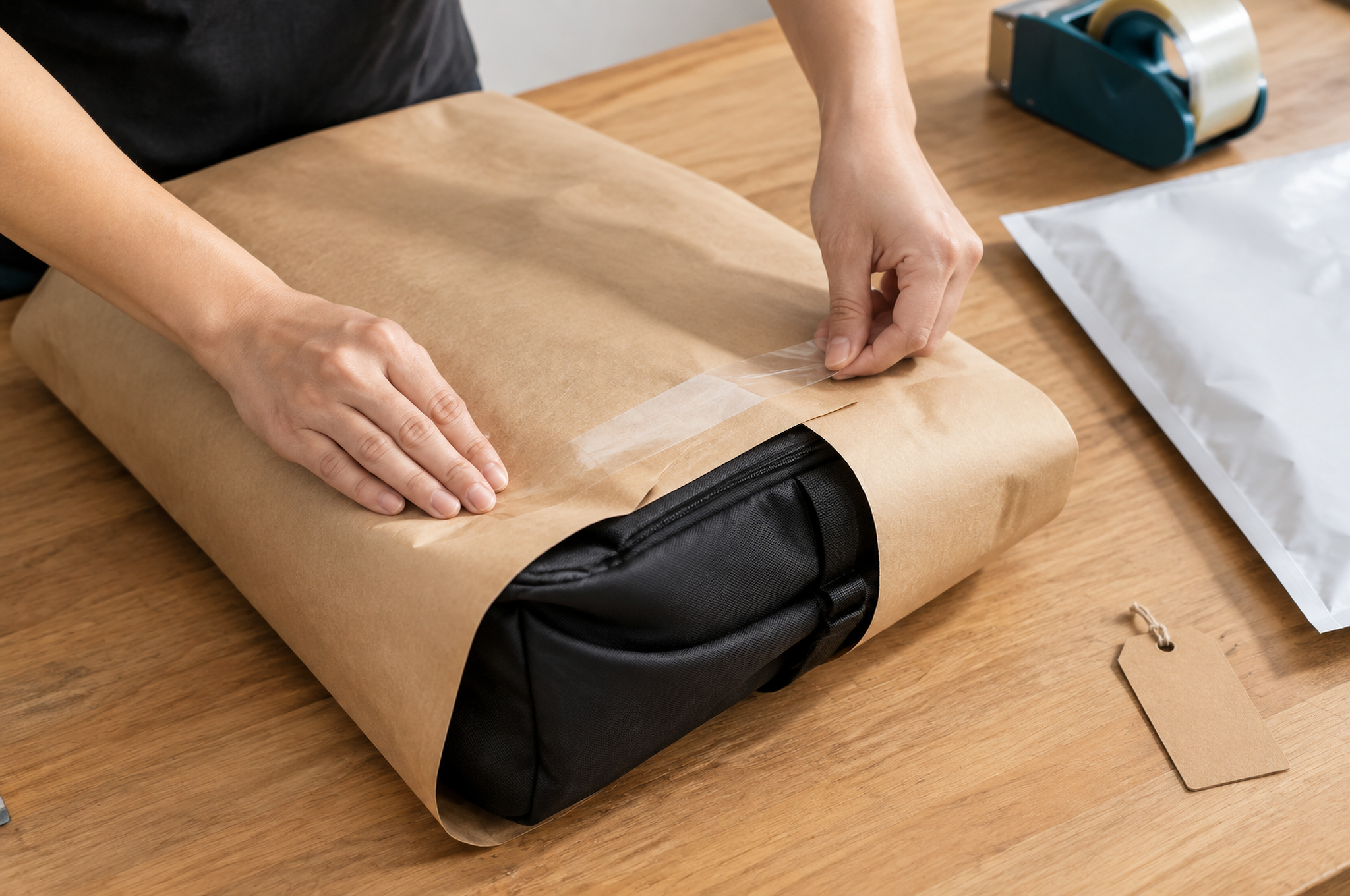
Two of these items prevent most disputes. The photo set before shipping lets you reject a wrong color before paying courier twice. The sealed sample retains the reference that a bulk claim will be decided against.
We retain the signed counter sample for 6 months after shipment. On a program shipping twice a year, that window matters, because the second lot is compared to a physical bag rather than to an email thread.
Where Our Policy Is Not Generous
Our terms have a hard edge worth stating. We do not refund sample fees on speculative rounds where three suppliers are being sampled and only one will be chosen. The fee stays a fee in that scenario, because we are absorbing design time that will not convert. Buyers who run a competitive sampling round should expect that, and should price it as a development cost rather than as a deposit.
We also will not start a second round without written comments on the first. Unstructured revision requests are the main cause of sampling loops that stretch past 3 rounds, and each round costs 7 to 15 working days. Written comments reduce that to two rounds on most programs.
Start With a Written Fee Confirmation
Send your tech pack, target quantity, and delivery window to [email protected] and we will reply with the sample fee, the refund threshold, and the tooling cost in one message, so there is nothing to interpret later. Standard sampling runs 7 to 15 business days from artwork approval, and the bulk quote accompanies the sample. Materials, process, and existing product lines are on www.tianqinbag.com. If you are comparing three suppliers, ask each of them the nine questions above and read the answers side by side before you pay anyone.
 Hot News


