
 EN



A procurement officer at a European logistics group sent us a 14-page tender document for 1,800 laptop backpacks. Page 9 specified Pantone 2965C for the embroidered logo. Page 11 required delivery to four warehouses in three countries inside a fixed five-day window. Page 14 required payment at 90 days from invoice date. We quoted. Most factories did not, and that gap tells you most of what matters about this channel.
Corporate laptop backpack programs are not retail orders with a logo added. They run on documents, approval chains and calendar obligations that are fixed before anyone discusses fabric.
What Corporate Buyers Put in a Tender Document
A serious tender is dense, and reading it properly tells you whether the order is winnable.
Typical content:
Reference number, submission deadline and format, often a portal upload rather than email
Product specification with tolerances: capacity in litres, laptop compartment dimensions, weight ceiling in grams
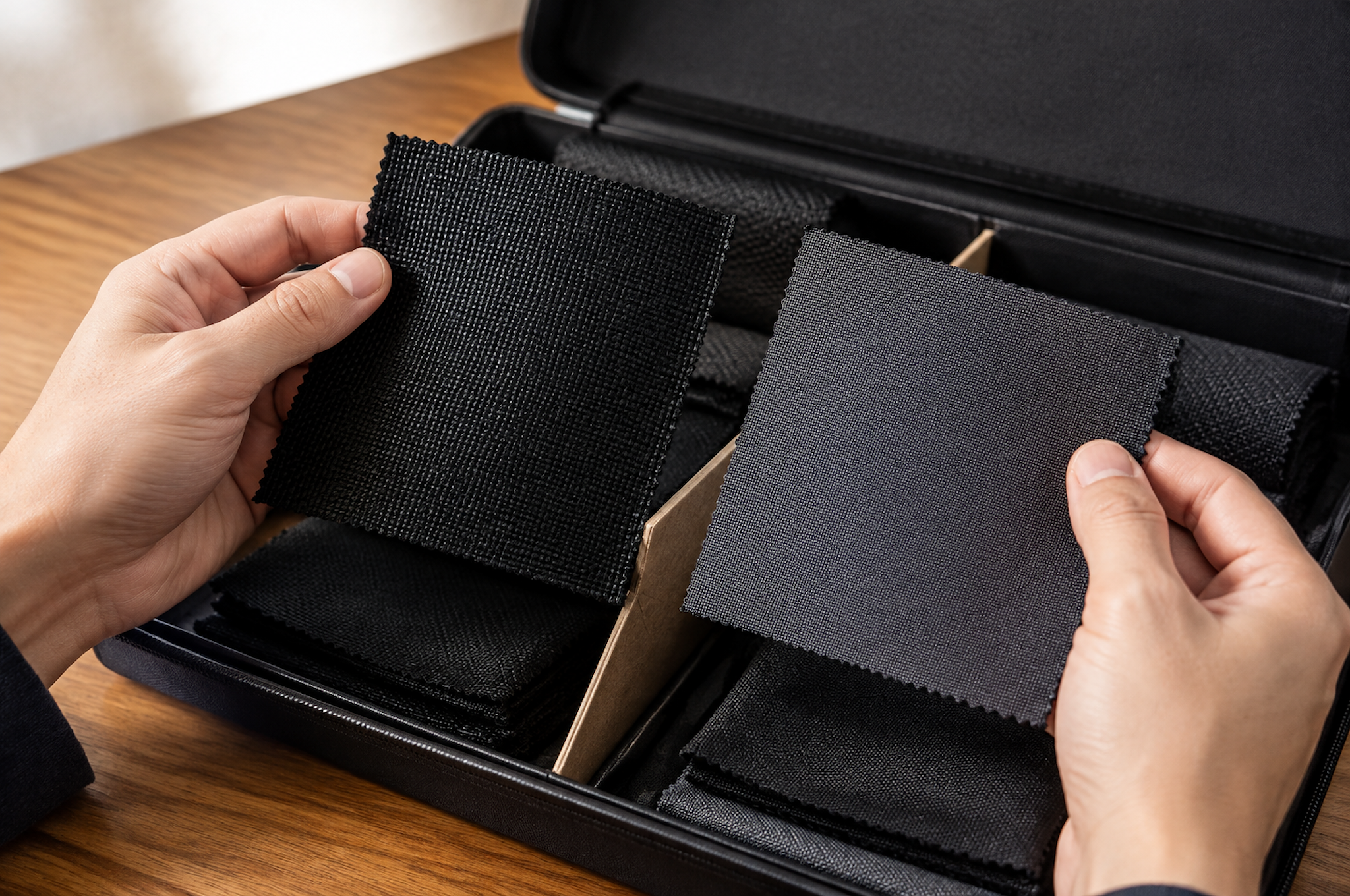
Material requirements stated by name, for example a 1680D ballistic nylon shell with 210D polyester lining
Mandatory certifications, usually REACH compliance for EU entities and CPSIA for US entities
Logo specification with Pantone reference, placement drawing and maximum dimensions
Delivery window with a named Incoterm, commonly DAP to a distribution center
Payment terms, penalty clauses and warranty period
Documentation list covering test reports, packing list format and country of origin declaration
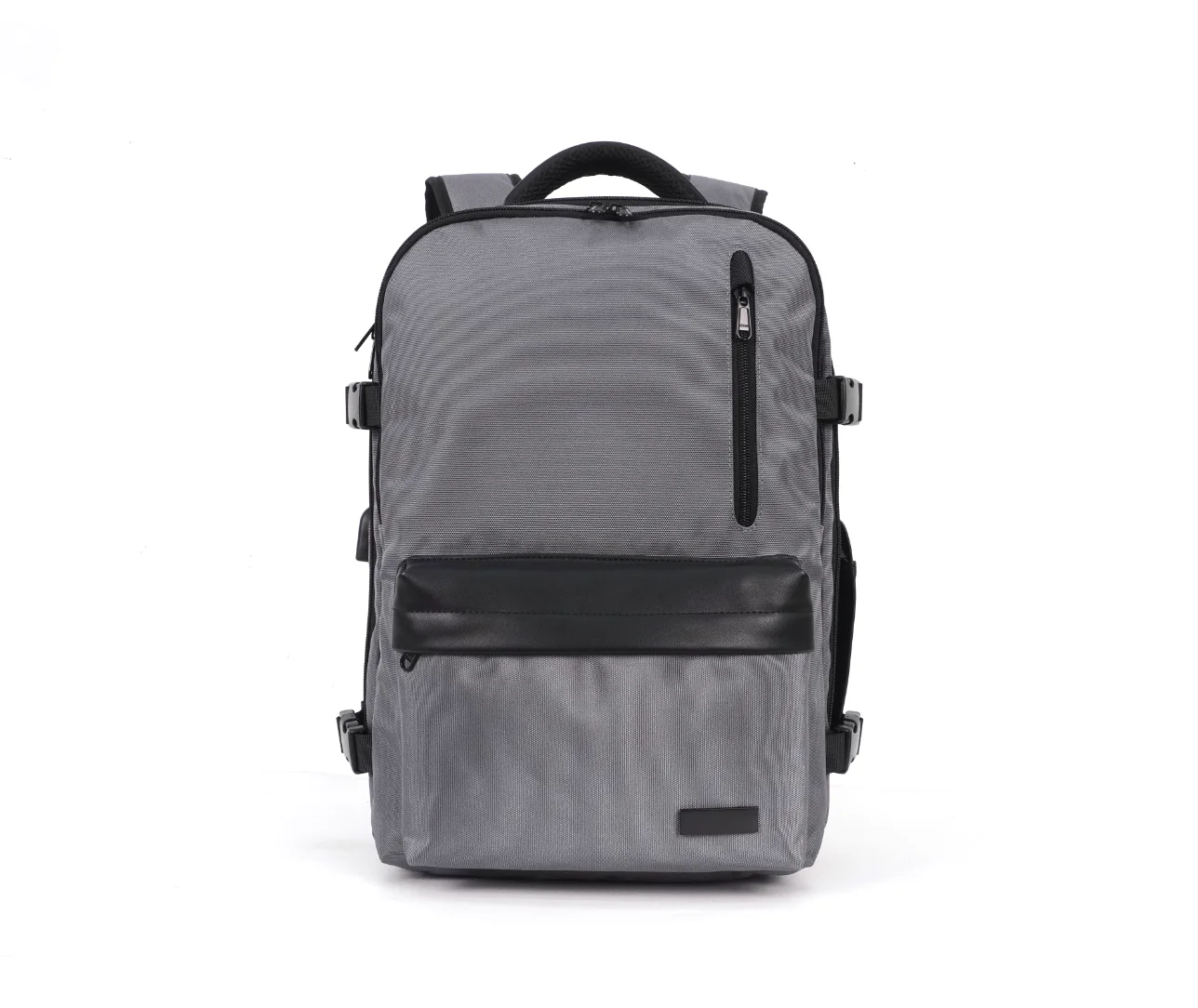
The specification usually contains one line that eliminates most suppliers. Weight is the common one. A 25L laptop backpack with a padded back panel, trolley sleeve and YKK zippers lands around 1.15 kg to 1.25 kg in 1680D. If the tender caps weight at 1.0 kg, you are being asked for thinner foam, a lighter shell or less hardware, and the buyer needs to know which trade-off they are accepting, in writing, before award rather than after delivery.
The Logo Approval Chain Is Longer Than the Sales Cycle
In retail, one merchandiser approves a logo. In corporate procurement, four to six people touch it and each one can stop the order.
The chain usually runs like this: brand or marketing owns the artwork file, procurement owns contractual compliance, legal checks the trademark license and territory rights, and in larger groups a sustainability or CSR team reviews material and packaging claims. Public sector buyers may add a standing frame agreement requirement on top.
At Tianqin, we treat corporate logo approval as a staged process. We issue a logo proof carrying the exact Pantone reference, the thread color if embroidery is chosen, stitch density in stitches per cm, and a dimensioned drawing on the actual panel. The buyer signs the proof. We do not release bulk on a verbal yes, because a verbal yes belongs to one person and the contract belongs to the company.
Two rounds of artwork revision are normal. Three rounds usually means the file arrived without vector artwork, or the placement clashes with a seam or zip guard, and the honest answer is that the sample has to be remade. We say so at round two instead of at round four.
Fixed Delivery Windows and the Penalty Clauses Behind Them
Corporate deliveries attach to events: a sales conference, an onboarding cohort, a dealer meeting, a year-end distribution. The window is not a preference.
Clauses we see repeatedly:
Delivery within 45 to 60 days of purchase order to a named warehouse
Late penalty of 0.5 to 1 percent of order value per week
Cap on penalties between 10 and 15 percent of contract value
Right to cancel the outstanding balance after a defined delay
Split delivery across locations, each with its own appointment booking
This is where Chinese New Year becomes a contractual risk rather than a scheduling inconvenience. Our factory closes for roughly three weeks around the holiday, and the weeks before closure are the most congested of the year. A purchase order signed in early January with a 45-day delivery clause is not achievable for a custom program. We say that at quote stage. It costs us orders, and it protects both sides from a claim nobody can win.
Why we quote a window and not a date
We quote a production window in working days plus a shipping estimate, then agree a delivery date with a two-week buffer inside the tender window. Buyers who book the last possible day of the window are usually the buyers who end up filing penalty claims against their own schedule.
Invoicing, Payment Terms, and Vendor Registration
Commercial terms in corporate procurement are stricter than retail and rarely negotiable.
Large buyers usually require vendor registration before a purchase order can be issued. That means business license, bank account verification, tax registration, insurance certificates and sometimes a factory audit report. The process alone can take 3 to 6 weeks, and it runs in parallel with nothing unless someone drives it.
Payment expectations vary by region. US corporates commonly ask for net 45 to net 60. EU public sector bodies can run to 60 or 90 days, with e-invoicing mandates in countries such as Italy. Chinese factories generally work on 30 percent deposit and 70 percent against the bill of lading copy for a first order, then consider open account terms after two or three clean cycles.
The honest limitation: we are a manufacturer, not a bank. We cannot finance a 90-day receivable on a first order of 2,000 units. What we can do is structure the deposit and balance so that the buyer's cash cycle and our material purchase cycle overlap sensibly, and put that structure in the contract rather than in an email.
Documentation is the other half of the invoice problem. A corporate shipment usually needs a commercial invoice carrying the buyer's PO number, a separate packing list for each warehouse, an origin declaration on the correct form, and test reports filed against the batch rather than against the model. We assemble that pack as one file and send it with the shipping advice, because a document arriving three days after the container does is a document arriving too late for the receiving appointment.
Invoices also have to match the buyer's accounts payable system. A wrong PO number, a missing vendor code or an absent VAT number gets an invoice rejected, and rejection adds two weeks to payment regardless of what the goods did.
A Tender Response Checklist
Before you submit a bid or accept a quote on a corporate laptop backpack program, confirm each of these is answered in writing:
Every mandatory certification named with a report number and date
Weight and dimensions checked against the tolerance stated in the tender
Logo proof signed by the brand owner with Pantone reference
Delivery window mapped against factory holidays and freight schedule
Incoterm and named delivery point for each warehouse
Penalty cap understood and priced into the offer
Payment terms confirmed by the factory finance team, not by sales
Vendor registration documents ready before the PO date
Warranty period and claim process written into the contract
Spare parts availability stated for straps, buckles and zipper pulls
A missing item on this list is a risk you have not priced.
Start the Sample Before the Tender Closes
Corporate programs reward preparation. The buyers who win these contracts usually hold a physical sample and a signed weight specification before the tender is published, which lets them answer technical questions inside the bid instead of after award.
Quanzhou Tianqin Bags Co., Ltd has built OEM and ODM bag programs for 17 years, exports to more than 50 countries, and runs 3D sampling before tooling. We keep SGS test reports for materials available on request, and we quote in working days rather than vague weeks.
Send your tender specification or logo file to [email protected] or visit www.tianqinbag.com. We return a costed quotation and a sampling plan inside 7 to 15 working days, and we will tell you plainly when a delivery window cannot be met.
 Hot News


