EN



The third order is where a supply relationship either becomes an asset or starts to drift. The first order is a courtship with generous attention. The second is a repeat with familiar terms. By the third, the buyer expects the line to be ready when the forecast says so, and the factory expects a forecast it can actually plan cutting around. Neither expectation is written down anywhere, which is why both sides end up disappointed by the fifth order. A partnership is mostly a set of documents and habits that survive the quarter when nobody has time.
What Changes After the Third Order
Buyers often assume a factory remembers everything about their bag. In practice a line runs 40 to 60 styles a year, and the technician who built your first pattern may have moved stations. Continuity is not memory, it is documentation.
On our side, the change is visible in how we plan cutting. A first order enters the schedule as a project. A repeat order enters it as a slot, and a slot has neighbors. That is good news for price and bad news for anyone who assumes flexibility on a two-week notice.
Ask any supplier what happens to your lead time when their line is fully booked in the month you need. The answer tells you whether you have a partner or a vendor.
A practical habit that costs nothing: send a one-page program summary with every purchase order, listing the current BOM version, the approved sample date, the color standards, and the last three shipment dates. Factories lose time reconstructing context from email threads, and reconstructing it is where small errors enter. Our own program files carry a version number that appears on the cutting order, so a technician can tell within seconds whether the panels in front of them match the approved revision.
Capacity Commitments in Writing
A capacity commitment is not a promise of unlimited space. It is a reservation with conditions, and both halves need to be written.
The buyer side supplies a rolling 12-month forecast, updated monthly, with a firm window of 30 days and a planning window of 90. Forecast accuracy in this industry runs around 70 percent at the 90-day mark, and a factory that plans raw material against a 12-month number without a firm window is guessing.
The factory side reserves a defined monthly quantity on a named line, states the color-change limit, and states the blackout periods. At Tianqin we ask buyers to name their peak months in advance, because a 6,000-piece September requirement received in August is not a scheduling problem we can solve with effort.
Write these numbers into the agreement.
Reserved monthly quantity in pieces, and the tolerance around it
Firm order window and the last change date before cutting
Fabric order lead time and the minimum mill run for a custom color
Color-change allowance per month, in changes
Peak-season reservation and the deadline to claim it
Consequence for a forecast miss in either direction
That last line is the one both sides avoid. A buyer who forecasts 8,000 and orders 3,000 has consumed a line slot someone else wanted. A factory that commits 8,000 and delivers 5,000 has broken a retail calendar. Naming a consequence in advance keeps the conversation commercial instead of personal.
Shared Development and Who Owns What
Long-term programs drift into joint development, and joint development is where ownership arguments start. Settle four questions before the second sample round.
Who owns the pattern and the tech pack
Who owns the mould for a logo plate or a custom buckle
Who pays for tooling, and whether the cost recurs on a reorder
What happens to the pattern if the relationship ends
Our position is straightforward: the buyer owns the pattern for a fully custom development, and we retain the right to build similar constructions for other customers, since a laptop sleeve is not a patentable idea. Tooling for a custom logo plate is charged once at 80 to 150 USD depending on the mould, and it stays with the buyer's account, not with the machine shop.
The Development Calendar That Prevents Rework
Shared development works when both sides agree on what each round resolves. Round one settles dimensions and panel layout. Round two settles materials, color, and logo application. Round three is the golden sample, sealed, dated, and signed by both sides.
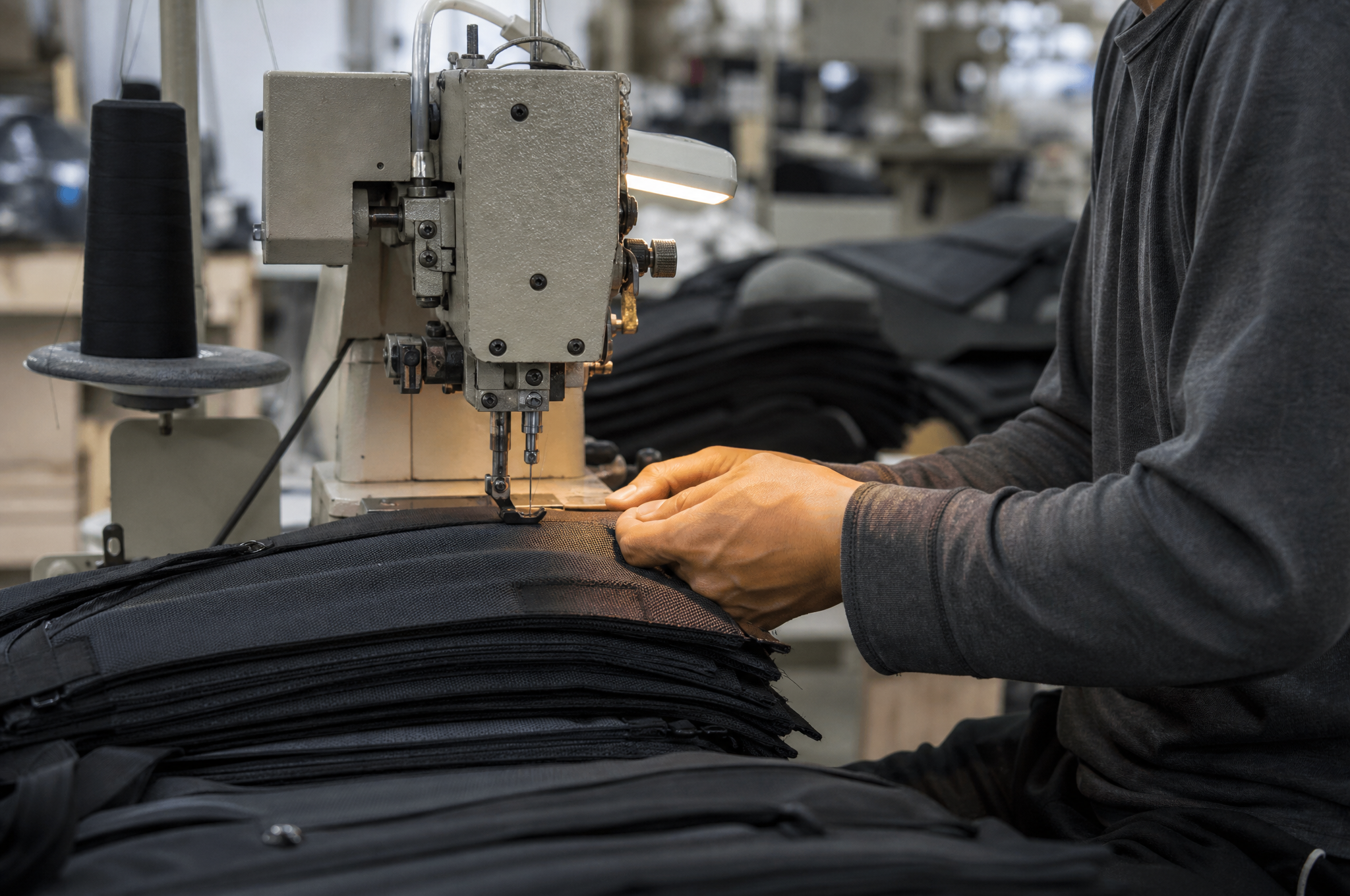
At Tianqin we run 3D sampling so a buyer can see proportion and pocket placement before a physical sample is sewn, and we hold the sample window at 7 to 15 business days from approved artwork. That window assumes the tech pack is complete. When a buyer sends artwork mid-window, the clock resets, and saying so plainly is better than quietly shipping a late sample.
The Escalation Path Nobody Writes Down
Most quality problems become relationship problems because nobody knew who to call at 6 pm on a Friday. Define three tiers with names, channels, and response windows.
Tier one: daily operational contact, 4 working hours response, handles documentation and schedule questions
Tier two: production or QC manager, 24 hours, handles a defect, a delay, or a spec deviation
Tier three: commercial owner on both sides, 48 hours, handles cost, credit, and capacity disputes
Escalation is not punishment. A buyer who jumps to tier three on a carton labeling question teaches the factory that the first two tiers are decorative, and the relationship becomes slow.
The reverse failure matters as much. If a buyer waits three weeks before mentioning that 12 percent of cartons arrived with the wrong hangtag, the evidence is gone and the claim becomes a negotiation about trust rather than a fix.
Documents Both Sides Must Keep
A four-year-old program with no records is a program that restarts from zero on every change of staff. Keep these on both sides, in a shared folder with dated versions.
The signed golden sample, sealed, with the date and both signatures
The current tech pack with a version number and a change log
The bill of materials with approved suppliers per component
The test reports: SGS, REACH, and any customer-specific standard
Cutting records tying roll number to shade and panel count
In-line and final inspection sheets with AQL levels and results
Every change order, with the date, the cost effect, and who approved it
Shipment history with planned versus actual dates
That last file is the one buyers use most and keep least. Eighteen months of planned versus actual dates is the only honest basis for a lead time conversation, and it is also the fastest way to see whether a supplier's promise has ever been tested.
The limitation on our side is that documentation quality depends on the people filling it in. We have improved this, and we still find gaps when a line runs three styles in one week and the third shift inherits a half-finished sheet.
Start With One Honest Conversation
Partnerships are built on naming the awkward things early: what your forecast really is, which months you cannot move, what a defect costs you in your channel, and what you will not accept. Bring those four answers to a call and the rest of the structure follows.
Write to [email protected] to set that call up or to request a sample against your current bag. Quanzhou Tianqin Bags Co., Ltd has manufactured bags for 17 years and exports to more than 50 countries, with OEM and ODM development, 3D sampling, and a 7 to 15 business day sampling window from approved artwork. Factory capability, materials, and product lines are on www.tianqinbag.com.



 Hot News