
 EN



Prima quaestio quam emptores interrogant, cum tabulam cartonem mittimus, est utrum cartonem minuere liceat. Saepissime licet, duobus aut tribus centimetris in singulis lateribus, et haec mutatio pecuniam plus valet quam plerique emptores exspectant. Etiam mutat numerum saccorum qui adveniunt sine compressa parte posteriori. Configuratio cartonis est una ex paucis decisionibus de vectura quas emptor adhuc habet potestatem agendi postquam saccus designatus est.
Cur Cartonem Decisio de Pretio Sit
Saccus pro computatro portatili praesertim aerem continet. Exemplum 25 L cum cuspide posteriori pellucida, vagina pro computatro portatili spumosa, et basi structurata, plicatur ad navigandum, et plicatura est quod cartonem capere oportet, non volumen usus sacci.
Accipe configurationem normalem: 62 x 45 x 30 cm, 10 partes, 14,2 kg brutum. Id est 0,0837 metra cubica per cartonem, sive 8,37 litra voluminis pro vectura per saccum. Ipse saccus 25 litra tenet. Ratio inter hos numeros totam conversationem de vectura constituit.
Change the carton to 60 x 42 x 33 cm and you get 0.0832 cubic meters, almost identical. Change it to 58 x 40 x 30 cm and you get 0.0696, a 17 percent reduction, with 8 pieces per carton at 11.6 kg. Seventeen percent of a container is seventeen percent of the ocean freight, and on a 1,000-unit order that is real money for a carton that still passes a drop test.
The catch is at the bottom of the stack. A carton is a structural component, and shrinking it without changing the board grade moves the failure from the freight invoice to the claim report.
Volume Weight: The Divisor That Sets the Bill
Air and express shipments are billed on chargeable weight, which is the greater of actual weight and volumetric weight. Volumetric weight is length times width times height in centimeters, divided by a divisor. Most air cargo uses 6,000. Some express products use 5,000.
Un divisor de 6.000 signifie qu’un mètre cube équivaut à 166,7 kg. C’est le seuil de densité. Les marchandises plus denses que 166,7 kg par mètre cube sont facturées selon leur poids réel. Celles moins denses sont facturées selon l’espace qu’elles occupent.
Les cartons en forme de sac à dos se situent presque exactement sur cette ligne. Le carton de 62 × 45 × 30 cm pesant 14,2 kg donne 14,2 divisé par 0,0837, soit 169,7 kg par mètre cube ; le poids réel s’applique donc avec une marge très étroite. Le carton de 58 × 40 × 30 cm pesant 11,6 kg donne exactement 166,7 kg par mètre cube, soit précisément le seuil. Le carton de 60 × 42 × 33 cm pesant 11,6 kg donne 139 kg par mètre cube, ce qui signifie que le poids volumétrique s’applique : la compagnie aérienne facture 13,86 kg au lieu de 11,6 kg, soit une majoration de 19 % pour un carton qui semblait plus petit.
Hoc est pars contra intuitum de opere cartonum. Minuere cartonem non semper minuit pretium aeris, quia divisor spectat proportionem, non magnitudinem absolutam. Si carto minor significat pauciores saccos per cistam, densitas cadit et tu praebes pro aere. Configuratio quae vincit in navigatione maritima non semper est ea quae vincit in navigatione aerea.
Navigationes maritimae negligunt pondus pro hac categoria productorum. Cisterna 20 pedum attinget suum limitem cubicum multo antequam attingat suum limitem ponderis 28 tonnarum cum sarcinis dorsualibus; ergo in navigatione oceani sola res quae refert est metri cubici per saccum.
Magnitudo cartonis contra rationem damni
Gradus tabulae et altitudo stratae decernunt utrum stratum inferius superet. Carto quinque-plicatus cum valore experimenti confracturae marginis 32 librae per pollicem est norma nostra pro cartonibus exportationis sarcinorum dorsualium. Carto tria-plicatus ad 26 libras per pollicem constat circa 0.18 USD minus per cistam et externe idem videtur.
Differentia apparet post quattuor hebdomades in mari. Tabula ondulata amittit vim compressionis in alta umiditate, et continens transiens tropicos diutius stare potest ad 85–90 percentum umiditatis relativae. Sub his conditionibus cassa amittere potest 40–50 percentum suae vim stivandi per fenomenon crepitationis. Stiva septem cassarum, quarum unaquaeque 14,2 kg gravat, circa 85 kg in cassam inferiorem imprimit ante hanc amissionem; post autem mollificationem tabulae, 85 kg efficiuntur 170 kg oneris effectivi. Cassa inferior tumescit, sacci intra eam compressionem in parte posteriori accipiunt, et mercator photographiam produsit deformis exhibet.
Regula nostra est ut valor experimenti compressionis cassae sit saltem triplus oneris statici in cassa inferiori. In stiva septem cassarum, quarum unaquaeque 14,2 kg gravat, hoc significat valorem propositum circa 255 kg vim compressionis, quem 5-ply ECT-32 attingit, sed 3-ply ECT-26 non attingit.
The claims data supports the rule. On programs where we moved from 3-ply to 5-ply, carton crush claims fell from around 1.8 percent of units to under 0.4 percent. The board upgrade cost 0.18 USD per carton, or 0.018 USD per bag. The claim cost it prevented was a return, a replacement, and a retailer chargeback that rarely comes in under 25 USD per unit.
Configurations That Work for Backpacks
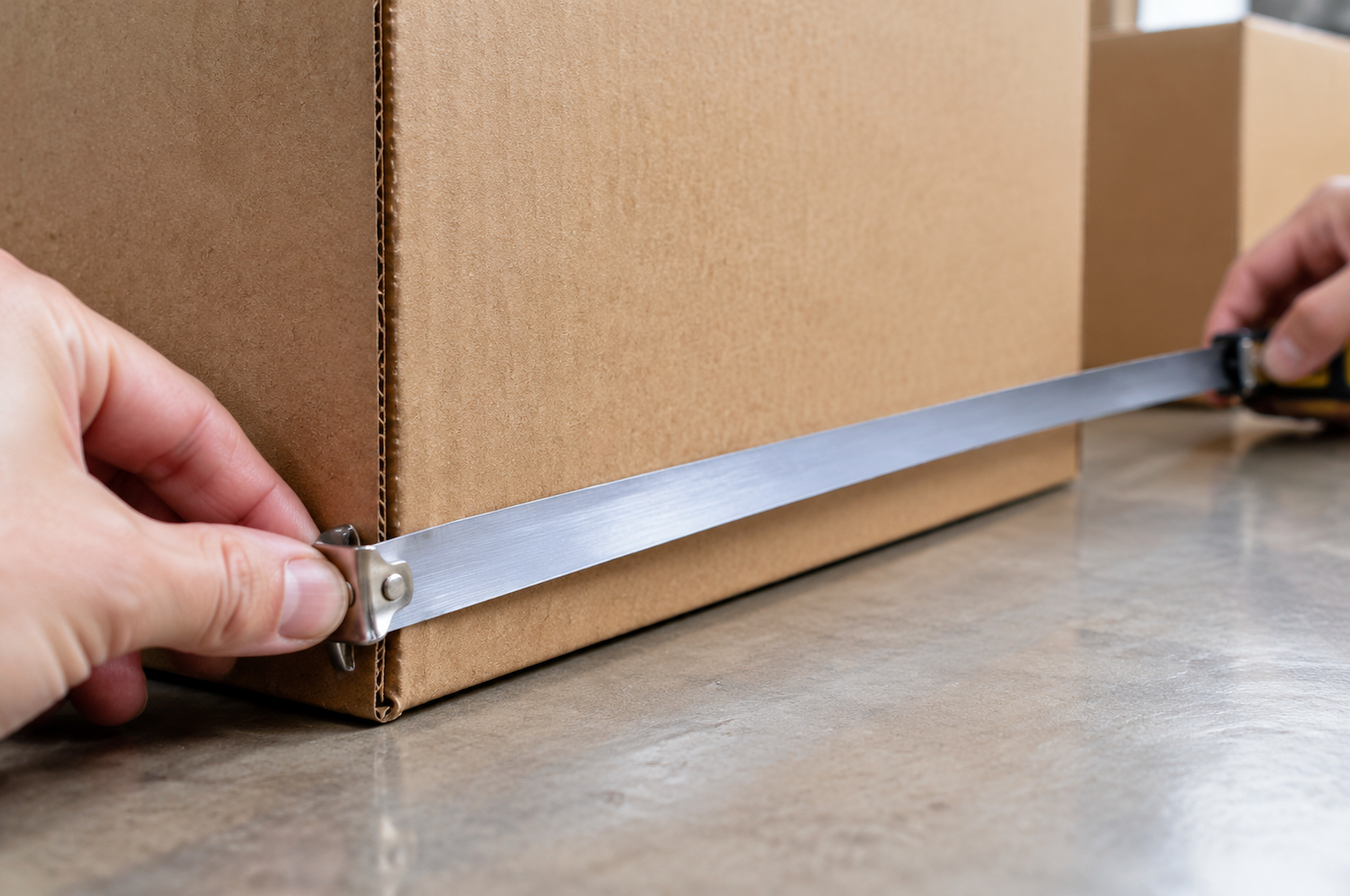
Carton footprint should be chosen against the pallet, not in isolation. A standard pallet is 1,200 by 1,000 mm. A 62 x 45 cm footprint lays two cartons per layer with 40 percent of the pallet empty. A 60 x 42 cm footprint lays four per layer, doubles the pallet load, and holds the pallet to a stable 1.6 m height at six layers.
Three more configuration rules we apply.
Pack a maximum of 22.7 kg per carton. Above that, manual handling injuries rise and many fulfillment centres reject the carton outright.
Keep the longest side at 63.5 cm or under unless the program is deliberately oversize, because several e-commerce fulfillment networks surcharge or refuse longer cartons.
Pack folded bags with the back panel flat and the shoulder straps rolled inward, then interleave a sheet between layers. Branded hardware scratches when metal contacts metal for 30 days.
Print the shipping mark, the piece count, the gross weight, and the SKU on two adjacent sides, so the carton is readable whichever way it lands.
Confirm the carton drawing at sampling, not at packing. A 1 cm change after the purchase order is a new die and a new pallet plan.
The limitation is worth stating. A smaller carton trades protection for cube, and there is a floor below which we will not go. On a 25 L model with a moulded EVA back panel we will not approve a carton height under 28 cm, because the panel takes a permanent set and the bag arrives with a curved back that no retailer will accept. We have lost orders over that position. It is still the right position.
A Carton Specification Checklist
Use this to review any carton drawing a supplier sends you.
Internal dimensions in millimeters, with a stated tolerance of plus or minus 5 mm.
Board construction by ply and edge crush test value, not by a vague grade name.
Pieces per carton, gross weight, and net weight, all three stated.
Stack height limit the factory actually uses in the container, not the theoretical one.
Drop test reference, such as ISTA 3A, and the drop height applied.
Pallet pattern, cartons per layer, and layers per pallet.
Utrum carton sit in pavimento oneratus an in palletis collocatus, quia responsum mutat totalem cubicam per 6 ad 9 percentum.
Locatio artis et positio codicis bar, si mercator latus specificum requirit.
Mitte nobis Problema Cartonis, non solum SKU.
Apud Tianqin, descripta cartonum ex eodem processo tridimensionalis exemplificationis proveniunt atque sacculi; itaque emptor videt sacculum plicatum, dimensionem internam, et schemata palletarum ante productionem massivam. Nos construimus palletam usque ad 2,4 metra et eam stare sinimus per 72 horas antequam specificatio cartonis approbetur, quia ‘creep’ non apparet in una hora. Praeterea, duobus annis abhinc, nos consolidavimus nostram platformam 25 L in basim 60 × 42 cm, quae volumen cubicum per sacculum minuit per 12 percentum et densitatem palletarum auxit a 120 ad 192 sacculos.
Narra nobis tuum destinatum locum, modum transportandi, et quasvis regulas mercatoris de cartonibus, et nos tibi remittimus specificatio sacculi cum calculo cartonis iam effecto. Scribito ad [email protected] aut pete citatum ad www.tianqinbag.com . Exemplarum captio 7 ad 15 dies negotiales durat, et descriptio cartonum pars exemplaris est, non res post eventum, postquam sacculi perfecti sunt.

 Nuntii Calidi


