
 EN



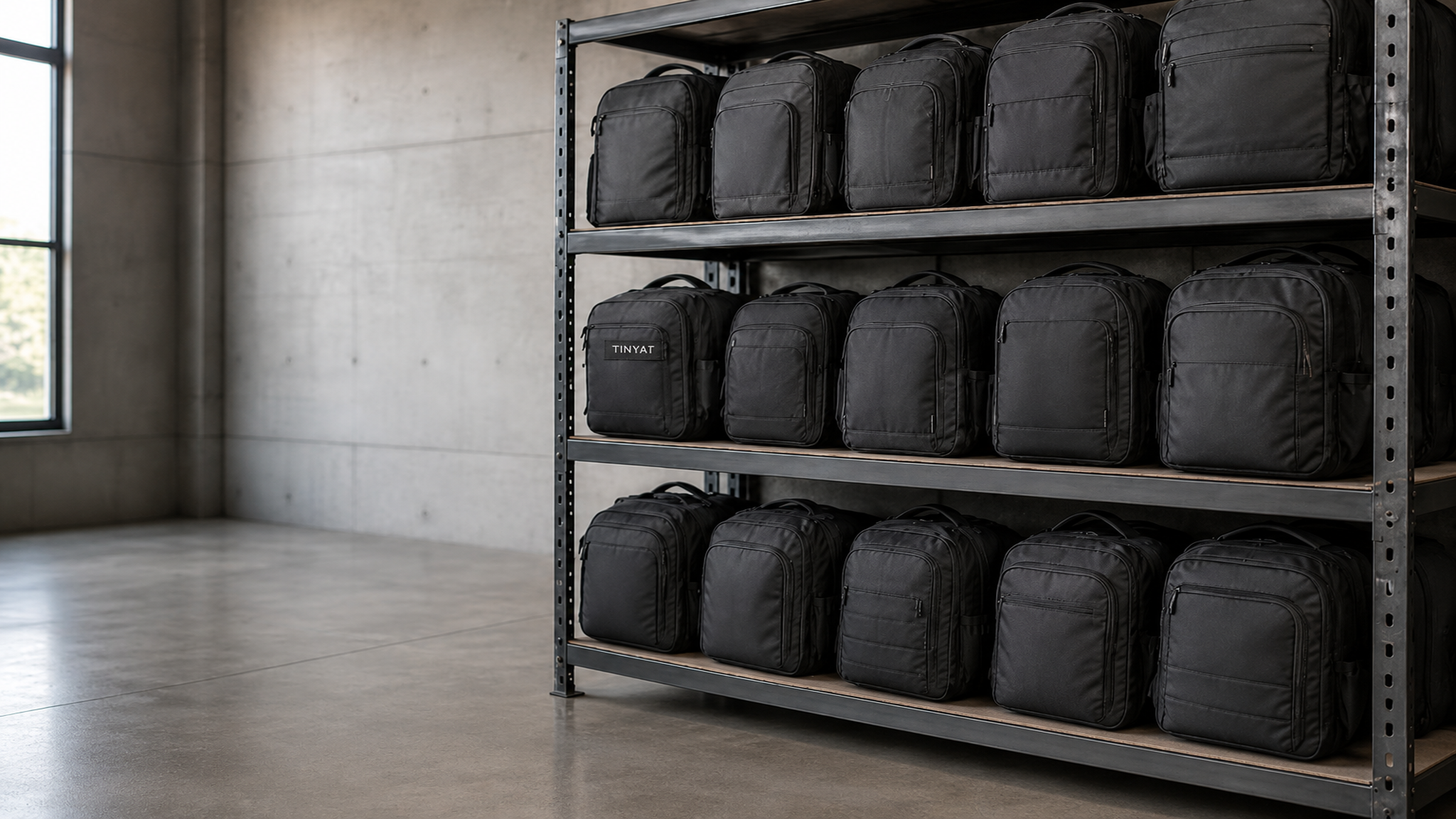
The order lands in our inbox every year in the second week of March: 400 laptop backpacks, four colorways, delivery to a university bookstore in early August. The buyer has eight weeks of selling time and no room for a late container. Every year, one or two suppliers in that category take the order in May and then explain in July why the delivery will slip.
Campus retail is a compressed business. Almost all of the volume happens in a window that cannot move, and the buying decisions are made when the store still has snow outside the door.
The Campus Buying Calendar Runs Backwards From August
Work backwards from the first day of classes and the calendar becomes obvious.
August to September: selling season, roughly 55 to 60 percent of annual backpack units in four to six weeks
June to July: goods must be in the store, tagged and merchandised
April to May: production and freight, 30 to 35 days production plus 30 days sea freight to the US East Coast
February to March: order placement, sample approval and deposit
October to November: review of sell-through, then next year's assortment planning
December to January: sampling for the following season
A store that places its order in July is not buying a program. It is buying whatever is left in someone's warehouse, at spot pricing, in colors nobody chose.
We quote campus programs in February with a fixed production slot. Buyers who want a custom colorway and a logo on the front panel need to approve the sample by the end of March, because our cutting schedule for April and May fills early in a peak year.
Assortment Depth: What a Small Store Can Actually Carry
A campus bookstore is not a chain buyer with a 40-foot fixture run. Many stores have 1,200 to 2,500 square feet of selling floor and a wall of peg space that also has to hold apparel, supplies and gifts.
The realistic depth is four to six SKUs. In our experience the working mix looks like this:
Two core colors in a 20L to 25L commuter silhouette, black and a neutral such as charcoal or navy
One fashion color that speaks to the campus palette, refreshed each year
One 17-inch or larger volume model for engineering and design students
One entry price point bag, usually simpler hardware and 600D shell
Sometimes one premium model in 1680D ballistic nylon as a gift purchase
Depth beyond six SKUs splits the buy too thinly. A store ordering 200 units across eight styles holds 25 units per style, which means one size run sells out and three sit in the stockroom until the November clearance.
Buyers ask us how many units per SKU is enough. On a campus with 12,000 students and a store that sells 200 backpacks a season, 40 to 60 units per core SKU is a sensible spine, with 20 to 30 on the fashion color.
Margin Structure and Where the Retail Price Goes
Campus channels carry a lower markup than fashion retail because the customer is price-aware and comparison shopping on a phone in the aisle.
A typical build on a 25L laptop backpack with a padded laptop sleeve, trolley sleeve and 600D Oxford shell:
Factory FOB price: USD 11.80 to 14.50 depending on hardware and lining
Ocean freight and duty landed: add USD 2.80 to 3.60 per unit
Store landed cost: around USD 15 to 18
Retail price: USD 39.99 to 44.99
Gross margin: roughly 55 to 60 percent before markdown
That margin looks healthy until markdown. A campus store that clears 60 percent of units at full price and dumps the rest at 30 percent off finishes closer to 38 percent. The fix is not a lower factory price; it is a tighter assortment and an earlier reorder on the styles that are working.
We show buyers the cost effect of each specification change rather than quoting one number. Moving from a generic zipper to a YKK zipper on the main compartment costs about USD 0.45 per bag at 500 units. Switching the shell from 600D Oxford to 1680D ballistic nylon adds roughly USD 1.60. Both changes are visible to a customer and both are defensible at the register.
Small-Order Economics and the 120-Unit Problem
This is the part of the conversation buyers dislike, so we say it plainly.
Below 300 units per colorway, a custom fabric color is not economical. The mill runs a minimum dye lot, and a small order absorbs the setup charge. In practice that adds 12 to 18 percent to the unit price on a 200-unit run, and more if the buyer wants two custom colors.
Our honest limitation: we are set up for production runs, and a 120-unit order costs us almost the same in cutting, line changeover and QC paperwork as a 500-unit order. We still take smaller orders, and buyers pay for the changeover in the price.
There are three ways around it:
Choose a stock fabric color and spend the budget on better hardware or a printed lining instead
Combine two similar colorways into one order to reach the fabric minimum, then split the packing
Place one larger seasonal order with a scheduled release, so the factory holds finished goods and ships in two lots
Consolidation is the other lever for a small store. If a bookstore buys backpacks, padfolios and travel mugs from three suppliers, shipping three LCL lots through three forwarders costs more than one consolidated container. We work with buyers who nominate a single forwarder and let our shipping team release documents to that forwarder alongside the other suppliers.
That third option works well for campus programs. We have held August-dated inventory for bookstore clients since a February order, releasing 50 percent in June and 50 percent in July, with the buyer paying against each release.
A Seasonal Order Calendar You Can Copy
The dates below are the ones that keep a campus program on schedule without air freight.
November: review sell-through by SKU and color, decide carryover versus new
December: send the target specification and price band to two or three factories
January: compare quotes and FOB terms, check carton configuration
February: place order, pay deposit, lock production slot
March: approve logo proof and pre-production sample
April: bulk production, inline inspection at 30 percent and 70 percent
May: final inspection, AQL 2.5 on major defects
June: sea freight departure, documents issued
July: arrival, customs clearance, delivery to store
August: selling season begins
Any step that slips by two weeks eats the buffer that protects the August date. Air freight to rescue a late campus order costs about USD 4 to 7 per bag, which is the entire margin on the entry price point model.
Place the Sample Order in March, Not June
If you are planning a campus or college-town assortment for next season, the cheapest decision available to you is an early sample. A physical bag in your hand in March settles fabric, capacity, logo placement and carton size while there is still time to change any of them.
Quanzhou Tianqin Bags Co., Ltd has manufactured bags for 17 years, exports to more than 50 countries, and runs OEM and ODM programs with 3D sampling, automated cutting and a hanging conveyor system. We hold SGS test reports on request and can quote stock colorways at short notice.
Send your assortment plan and target retail price to [email protected] or review options at www.tianqinbag.com. We will return a costing sheet and a production calendar, and we can run samples in 7 to 15 working days so your March decision is made on a real bag.
 Hot News


