
 EN



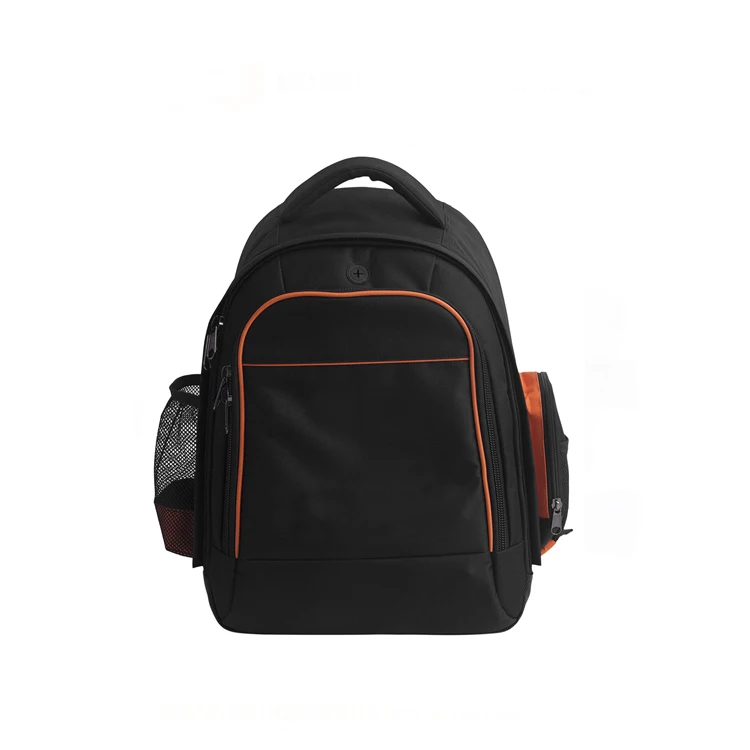
A quote returns at 6.75 USD for a 25L laptop backpack with a padded 15.6-inch sleeve, a trolley sleeve, YKK-style zippers, and a logo plate. Two other factories quoted 8.90 and 9.30. The buyer asks the obvious question, and the honest answer is that the bag described in the quote is not the bag that will arrive in carton 900. Something was removed to reach 6.75, and the removal is almost never announced. What follows is where those two dollars go, in the order they usually get cut.
When the Number Cannot Be Built
A 25L laptop backpack in 600D Oxford polyester, built to a spec a European retailer would accept, has a material and labor floor. Fabric alone runs 1.60 to 2.20 USD depending on weight and coating. Foam, lining, webbing, zippers, buckles, thread, and labels add 1.40 to 1.90. Cutting and sewing labor on a 40-panel bag runs 2.10 to 2.80 at normal line speed. Overhead, packing, and factory margin complete the number.
Add those ranges and a defensible FOB sits near 8.30 for a basic build and 9.80 for one with a foam-moulded back panel and a YKK zipper set. A 6.75 quote is not impossible, but it requires a different bag, a different factory cost base, or both. The buyer's job is to find out which.
The Six Cuts Behind a Below-Market Quote
These are the reductions we see most often when a buyer brings us a competitor's low quote and asks us to match it.
Fabric weight and yarn: 600D becomes 420D, or polyester replaces nylon, saving 0.35 to 0.60 per bag with a visible drop in abrasion resistance
Zipper grade: a branded zipper set at 0.55 becomes a generic set at 0.18, and the slider fails at 2,000 cycles instead of 8,000
Foam density: 25 kg per cubic meter in the laptop sleeve becomes 18, and the sleeve protects against a bump but not a drop
Stitch density: 8 to 10 stitches per inch becomes 6, saving thread and 15 to 20 seconds of machine time per seam
Plating hardware: zinc alloy becomes plated iron, and salt spray resistance drops from 48 hours to under 12
Assembly shortcuts: bar-tacks at strap anchors replaced by single-row stitching, and edge binding replaced by overlock
Any one of those is survivable in a chosen price band. Three together produce a bag that returns.
Red Flags Inside the Quote Document
The document often tells you before the sample does. Watch for these.
A one-line price with no material or labor breakdown. Not fatal by itself, but it means no line can be challenged, which is usually the point.
No fabric specification, only a color. A factory that will not state the denier, the yarn, and the coating is holding the option to substitute.
The word "or equivalent" attached to hardware. It reads as flexibility and functions as a downgrade clause.
No mention of tolerance. Ask for panel tolerance in millimeters and see whether the answer is a number or a sentence.
A sample fee that is high with no stated refund condition, or a fee of zero. Both are signals, in opposite directions. A factory charging nothing for a custom sample is either expecting a very large order or planning to recover the cost in the unit price.
A lead time quoted in weeks with no start trigger. 45 days from what, exactly. Deposit, artwork approval, and counter sample approval are three different starts and can differ by 20 days.
The Cost of Buying the Cheap Batch
The 6.75 bag does not fail in the warehouse. It fails at month five, in the customer's hands, and the cost arrives in several places at once.
Accipe ordinem 3000 partium ad pretium 6,75 contra alternativum 8,90. Pars salvata: 6450 USD. Nunc aestima consequentias. Ratione reditus 6 percentuum contra basim 2 percentuum, habes 120 unitates additas reditae, quae, ad pretium venditionis 69 USD, valent plus quam 8000 USD in reditibus restitutis, praeter logistici inversi onera. Adde degradatio in enumeratione mercatus post incrementum recensionum unius stellae, et arithmetica invertitur intra unam stagionem.
Est etiam tardior costa. Si fabrica, quae citra pretium offert, non potest tenere eandem umbram per renovationes, secundus tuus grex differt a primo, et conversatio de delistatione apud mercatorem incipit.
Tum adde onus servitii. Cernere, quod deficere solet post 2000 cycli, non post 8000, generat petitiones substitutionis per 18 menses, et unaquaeque consumit tempus personarum valens plus quam 0,37 salvatum pro singula unitate in cernere. Emptores raro hanc lineam computant, quia cadit in centrum costarum alterius dominatoris rationis.
Un emptor cum quo operamur numerum computavit post frustratum experimentum pro parvo pretio et verum pretium inaequalis partis 9,15 per unitatem invenit, postquam reditus, substitutiones, et horae personarum adsignatae sunt. Quotatio 8,90 quam eadem hebdomade reiecerunt solum in charta cara videbatur.
Nisi tuus canalis vere abici possit, vera positio est quod quotatio infra mercatum onus a margine supplicantis ad tuam lineam redituum transferat.
Ordo Verificandi Antequam Signes
Hoc ordine exsequere. Plures quotae parvae in gradu tertio deficiunt.
Petitionem fac ut quotatio in tela, ferramenta, laborem, onera, et impacationem dividatur
Petitionem fac ut consumptio telae in metris per sacculum et pretium molendini per metrum detur
Petitionem fac ut nomen marcae, modello, et genere cursoris cernitur in scripto
Petitionem fac ut densitas spumae in vagina pro computatro portatili et in lamina posteriori, in kg per metrum cubum, detur
Petitionem fac ut densitas stichorum per pollicem in suturis structurales, in tabula technica enuntiata, detur
Petitionem fac ut numerus horarum in testu pulveris salis pro platingo ferramenti detur
Ask for the last three shipment dates and whether they shipped on plan
Buy one sample, cut the lining seam open, and check the foam and the stitch count
Step eight is uncomfortable and decisive. At Tianqin we have had buyers do exactly that on our samples, and we would rather they did, because the same knife on a competitor's sample answers the price question in ten minutes.
What We Will Not Do to Match a Price
We decline price matches that require breaking the spec silently. If a buyer's target is 7.90 and the spec needs 8.60, we quote the 7.90 build with the changes listed: 420D shell instead of 600D, generic zippers, 20 mm webbing instead of 25 mm. Then the buyer chooses with open eyes.
That approach costs us orders. It also means our stated first-pass reject rate of roughly 3 to 4 percent stays real instead of being achieved by inspecting less. Our limitation is the same as any factory's: at 300 pieces on a fully custom pattern, our unit price will not approach a stock-bag price, because setup dominates the cost.
Send Us the Quote You Do Not Trust
If a quote is more than 20 percent below the next bid, ask the supplier to break it down before you pay a deposit, and send the same document to [email protected]. We will cost it line by line and tell you which parts of it we can build and which parts we cannot, including the case where the other factory is simply more efficient than we are.
Exemplaria currunt 7 ad 15 dies negotiales ex arte approbata, et omne exemplar cum specificatis textili, cernu, et spuma mittitur. Quanzhou Tianqin Bags Co., Ltd. sacculos iam 17 annos fabricat et in plus quam 50 nationes exportat. Facultas, materiae, et series productorum sunt in www.tianqinbag.com .


 Nuntii Calidi


