
 EN



Three hundred cartons of 25 L laptop backpacks is roughly 25 cubic meters, and that single number decides most of your freight cost before a forwarder even quotes. First-time importers look at the per-kilo rate and stop there. The real question is who pays for the air inside the container, who waits for a consolidation to close, and how much of your delivery window you hand over to a schedule you do not control.
What a Container Holds Once You Load Cartons
Nominal capacity is a marketing number. A 20 ft general purpose container is listed at 33.2 cubic meters, but you cannot fill the last of it with cartons. Accounting for the door recess, the gap at the roof line, and the fact that a 10-carton stack of loaded backpacks compresses the bottom layer, a realistic load is 27 to 28 cubic meters. A 40 ft high cube lists 76 cubic meters and loads to 62 to 66 in practice.
For laptop backpacks the carton count follows directly. A standard export carton for a 25 L model measures 62 x 45 x 30 cm, holds 10 pieces, and weighs 14.2 kg gross. That is 0.0837 cubic meters per carton, so a loaded 20 ft container takes about 330 cartons, or 3,300 bags. A 40 ft high cube takes about 760 cartons, or 7,600 bags.
Those two numbers are the frame for everything below. If your order is 600 bags, you are at 18 percent of a 20 ft container and LCL is the only sensible option. If your order is 4,000 bags, you are filling a 40 ft high cube and the LCL question is already closed.
The Volumetric Math on Soft Goods
LCL does not bill by weight. It bills by revenue ton, which is either one cubic meter or 1,000 kg, whichever is greater. Backpack cartons land at roughly 170 kg per cubic meter, well under the 1,000 kg threshold, so volume governs every LCL invoice you will ever receive for this product.
Run a 1,000-bag order through the numbers. One hundred cartons at 0.0837 cubic meters is 8.4 cubic meters. At 70 USD per cubic meter from a South China port to the US west coast, the ocean freight is 588 USD. Then add origin CFS handling around 45 USD, documentation 50 USD, destination CFS 220 USD, and ISF filing 35 USD. The all-in figure is about 940 USD, or 0.94 USD per bag.
The same 1,000 bags inside a 20 ft container you share with nothing still costs a full container: 1,900 to 2,400 USD to the west coast plus roughly 600 USD in origin and destination charges. That is 2,500 to 3,000 USD for 8.4 cubic meters of cargo, which is 3 USD per bag. Filling the container changes the picture. At 28 cubic meters and 3,300 bags, the same 2,700 USD becomes 0.82 USD per bag.
The crossover sits near 24 to 28 cubic meters, which is almost exactly one full 20 ft container. Below that, LCL is cheaper in absolute dollars. Above it, you are paying container prices for leftover space, and the extra bags ride nearly free.
There is a second volumetric trap in air freight, covered separately, but one figure matters here: an air chargeable weight divisor of 6,000 gives a density threshold of 166.7 kg per cubic meter. Backpack cartons sit right on that line. Repack a model into a slightly larger carton and you switch from actual weight to volumetric weight without changing a single bag.
When Consolidation Saves Money
LCL earns its place in four situations, and buyers who use it deliberately rarely regret it.
Trial orders and first shipments where volume is under 8 cubic meters and a container would be 70 percent empty.
Assortment launches where you need 200 units of six colors rather than 1,200 of one, and the carton count never reaches container scale.
Cash flow sensitive programs where paying 900 USD now beats paying 2,700 USD to save 0.12 USD per bag.
Test markets and new accounts where the buyer wants to see sell-through before committing to a container.
A Greek distributor we work with runs this way on purpose. They ship 400 to 600 units per quarter by LCL, pay a higher per-unit freight, and keep their inventory at six weeks instead of four months. Their freight cost per bag is around 1.40 USD against a 0.80 USD container benchmark, and they accept it because the working capital saved is worth more than 60 cents.
That is the honest trade. LCL is a financing decision as much as a logistics one.
When Consolidation Delays You
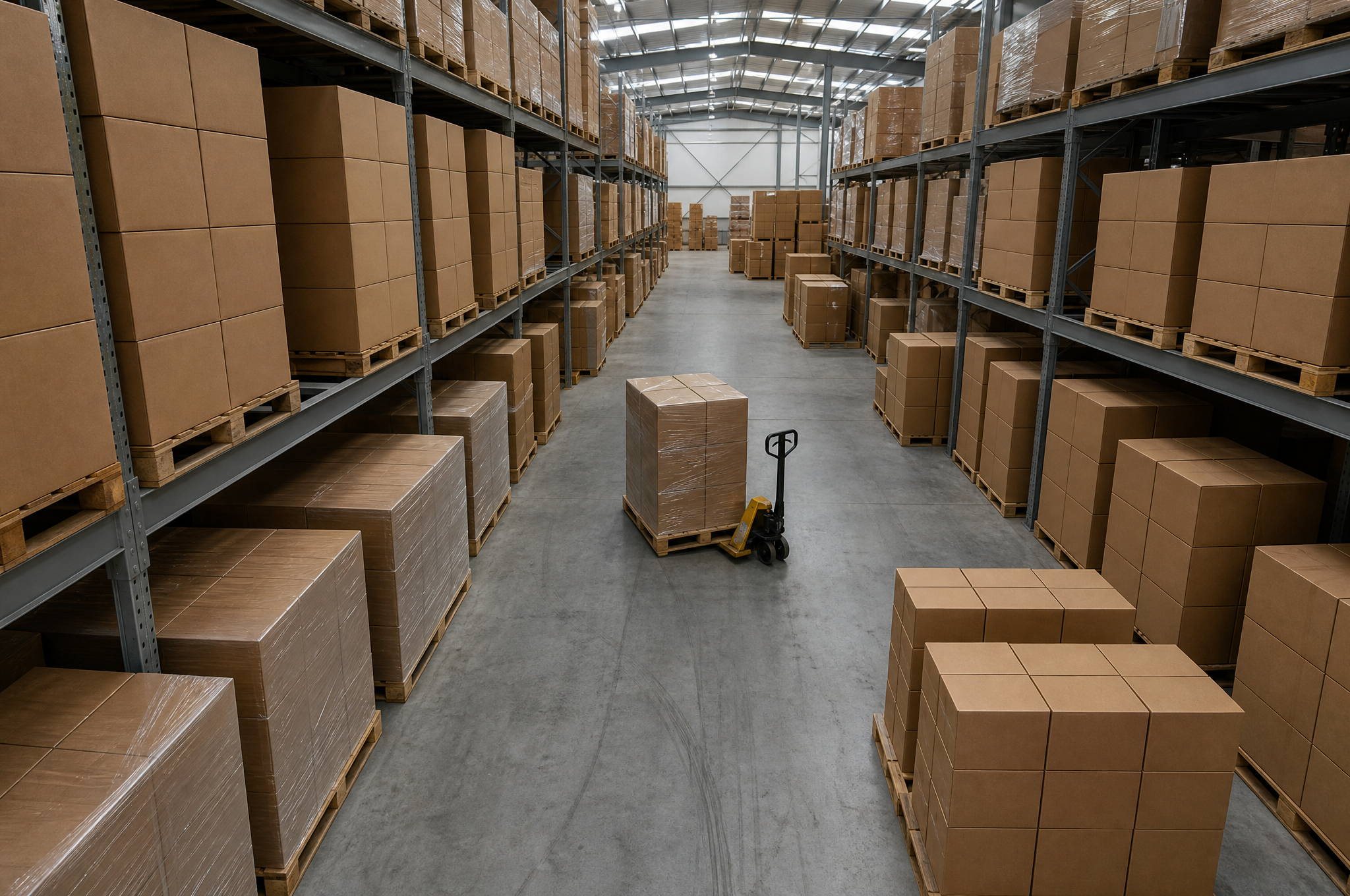
Consolidation has a schedule that belongs to the consolidator, not to you. Four delays stack up in sequence.
The first is origin waiting time. Your cargo sits at the CFS until enough co-loaders fill the container, which is typically 3 to 7 days and can stretch to 10 in a slow month. The second is the destination CFS, where the container is devanned and your cartons are separated, adding 2 to 5 days before pickup. The third is rolling: during August to October, carriers bump LCL cargo first because a container booking outranks a shared one. The fourth is handling damage, because LCL cargo is touched 6 to 9 times between factory and warehouse against 2 to 3 times for a sealed container.
Net effect on a China to US west coast lane: 34 to 42 days door to door by LCL in a normal month, against 26 to 30 days for a full container booked on the same vessel. In peak season the gap widens to three weeks.
The limitation is worth stating plainly. We can give you accurate carton dimensions, a loading plan, and a container-ready schedule, but we cannot control a consolidator's cut-off. When a buyer's retail window is 60 days out and the order is 6 cubic meters, we tell them the honest answer: this volume will probably arrive on time, and it will be the first thing that slips if the carrier gets tight.
A Booking Checklist Before You Commit
Use these checks in order. They take ten minutes and prevent most of the arguments that follow.
Confirm the chargeable basis in writing: per cubic meter, per revenue ton, or per cubic meter with a minimum.
Get destination charges itemized, not bundled. CFS, doc fee, ISF, delivery order, and chassis are where LCL quotes hide margin.
Ask for the CFS cut-off date and the vessel sailing date as two separate dates.
Request the exact carton dimensions and piece count per carton for every SKU, and recalculate cubic meters yourself.
Confirm whether the forwarder will roll LCL cargo during the peak and what notice they give.
For containers over 24 cubic meters, price a 20 ft and a 40 ft high cube side by side, including the last-mile difference.
Check whether a pallet configuration changes the math. Palletizing 330 cartons costs 6 to 9 percent of usable cube.
Put Freight Inside the Quote
Freight should never be a surprise discovered after the purchase order. At Tianqin, every quotation for a laptop backpack program carries the master carton dimensions, the pieces per carton, and the gross weight, so a buyer can convert units to cubic meters before signing. We also produce a loading plan for mixed SKU containers, because a program with three colors and two sizes will lose 8 to 12 percent of its cube to poor stacking if nobody draws it first.
Our carton sizes were consolidated for exactly this reason. Moving from a 64 x 46 x 34 cm carton to 62 x 45 x 30 cm on our 25 L platform cut 19 percent of the volume per bag with no loss of bag protection, and that change alone saves about 0.15 USD per bag on a west coast container. Small numbers at the carton level become real money at container level.
Send your volume, destination port, and target delivery date to [email protected] and we will quote the backpack and the cube together. Sampling runs 7 to 15 business days, so there is time to confirm carton dimensions on a physical sample before your first booking. Full program details and current carton specs are on www.tianqinbag.com.

 Hot News


