
 EN



Eight days before a promotion, a retailer has 190 units left against a forecast that needs 900. The factory can ship in three days. The question is not whether to fly the stock, it is whether the freight bill is smaller than the margin the promotion will lose without it. Most buyers answer that question by feel. It is arithmetic, and the arithmetic is not close.
The Two Costs Buyers Compare Incorrectly
The comparison that matters is not per kilogram against per container. It is freight premium against margin at risk, calculated per unit.
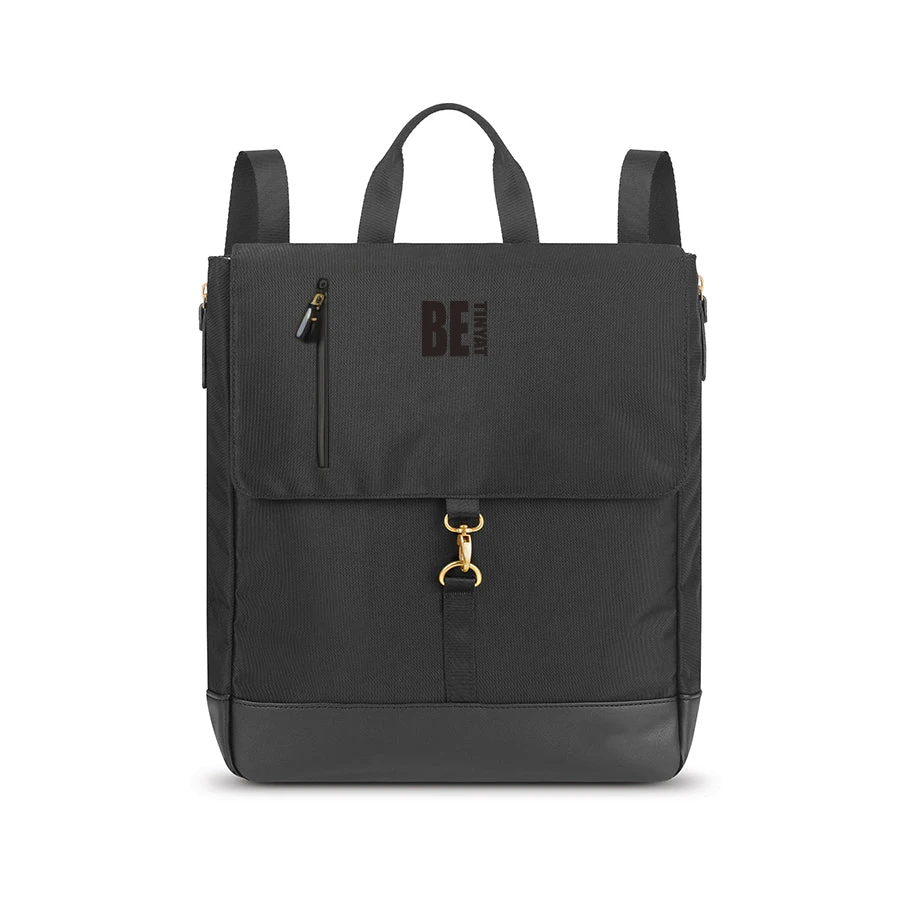
Start with chargeable weight, because that is where the first error happens. A 25 L laptop backpack weighs 0.95 kg net. A master carton holds 10 pieces at 14.2 kg gross, and measures 62 x 45 x 30 cm, which is 0.0837 cubic meters. Divide by 6,000 and the volumetric weight per carton is 13.95 kg. Actual weight is 14.2 kg, so actual governs by a margin of 250 grams.
That margin is thin, and it is why packers matter. Add a hangtag, a polybag, and a tissue wrap and the carton can cross from actual to volumetric. Repack the same 10 bags into a 64 x 47 x 32 cm carton and the volumetric weight rises to 16.0 kg, so you pay for 1.8 kg of air per carton without shipping one extra bag.
Air freight from Xiamen or Shenzhen to a US west coast airport runs 5 to 7 USD per chargeable kilogram in a normal month. At 1.42 kg per bag, that is roughly 8.50 USD per bag. Sea LCL on the same 1,000 bags is about 0.94 USD per bag. The premium is 7.50 USD per bag, or 7,500 USD on a 1,000-unit reorder.
That is the number to hold. Everything else is deciding whether 7,500 USD is worth spending.
Working Out the Break-Even
Take a 25 L bag that sells at 59 USD retail with a landed cost of 21 USD. Gross margin per unit is 38 USD, and the margin on a 1,000-unit reorder is 38,000 USD.
Air costs 7,500 USD more. Divide 7,500 by 38 and the answer is 197 units. If stock arriving by air prevents more than 197 lost sales out of 1,000, air is the cheaper mode. That is a 20 percent stockout rate on the order.
Twenty percent sounds high until you look at what a stockout actually does. It rarely stops at the lost sale.
The practical band we see across reorders is 13 to 22 percent, depending on volume, because sea freight carries fixed fees that air does not. At 400 units, sea costs about 1.60 USD per bag after CFS and documentation minimums, so the premium falls and the break-even drops to around 16 percent. At 3,000 units, sea drops to 0.55 USD per bag, the premium rises to 7.90 USD, and the break-even climbs to 21 percent.
Two adjustments change the answer more than volume does. The first is the retail price. At 129 USD with a 45 USD landed cost, margin is 84 USD and the break-even falls to 89 units, which makes air close to routine. At 39 USD with an 11 USD landed cost, margin is 28 USD, the break-even rises to 268 units, and air is hard to justify.
The second is repeat rate. A customer who cannot buy today may not come back, and a listing that goes dark for nine days loses ranking that money cannot instantly recover.
What a Stockout Costs When You Count It Properly
Three cost lines belong in the calculation, and buyers usually count only the first.
Lost gross margin on units that would have sold, at your own margin per unit, not revenue.
Advertising waste while the listing or shelf is empty. If you spend 60 USD a day on a listing that converts at 4 percent, an eight-day stockout burns 480 USD for zero sales.
Recovery cost after restock: extra ad spend, markdowns to rebuild velocity, or expedited replenishment of the replacement order.
The admitted limitation is that air freight does not create inventory. It moves it. If the production start slips by twelve days, an air shipment recovers the 25-day gap between sea and air transit but not the slipped cutting date. We have seen buyers approve air freight on a reorder that had not yet passed bulk approval, and the bags still missed the window by four days because the fabric was late. Air fixes the transit segment only.
The second limitation is capacity. In October and November, air space out of South China tightens and rates for bag cargo can rise 40 to 80 percent against the August benchmark. A premium quoted at 5.50 USD per kg in July can be 9.00 USD per kg in the last week of November. Break-even math built on the low-season rate overstates the case for air during the weeks when you most want it.
Peak Season Risk Runs Both Ways
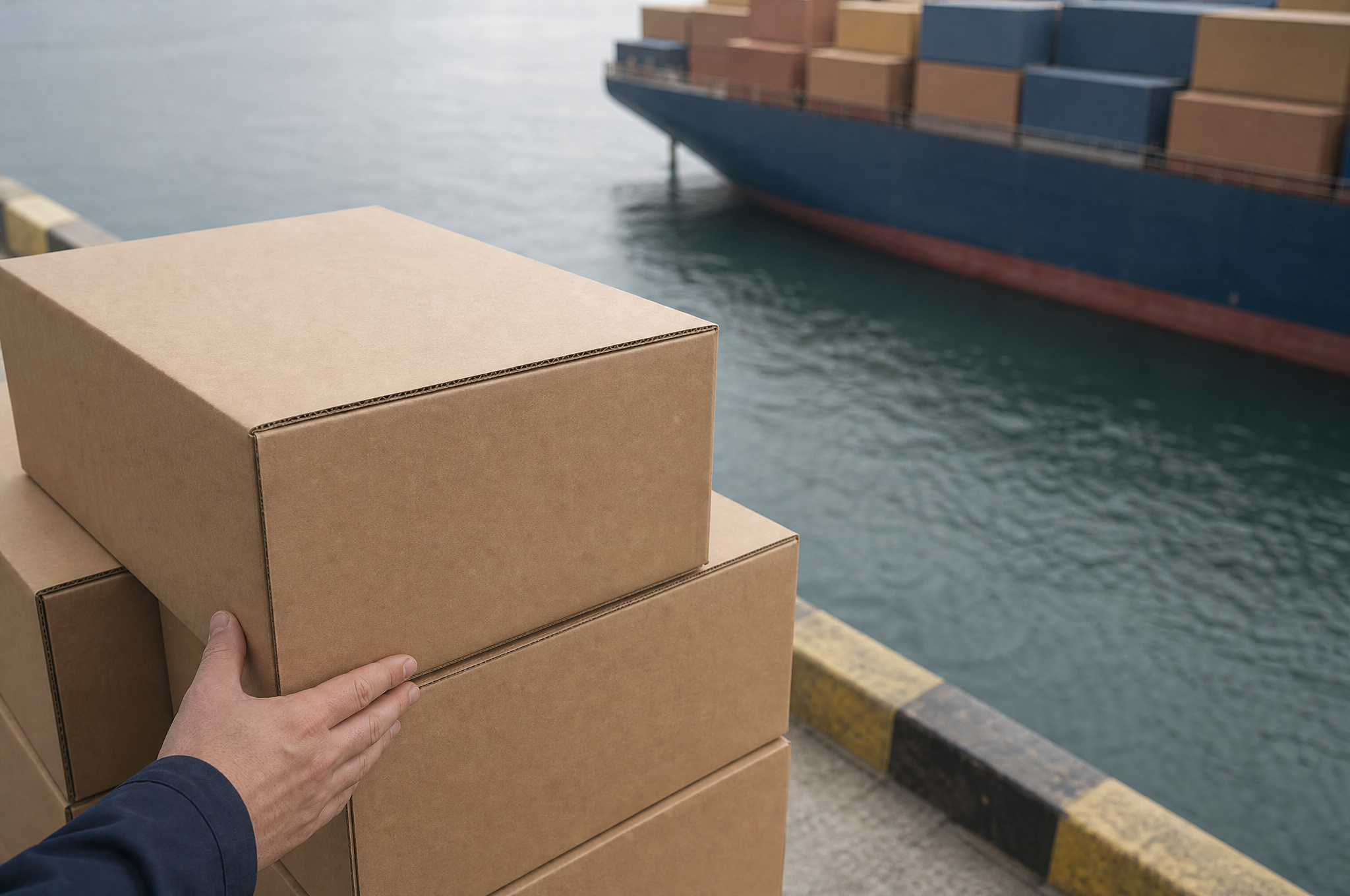
Sea freight has its own seasonal failure mode, and it is not only price. Between August and October, space on China to US and China to EU lanes is allocated weeks ahead, and LCL cargo is the first to be rolled when a vessel is overbooked. A booking confirmed for the 14th can sail on the 28th with no clause breached.
Container rates move too. The spot rate on a 40 ft high cube to the US west coast has ranged from 1,400 to 4,800 USD within a single year in recent cycles, which means a landed cost model built in a quiet month can be out by 30 cents a bag in a busy one.
There is also the calendar both modes share. Chinese New Year closes factories and most of the trucking fleet for two to four weeks, so a reorder that needs to land in March must leave Quanzhou by early January by sea. Air can shave three weeks but it cannot move cargo that has not been produced.
For our own accounts we plan reorders in two blocks: a sea shipment covering 70 percent of the season, booked 90 days out, and an air allowance covering 25 to 30 percent, held as unbooked capacity until sell-through data arrives. That split is not a rule for every buyer, but it does mean the air decision is made with sales data instead of anxiety.
A Mode Decision Checklist
Run these five checks before you approve an air quote on a reorder.
Chargeable weight per carton, stated in writing, plus the divisor your forwarder actually uses.
Air premium per unit, calculated as air landed cost minus sea landed cost at the same volume.
Gross margin per unit, from your own P and L, not from the supplier's suggested retail.
Sell-through rate in the last four weeks, converted into days of cover at current velocity.
Days remaining between today and the first day you lose sales, including customs clearance at destination.
If the premium divided by the margin is lower than your forecast stockout rate, fly it. If it is higher, book sea and spend part of the difference on a bigger safety stock next cycle.
Where the Factory Can Help, and Where It Cannot
At Tianqin, we print the gross weight, carton dimensions, and pieces per carton on every packing list so buyers can compute chargeable weight without asking a forwarder to interpret our data. For accounts that run frequent small reorders, we consolidate two or three SKUs into a single weekly air booking from Xiamen, which cuts per-bag air cost by 12 to 18 percent compared with shipping each run separately.
We do not quote air rates as fixed numbers, because we are not the carrier and rates move weekly. What we will do is tell you the production completion date with a margin of error, confirm the carton weight before packing, and photograph the pallet build so your forwarder has no surprises at pickup.
Bring us your reorder volume, destination, and the margin you need to protect. We will quote the bag FOB, give you the carton data, and let your forwarder price both modes on identical facts. Write to [email protected] or start at www.tianqinbag.com. Sampling takes 7 to 15 business days, which is usually enough time to test a carton configuration before a peak-season booking is due.

 Hot News


