
 EN



A retailer in Chicago launched a 22 L laptop backpack with a two-year "no questions" warranty printed on the hangtag. Eleven months later, 4.1 percent of the first shipment had come back, and the policy had no clause covering normal wear. He paid for every return, including the ones caused by a user who had overstuffed the bag. The policy was not generous. It was undefined.
Decide What The Warranty Covers
A laptop backpack has roughly 40 components that can fail, and a policy promising "defects in materials and workmanship" without naming them leaves the decision to whoever answers the ticket. Name the parts. The policies we see survive contact with volume usually cover: zipper sliders and tooth separation, seam failure at strap anchors, stitching that opens along the main compartment, buckle and D-ring breakage under normal load, lining tears at the laptop sleeve corner, and trolley sleeve stitching.
They exclude: abrasion through the base fabric, colour fade, scuffs on hardware plating, damage from airline handling, water ingress through a wet zipper, and anything that happened after a third-party repair.
The list matters more than the length. A one-year policy with a defined parts list produces fewer arguments than a lifetime policy with none. Most EU distributors we work with ask for 24 months because consumer law pushes that direction, while US retailers commonly accept 12 months on a bag retailing between 59 and 89 US dollars.
Exclusions That Hold Up Under Pressure
Two exclusions do the heavy lifting: normal wear and misuse. Both need a definition, because a claim handler with no definition approves the claim to close the ticket.
Normal wear, written down: loss of coating sheen, softening of foam, minor pilling on the back panel, plating wear on the zip pull, a base panel that has thinned but not torn. We suggest a photographic appendix showing each of those states on a bag after 12 months of use. Buyers who add that appendix report roughly 30 percent fewer escalations, because the customer sees the standard at the point of complaint instead of after an argument.
Misuse: loads above the stated limit. For a 25 L laptop backpack that limit should be printed as a figure, typically 12 kg. A bag rated for 12 kg that fails at 18 kg is not a warranty case, and a handler cannot make that judgement without the number in front of them.
One limitation we state plainly to brands: a warranty policy cannot control the failure rate. It controls who pays for it. If your return rate is running at 6 percent because of a design choice, tightening the wording converts warranty cost into review damage, and the reviews cost more than the credits.
Calculating A Reserve You Can Defend
Finance will challenge the reserve number, so build it bottom-up rather than as a flat percentage of sales.
Start with the claim rate by component. Zippers, strap anchors, and sliders drive most claims on laptop backpacks. In programs we supply, first-year claim rates under a defined policy usually land between 1.2 percent and 2.8 percent of units shipped, with the higher end on entry price points where the shell is 600D Oxford and the zipper is a generic #5 coil.
Then apply cost per claim. A replacement unit at FOB cost, plus outbound freight, plus the labour of processing the return, plus inbound freight of the failed unit if you ask for it back. On a bag with an FOB of 9.60 US dollars shipped to a US warehouse, a resolved claim often costs 16 to 19 dollars all in. That is why a 2 percent claim rate looks small in units and large in dollars.
Then apply a seasonality factor. Back-to-school and Q4 gifting programs concentrate usage, and the first 90 days after those peaks produce a spike that a flat annual average hides. We advise buyers to hold the reserve monthly and reconcile quarterly, not annually, so the reserve tracks the usage curve instead of the calendar.
A working formula: reserve equals claim rate times cost per claim times units sold in the period, plus 20 percent for freight variance. On 6,000 units at a 2 percent claim rate and 17 dollars per claim, that is 204,000 dollars of exposure before the variance buffer. Put the arithmetic in the policy file, not only in the finance model, because the brand team will need it the first time a buyer asks why the term is 12 months and not 24.
Wording That Limits Exposure
State the start date as the date of retail sale and require proof of purchase. Open-ended start dates invite claims on stock that sat in a warehouse for a year.
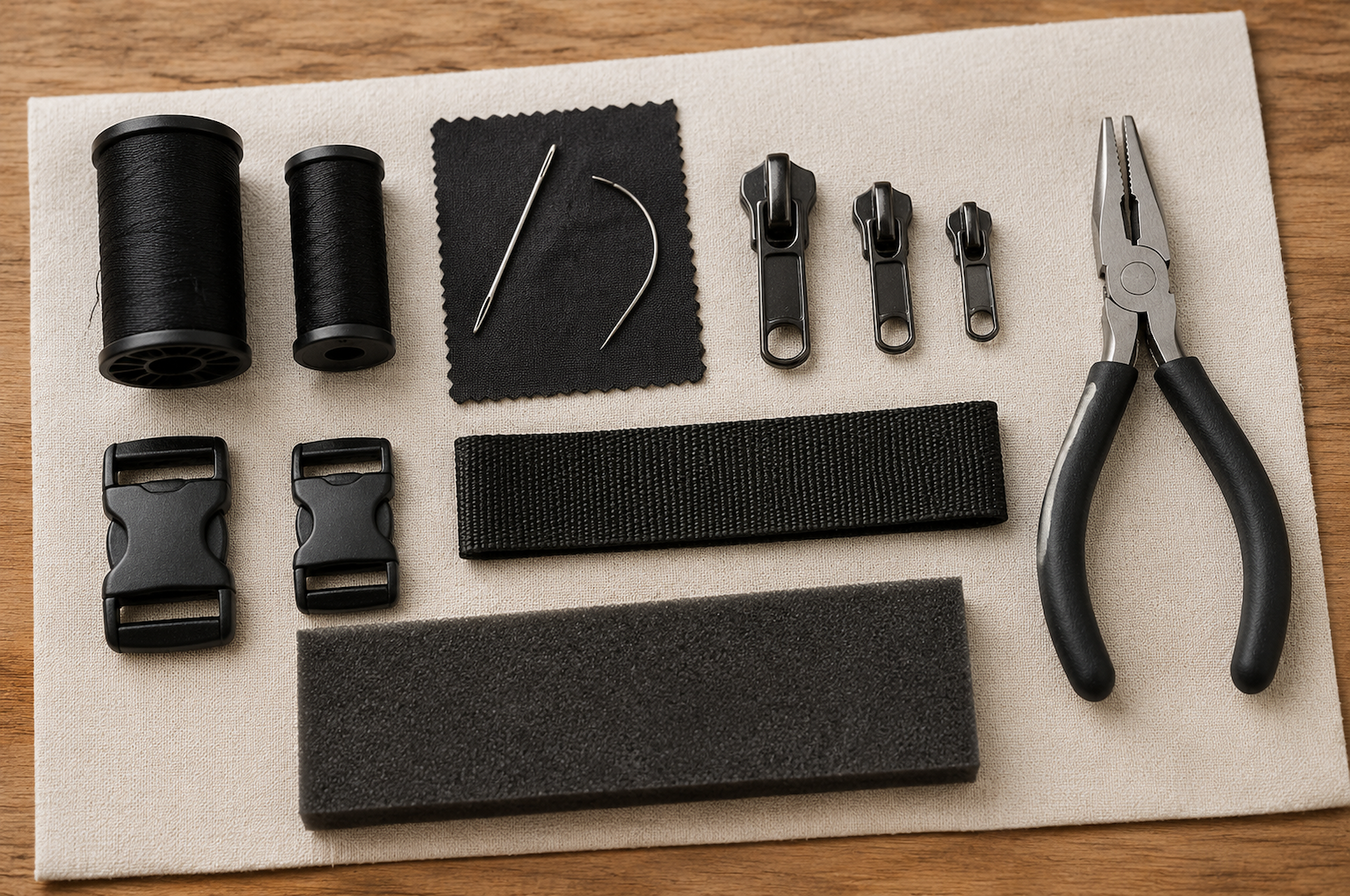
Say "repair or replace at our discretion" rather than "replace". A slider costs cents and a unit costs dollars, and replacement-only language gives away the cheap remedy.
Put a time limit on submission, typically 30 days from discovery rather than 30 days from purchase.
Require the failed item back before credit, or allow a photo-based claim under a set value. Photo claims are faster and cheaper, and they fail on roughly 1 in 5 cases where the photo does not show the failure clearly.
Exclude consequential damages in one sentence. Missed flights and lost work days are not your liability.
Define the inspection standard by reference. "Workmanship defects as defined by the AQL 2.5 inspection report for the shipment" is a sentence that ends arguments.
The document that decides disputes
Claim files that survive a chargeback share one feature: the original inspection report is attached. If the policy says "workmanship defect" and the file contains the pre-shipment report from that production run, the question narrows to whether the defect existed at shipment. Without it, every claim becomes a negotiation about opinion.
A Warranty Policy Checklist
Use this to pressure-test a draft before it goes to print:
Named parts covered, with a written pass and fail definition per part
Named exclusions, with photographs of normal wear states
Load limit in kilograms, taken from the tested strap tensile value rather than guessed
Warranty period and start date, with proof of purchase required
Repair-first language with a stated replacement threshold
Claim submission window and required evidence, including a minimum photo set
Return-versus-credit rule by unit value, for example photo approval under 40 dollars
Handling times, for example 5 working days to first response and 15 to resolution
One page maximum for the customer-facing version
That last item is not cosmetic. A policy longer than one page does not get read, and an unread policy is treated as a promise of unlimited service.
Build The Policy Before The First Reorder
At Tianqin we keep a claim-log format our buyers can adopt: part name, retail sale date, failure description, photo set, ship date, and resolution. It takes two minutes to fill and turns the warranty from a cost line into a design feedback loop. Three brand clients changed their front pocket zipper spec after the log showed the same slider failing in the same position across two seasons.
Send us your target retail price, warranty term, and the parts you plan to cover. We will tell you which components carry the highest claim risk at that price, what a repair-kit alternative costs per unit, and where the specification has to move to keep a 12 month term honest. We would rather say that during sampling than after a container of returns reaches your warehouse.
Contact [email protected] or visit www.tianqinbag.com to request samples, get a factory quote, or start an OEM/ODM project with Quanzhou Tianqin Bags Co., Ltd. Our sampling window is 7-15 working days, and the warranty discussion sits inside it. Seventeen years of bag manufacturing in Quanzhou, exports to more than 50 countries, SGS test reports available on request.

 Hot News


